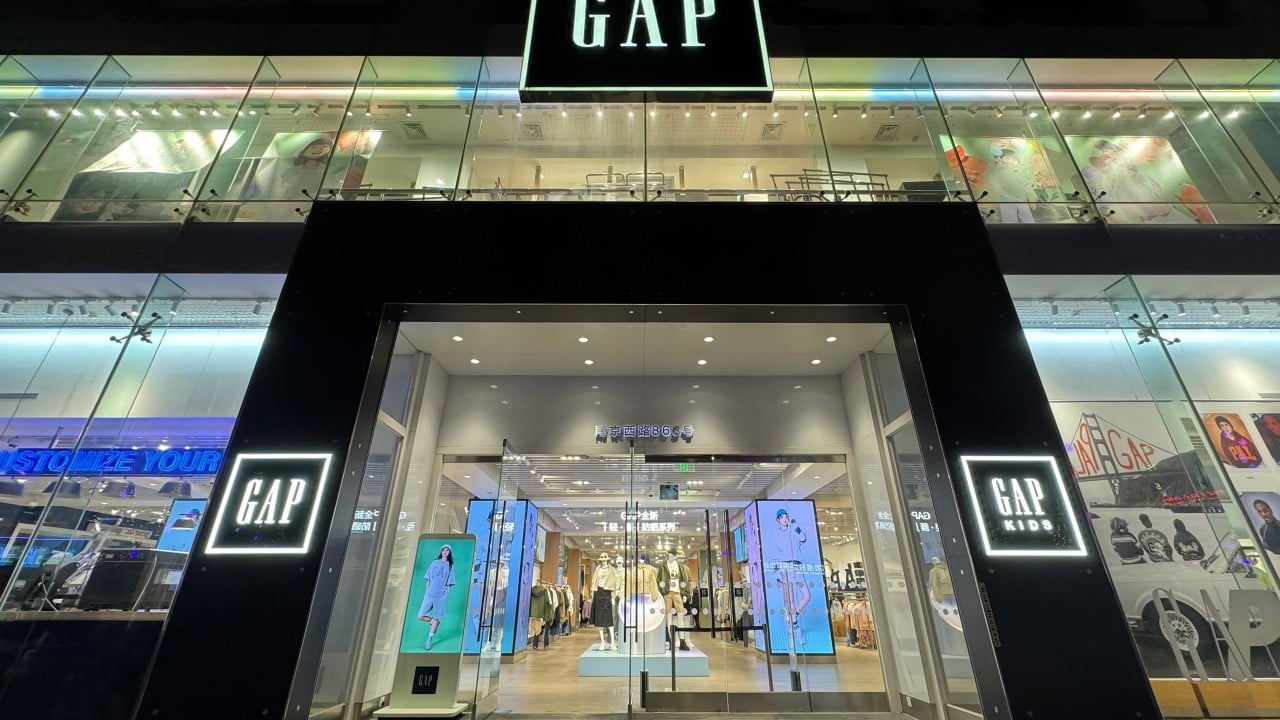
The Ghost of the Khaki Aisle
Walk into any mall in middle America during the late nineteen-nineties, and you could smell the cotton. It smelled like bleach, promise, and a very specific kind of American casual uniform. Folded tables stacked chest-high with pocket t-shirts. Rows of denim washed down to the exact shade of a dusty summer sky. And, of course, the khakis.
That was our uniform. It was an export of a lifestyle, sold to us as effortless.
Years later, standing on a bustling pedestrian thoroughfare in Shanghai, I watched a young woman run her fingers over the sleeve of a wool-blend trench coat hanging in a window. She did not see middle America. She did not smell the bleach of a suburban strip mall. She saw something else entirely. She saw a canvas.
Retail is supposed to be dying. Every quarterly report tells the same grim story of foot traffic bleeding out onto digital screens, of brick-and-mortar storefronts turning into expensive ghost towns. Yet, on the other side of the planet, thousands of miles away from the birthplaces of classic American casual wear, something strange is happening. Brands that many left for dead are staging massive expansions. Not by shouting louder in the same old language, but by learning how to speak a completely new one.
This is the story of how an American icon stopped trying to sell the world its past, and started stitching together its future.
When Exporting Fails
Consider what happens when you drop a foreign brand into a new country without a compass. For decades, Western companies made the same arrogant mistake. They assumed that a successful formula in Chicago or Los Angeles would automatically translate to Beijing or Shenzhen. They took the exact same cut, the exact same sizing, the exact same marketing campaign, and simply translated the words.
It is a bit like trying to serve a cold, heavy slice of apple pie to someone who has spent their entire life eating delicate, savory pastries. It is not that the pie is bad. It is simply out of place.
I remember talking to a retail strategist a few years back who watched a major American apparel label flame out in an overseas market. "We brought our best-sellers," she told me, shaking her head. "The problem was that nobody wanted our best-sellers. They wanted clothes that fit their lives, not our memories."
The clothes were too boxy. The colors were too loud or too muted for local palettes. The sizing charts felt like a foreign geometry exam. Shoppers walked in, touched the fabric, felt the disconnect, and walked out.
Expansion without localization is just expensive tourism.
Then came the pivot. Not a whisper of a strategy shift, but a deafening roar of reinvention. Brands began to realize that if they wanted to survive the retail headwinds, they had to stop acting like invaders and start acting like neighbors.
The Art of Listening
To understand how a massive retail expansion actually works on the ground, you have to look past the financial spreadsheets. You have to look at the design rooms.
Imagine a studio in Shanghai, filled with fabric swatches, sketches, and local designers who grew up navigating a completely different rhythm of daily life. (This is a hypothetical composite based on modern localization practices in the fashion sector). In this room, the classic American aesthetic is not treated as a holy text. It is treated as raw material.
The heavy, stiff cottons of the past are replaced with softer, lighter drapes that move differently. The hemlines change. The proportions shift to match local preferences for streetwear and urban utility.
This is what industry insiders call a localisation drive, but that sterile phrase hides the intense human labor behind it. It requires humility. It requires a legacy brand to admit that its heritage is only valuable if it can be made relevant to the person wearing it today, on a crowded subway in a city millions of miles from the corporate headquarters.
The numbers backing this up are staggering. While domestic markets shrink and struggle under economic uncertainty, companies investing heavily in localized Asian retail footprints are seeing surges in physical store traffic and digital engagement. They are opening flagship locations in prime urban centers, spaces designed not just as warehouses for clothes, but as cultural touchpoints.
They are partnering with local artists. They are designing capsule collections that never see a rack in North America. They are listening.
The Weight of a Stitch
Why does any of this matter outside the boardroom?
Because clothing is identity made tangible. When you pull a sweater over your head in the morning, you are making a silent statement about who you are, where you belong, and how you want the world to see you.
When a brand successfully localizes, it bridges a chasm of culture and distance. It says, We see you. We respect your taste. We are not here to lecture you on our heritage; we are here to be part of yours.
There is a vulnerability in this process. When you redesign your entire product line for a new audience, you risk alienating the purists back home. You risk losing your identity in translation. It is a tightrope walk over an abyss of irrelevance.
Yet, the alternative is much worse. To stay frozen in amber, clinging to a nostalgic past that no longer exists, is a slow death.
The retail headwinds are real. Rent is high. Attention spans are short. Consumer loyalty is fleeting. But human desire for connection, beauty, and self-expression remains entirely constant.
The New Horizon
Back on that street in Shanghai, the young woman in the trench coat smiles at her reflection in the glass. She buys the coat. She walks out into the evening mist, blending into the pulsing current of millions of lives moving forward.
The tag inside her collar carries a legacy born decades ago in a different hemisphere. But the fit is entirely her own.
The thread has crossed the ocean. And in the friction of that journey, something entirely new was born.