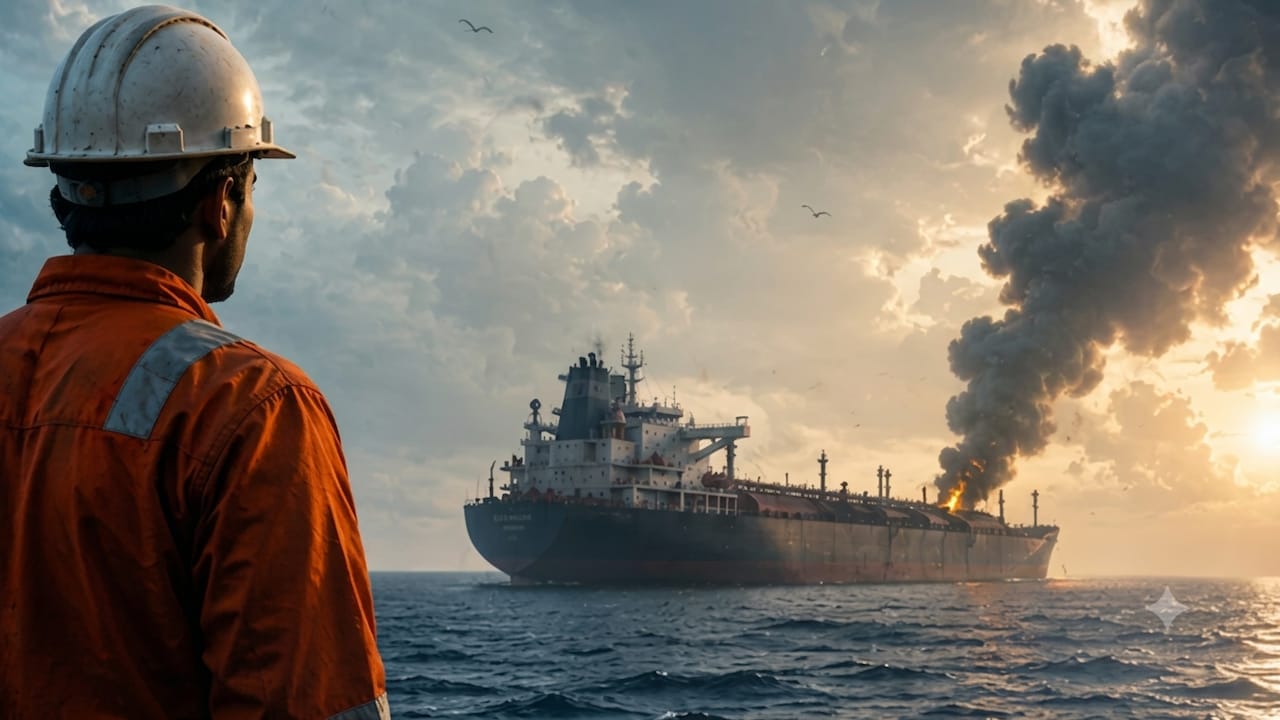
Dangling six-figure bonuses to bribe merchant mariners into active fire zones is not a crisis response. It is a desperate, short-sighted band-aid hiding a structural collapse in maritime risk management.
When reports surfaced that shipowners were offering sailors up to a six-fold salary surge just to navigate the Strait of Hormuz, mainstream outlets rushed to frame it as a victory of market forces. "Look at supply and demand at work!" they trumpeted. "The free market compensates extreme risk!" Recently making headlines in related news: Why Javier Milei Just Targeted Israeli Investors Over Falklands Oil.
That narrative is completely broken.
I have spent decades watching global logistics executives panic the second a geopolitical choke point flares up. They throw cash at human targets, pray the anti-ship missiles miss, and pass the inflated shipping costs down to consumers. Throwing a six-fold hazard pay rate at a crew does not secure a supply chain. It exposes a complete lack of operational resilience and signals to insurance underwriters, hostile actors, and shareholders that shipowners have zero strategy beyond financial coercion. Additional insights regarding the matter are detailed by The Wall Street Journal.
Hazard Pay Is an Admission of Zero Contingency Plan
Let us break down the mechanics of what a 600% pay bump actually accomplishes.
It does not buy security. It buys compliance from desperate crews who feel forced to trade their lives for rapid wealth.
Standard maritime contracts include war-risk clauses allowing mariners to refuse passage through designated high-risk areas. When an operator offers six times standard pay to bypass that refusal right, they are not rewarding bravery; they are purchasing a crew's risk tolerance because the operator failed to build alternative routing, failed to secure naval escorts, and failed to hedge against regional volatility.
A six-fold pay bump is not an incentive structure. It is an act of desperation masking a broken risk model.
Consider the operational reality. The Strait of Hormuz sees roughly 20% of the world's petroleum flow through its narrow, shallow waters. When regional tensions spike, the actual threat level to commercial shipping rises exponentially, not linearly. A drone strike or limpet mine does not care about your payroll ledger.
When operators rely on cash incentives to push hulls through contested chokepoints, three disastrous things happen simultaneously:
- Insurance premiums skyrocket past profitability: Underwriters see hazard pay surges as a sign of imminent asset loss, re-pricing Hull and Machinery (H&M) and War Risk cover to punitive levels.
- Crew morale collapses: The moment you monetized extreme mortality risk, you turned your crew into mercenaries. Mercenaries do not maintain discipline under actual barrage; they abandon ship.
- Hostile state actors take the bait: Bribing ships through a blockade proves the blockade is working. It incentivizes further disruption because the economic pain is clearly landing on the shipowner.
The Flawed Premise Behind the Chokepoint Panic
Every mainstream analysis asks the same lazy question: How much money will it take to keep the ships moving through the Strait?
That is the wrong question entirely.
The real question is: Why are multi-billion-dollar energy and freight operations still running unhedged, single-point-of-failure transit models in the 2020s?
People constantly ask if supply chains can survive prolonged closures of Hormuz or Bab-el-Mandeb. The brutal reality? They cannot, if the baseline strategy remains "pay sailors more money and run the gauntlet."
For years, corporate logistics teams treated geopolitical stability as a free public good provided by western navies. They built lean, just-in-time routing through narrow waterways to shave three days off a voyage. They stripped inventory buffers to the bone. Now, faced with asymmetric warfare—where a $20,000 loitering munition can paralyze a $150,000,000 crude carrier—they discover that market logic breaks down in shallow water.
Bypassing the Strait via land-based pipelines like the Saudi East-West Pipeline (Aramco's Petroline) or Oman bypass routes costs money and requires long-term capital expenditure. Bypassing Africa via the Cape of Good Hope adds 10 to 14 days and millions in bunker fuel. Executive suites hate those numbers because they hurt quarterly margin comparisons. So instead, they gamble with merchant mariners' lives and call it market agility.
Imagine a scenario where a major tech firm sent software engineers into an active war zone to fix a server, offering them six times their salary, instead of setting up a redundant cloud region. The board would fire the CEO by sunset. Yet in maritime commerce, this exact recklessness gets written up as a heroic news story.
The Brutal Truth About Maritime Risk Hedging
If you run bulk carriers, tankers, or container fleets, trying to solve geopolitical risk with payroll is a suicide march. You cannot out-pay a shore-based missile battery.
True risk mitigation looks unsexy, expensive, and rigid. It forces executives to do the hard work before the shooting starts.
Stop Treating Redundancy as Waste
If your entire business model relies on guaranteed transit through a 21-mile-wide waterway bordered by hostile shorelines, you do not have a business model; you have a timed explosive. True operational resilience requires holding strategic buffer inventory at destination ports, locking in long-term bypass pipeline capacity long before crisis events, and signing long-term charter agreements with multi-fuel vessels capable of economically taking longer oceanic routes.
Securitization Over Bribes
Instead of burning capital on emergency hazard pay and emergency war-risk surcharges, fleet operators should form private-public convoy coalitions. If a trade corridor is national-security critical, force the flag states to provide naval escorts or do not sail. Sailing unescorted into a hostile corridor while tossing cash at the bridge crew is negligence masquerading as commerce.
The Downside No One Admits
Adopting a genuine anti-fragile strategy hurts. It means lower margins during quiet times. It means paying for pipeline capacity you might not use every month. It means explaining to impatient shareholders why your transit times are 12 days longer than a competitor who is currently playing Russian roulette in the Gulf.
But when the crisis hits—and it always hits—the competitors who relied on six-fold salary bribes watch their crews resign, their insurance canceled, and their hulls hit the bottom of the Gulf.
Stop glorifying hazard pay spikes. It is time to call them what they really are: the ultimate failure of executive foresight.