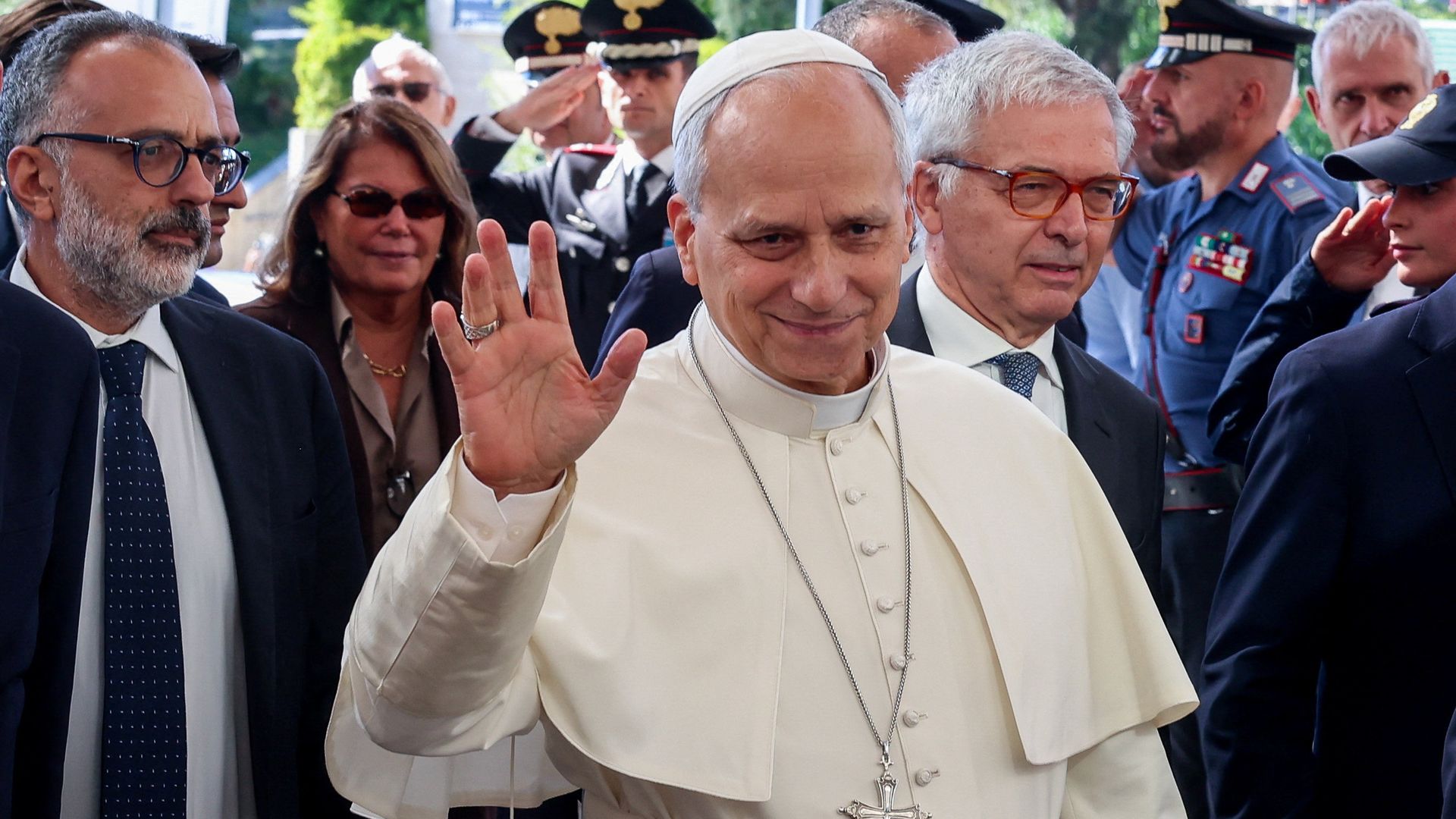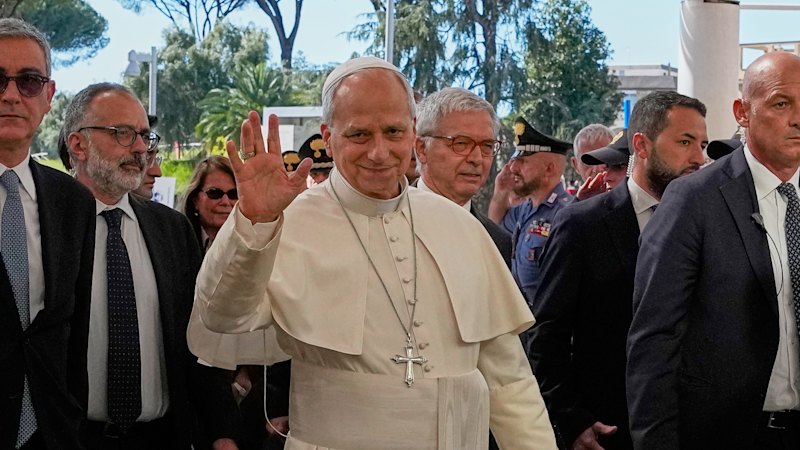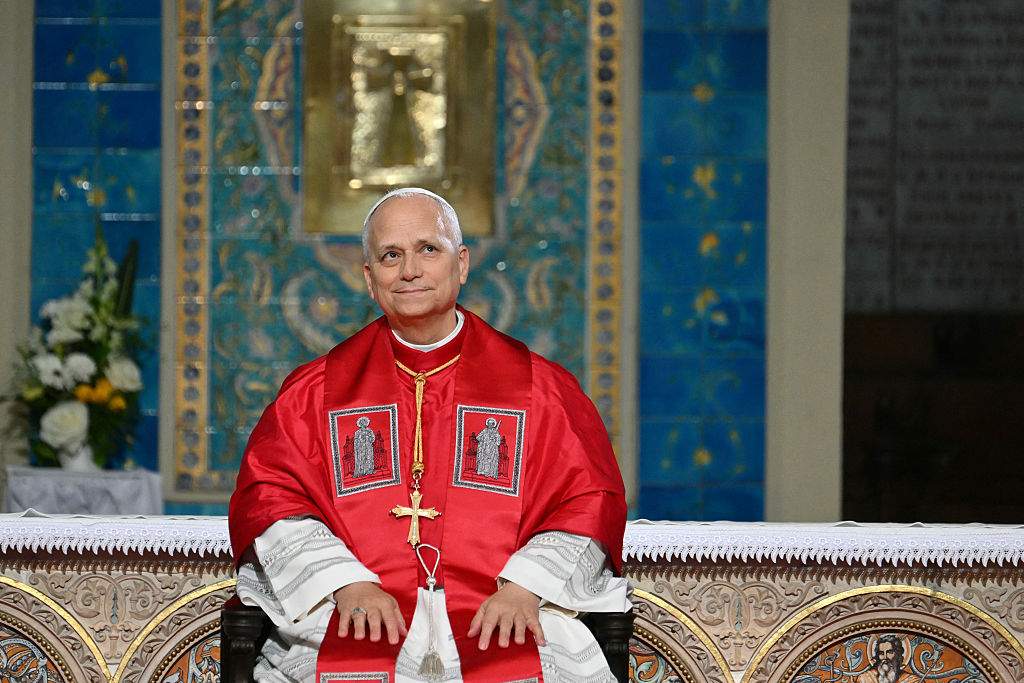
The bells over St. Peter's Square do not ring differently when a diagnosis changes from routine to grave. The travertine stone still warms under the Roman sun. The fountain water still splashes in its quiet, rhythmic loop. Yet inside the stone walls and cool corridors where decisions echo across a billion lives, a single word shifts the gravity of every morning: cancer.
When the Vatican confirms that Pope Leo has been diagnosed with lung cancer following the removal of a pulmonary nodule, the news arrives like a sudden draft in a sealed room. A press release can list dates, hospital names, and clinical terms in neat, measured sentences. It can sound calm. It can sound complete.
It is neither.
Behind every medical bulletin is a human body that does not care about titles, centuries, or diplomacy. A lung does not know it belongs to the Bishop of Rome. A suspicious spot on a scan does not pause for an encyclical or a scheduled audience. Medicine moves at the pace of cells dividing, pathologists peering through microscopes, and a patient waiting for a phone call that changes the shape of time.
A Speck on Glass and the Weight of Waiting
Ask anyone who has sat in a quiet clinic room waiting for pathology results after a nodule comes out, and they will tell you the same thing: the waiting has its own weather. One minute you feel fine. The next, every breath feels like something you have to inspect.
To make sense of how a small spot becomes such a heavy turn of events, consider a hypothetical scenario. Picture a retired high school history teacher in Chicago—let's call him Thomas—who goes in for a routine scan after a nagging cough that lasted three weeks too long. The radiologist spots a small pulmonary nodule. A nodule is simply a round or oval spot in the lung, often no bigger than a pea or a grape. Most of the time, spots like that turn out to be harmless scars from an old infection or inflammation. Sometimes, they are not. Thomas has the nodule removed. For days, he walks his dog along the lakefront trying to act normal while his mind runs ahead to worst-case scenarios. When the surgeon calls with the final pathology report, the words "malignant cells" land with a quiet thud that makes the room go very still.
In Thomas's case, the drama stays inside a family kitchen and a local clinic. For Pope Leo, the same biological reality plays out under global spotlights, diplomatic calendars, and centuries of institutional memory. That contrast is what makes this moment so gripping. A private vulnerability is suddenly public property.
Oncology is a field of probabilities, staging, and trade-offs. When a nodule is removed—whether through a minimally invasive wedge resection or a broader thoracic procedure—doctors examine the tissue under high magnification to see what kind of cells are present and whether any escaped beyond the margins. Lung cancer is broadly divided into non-small cell and small cell types, and within those categories, modern medicine looks closely at specific genetic mutations and biomarkers. A targeted therapy or immunotherapy regimen can look very different from traditional chemotherapy, depending on what the cells reveal.
Still, no matter how advanced the science becomes, the emotional shock does not come with a manual. I have watched loved ones sit with a binder of lab printouts in a fluorescent-lit hallway, nodding politely while a specialist draws diagrams on a notepad, trying to hold onto two thoughts at once: We caught it and Why is this happening now? That confusion is real. Even doctors who treat lung cancer every day know that hearing the word applied to yourself—or to a leader millions look to for steadiness—hits like a trapdoor opening beneath your feet.
Why Papacy and Mortality Collide
History has seen popes grow old, fall ill, govern from wheelchairs, travel despite fragile health, and occasionally resign or die in office. The papacy is an ancient institution built to endure human frailty, yet each generation experiences a leader's illness as if for the first time. When a pope faces lung cancer, two clocks start ticking at once: the biological clock of the disease and the institutional clock of the Church.
Think of the papacy as a grand suspension bridge spanning rivers of history, doctrine, and global politics. The cables are centuries of tradition; the deck carries daily administration, appointments, travel, and moral leadership. When one of the main towers develops a hairline fracture—not collapse, not ruin, just a serious structural concern that requires inspection and reinforcement—every engineer on the bridge pays attention. (This bridge comparison is a metaphor for how institutional stability interacts with leadership health, not a literal description of Church governance.)
People immediately ask practical questions, and they are fair questions born of genuine concern. Can a pope with lung cancer keep working? What does recovery after nodule removal look like? Could this lead to a resignation, or is a long period of monitored care more likely?
Honesty demands a simple answer: nobody outside the inner medical team knows the full picture from a single announcement, and even inside a hospital, early weeks after surgery and diagnosis are about gathering facts. Recovery from lung tissue removal depends on the extent of the surgery, baseline lung capacity, age, and how smoothly the chest heals. Pain management, breathing exercises, and pacing are crucial. If further treatment is needed—such as adjuvant therapy to lower the chance of recurrence—energy levels and schedule stamina become central considerations.
What makes lung cancer especially sobering in public imagination is its reputation. For decades, people associated lung cancer almost exclusively with heavy smoking, and many still do. In reality, anyone with lungs can develop it, including lifelong non-smokers, shaped by genetics, environmental exposures, air quality, and chance. Removing that stigma matters. Illness is not a moral scorecard. A malignant cell does not ask how you lived your life before it mutates.
Beyond the Headlines: What Care Really Demands
When breaking news hits, attention rushes toward speculation. Analysts debate succession. Commentators parse every phrase of a Vatican statement. Social media turns a clinical diagnosis into a proxy battle over theology, politics, or the future of the institution.
Noise.
Meanwhile, the actual work of healing is quiet, repetitive, and unglamorous. It happens in blood draws, pulmonary function tests, follow-up scans, physical therapy, and honest conversations between a patient and trusted physicians. It requires rest in a role that rarely rewards stillness.
Consider what happens next: once the initial shock settles, the real test is rhythm. A leader carrying a serious diagnosis has to balance duty with limits. Advisors and caretakers have to protect recovery time without hiding reality from the public. Transparency builds trust; vague euphemisms breed rumor. When institutions speak plainly about health—acknowledging both medical realities and human resilience—they respect the intelligence of the people watching.
For ordinary readers watching from afar, a story like this also carries a quiet mirror. Most of us will never set foot in the Apostolic Palace or hold a press conference in Rome. Yet almost all of us know what it feels like when routine medicine turns serious. A routine checkup turns into a second opinion. A small spot turns into a big question. In those moments, courage rarely looks like a grand speech from a balcony. More often, it looks like showing up to the next appointment, breathing through the fear, and letting other people help carry the weight.
A Fragile Breath Over Ancient Stone
In Rome, morning light always finds the dome of St. Peter's first, turning stone from slate gray to warm gold while the city below is still half-asleep. Somewhere behind those walls, a man who carries an extraordinary burden is also just a patient learning what his body can bear, taking one measured breath at a time, while a watching world waits to see how grace meets mortality.