The internet loves a lie.
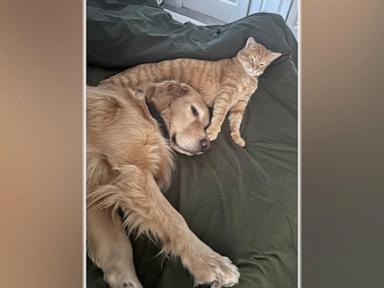
You have seen the video. A golden retriever and a tabby cat snuggling on a couch, or a lion cub playing with a baby baboon. The clip gets fifty million views, the comment section floods with crying emojis, and morning talk shows run it as a heartwarming segment to close out the broadcast. The narrative is always identical: if these natural enemies can set aside their differences and love each other, why can't humanity?
It is a comforting thought. It is also complete nonsense.
What the viral videos and lazy fluff pieces do not tell you is that forcing apex predators from different evolutionary branches to cohabit is not a heartwarming miracle. It is a stressful, anthropomorphic experiment that frequently borders on animal cruelty. We need to stop projecting human psychological needs onto creatures driven by instinct, biology, and survival mechanics.
The Economics of the Cute Economy
I have spent over a decade working closely with animal behavioral analysts, zoologists, and veterinary behaviorists. I have watched media outlets buy up the rights to these clips for thousands of dollars because "unlikely animal friends" move the needle. It is pure engagement farming.
When you see a dog and a cat "hugging," a veterinary behaviorist sees something entirely different. They see a dog displaying micro-signals of resource guarding and a cat freezing in a state of learned helplessness.
- The Freeze Response: Humans misinterpret a cat staying perfectly still next to a large dog as affection. Often, it is tonic immobility—a prey response to a perceived threat.
- Stress Grooming: When the cat vigorously licks the dog's face in these videos, it is rarely love. It is often displacement grooming, a self-soothing mechanism triggered by high cortisol levels.
- The Ticking Time Bomb: Predatory drift is real. A dog can live peacefully with a smaller animal for five years until a sudden movement, a high-pitched squeak, or a flash of light triggers the canine's hardwired prey drive. In an instant, the "friendship" ends in tragedy.
People ask, "Can dogs and cats genuinely love each other?" They are asking the wrong question. The real question is: "Should we force them to risk each other's safety for our own emotional validation?"
Dismantling the Domestic Peace Fallacy
Let us break down the exact evolutionary mechanics that the viral articles ignore. Dogs and cats communicate using completely contradictory body language.
| Behavioral Signal | What it Means to a Dog | What it Means to a Cat | The Resulting Chaos |
|---|---|---|---|
| Wagging/Thumping Tail | Externalized excitement, openness to interaction, or high arousal. | Intense agitation, frustration, or an imminent physical strike. | Miscommunication and sudden aggression. |
| Direct Eye Contact | Social engagement or a challenge for dominance. | An explicit threat or an act of overt hostility. | Escalation of tension. |
| Rolled Over on Back | Submission, deference, or an invitation to play. | Ultimate defensive posture, preparing all four sets of claws for combat. | Total tactical misunderstanding. |
To claim these animals have formed an "unlikely friendship" is to ignore thousands of years of specialized evolution. You are looking at two entirely different operating systems trying to run the same software. When it crashes, the smaller animal usually pays the price.
The Dark Side of Interspecies Coexistence
Let us talk about the data the clickbait sites will never publish. Go to any emergency veterinary clinic on a Sunday night. You will not find unlikely friendships. You will find cats with crushed trachea from a housemate dog that "never showed aggression before." You will find dogs with corneal ulcers from a cat that finally snapped after being cornered for a cute photo opportunity.
I once consulted for a sanctuary that took in exotic pets from private owners who tried to recreate these viral dynamics. They had a wolf-dog hybrid and a potbellied pig that lived together because the owner wanted to document their "bond" on Instagram. The owner made hundreds of dollars a month off their videos. Then came a thunderstorm, the wolf-dog panicked, its predatory instinct kicked in, and the pig was dead within ninety seconds.
The owner did not post a follow-up video about that.
We are actively incentivizing pet owners to create dangerous scenarios. To get that perfect, shareable shot, people routinely ignore subtle warning signs:
- Lip licking
- Whale eye (showing the whites of the eyes)
- Whale-tailing (stiff tail wagging)
- Tense facial muscles
- Slow, calculated blinking
When you celebrate these videos, you are funding the normalization of chronic animal stress.
Step Away from the Anthropomorphism
The contrarian truth is simple: true animal welfare means respecting an animal's innate nature, not forcing it to act like a human character in a Disney movie.
If you own both dogs and cats, the goal should never be to force them into a viral snuggle session. The goal is structured, peaceful coexistence rooted in total separation of resources.
- Vertical Territory: Cats require high spaces where dogs cannot reach them. If your cat cannot cross a room without interacting with your dog, you have failed as an owner.
- Separate Feeding Zones: Food is a high-stakes trigger. Feeding animals in the same room to show how "disciplined" they are is an unnecessary stressor.
- Enforced Boundaries: A dog must be trained to completely ignore a cat. Neutrality, not affection, is the gold standard of multi-species households.
Stop clicking on the fluff pieces. Stop sharing the clips of the bear cub and the hound dog. Stop demanding that the animal kingdom act out human fantasies of universal harmony. They have their own languages, their own boundaries, and their own survival mechanisms. Respect them enough to let them be what they actually are: predators, not props.