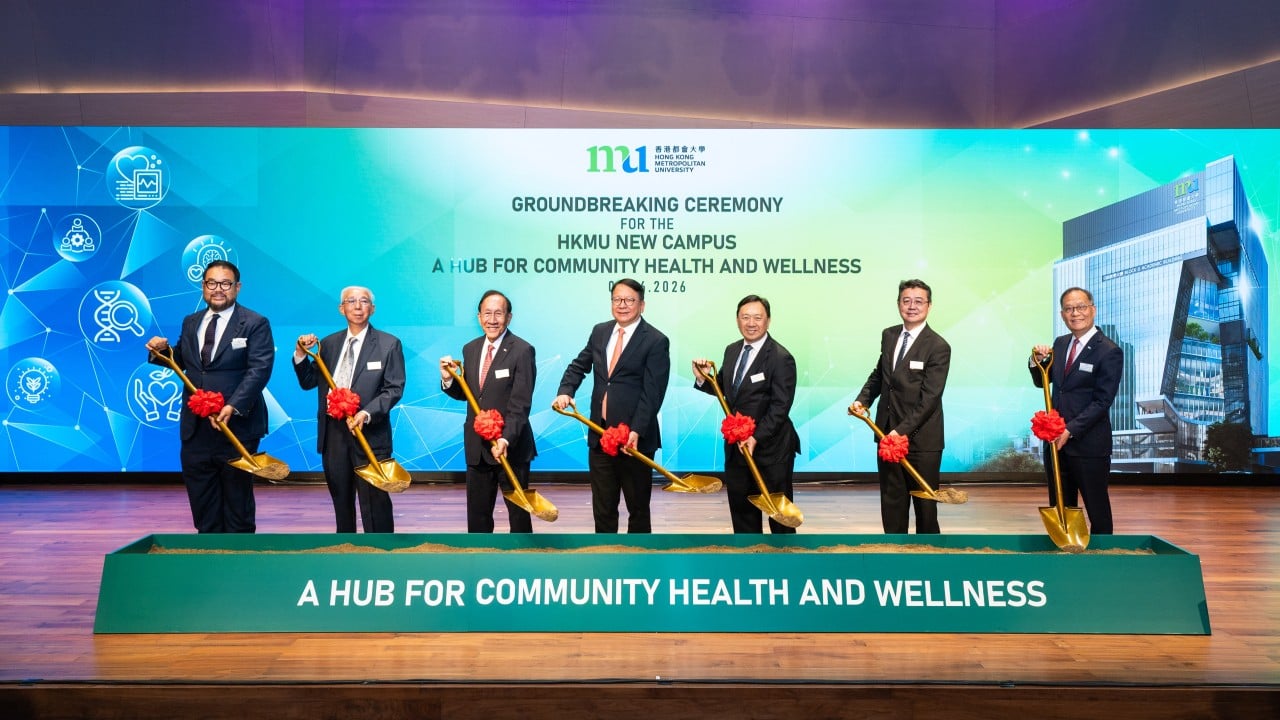
Hong Kong Metropolitan University recently broke ground on a new campus hub dedicated to community health and wellness. While official press releases frame the expansion as a localized win for public health and academic capacity, a deeper look at the region’s shifting demographics reveals a far more urgent reality. This is not just a campus expansion. It is a tactical deployment of institutional resources designed to stave off an impending public infrastructure crisis.
The global conversation around healthcare usually centers on hospital beds and surgical equipment. Yet the real battle for municipal survival is happening much earlier in the care pipeline, specifically in preventative, community-based management. By investing heavily in a dedicated physical hub, the university is attempting to build a friction point against the massive wave of chronic illness and aging that threatens to overwhelm public resources over the next two decades. Learn more on a connected issue: this related article.
The Strategy Behind Physical Expansion
Municipal planning usually favors digital solutions or decentralized clinics to save on skyrocketing real estate costs. Building a massive, centralized physical structure in a dense urban environment seems counterintuitive to modern development trends.
The physical structure serves a distinct operational purpose that digital applications cannot replicate. High-density cities suffer from severe spatial fragmentation. When health services are scattered across various municipal districts or buried within general hospital complexes, accessibility drops significantly for the most vulnerable populations, particularly the elderly. Additional analysis by NBC News explores similar views on the subject.
Centralizing educational facilities alongside public-facing health clinics creates an immediate feedback loop. Students operate within real-world environments from day one, while the local population gains direct access to subsidized, high-tier preventative care. It transforms an academic institution from a closed ecosystem into an active civic utility.
Confronting the Silver Tsunami
The demographic reality facing major Asian metropolitan areas is unforgiving. Projections indicate that by the late 2030s, over a third of the population in hubs like Hong Kong will be over the age of 65. The current healthcare infrastructure is built on an acute care model, meaning it is designed to treat people after they become severely ill.
This model is financially unsustainable. Chronic conditions like diabetes, hypertension, and cognitive decline require continuous, low-intensity management rather than periodic, high-cost hospitalizations.
Acute Care Model:   Symptom -> Hospitalization -> High Cost -> Crisis Managed
Preventative Model: Education -> Community Hub -> Continuous Monitoring -> Low Cost
The new campus hub targets this exact structural flaw. By focusing the curriculum and the physical space on community wellness, the institution is shifting its primary output from specialized clinical doctors to community health managers, physical therapists, and geriatric care coordinators. These are the frontline workers needed to keep the aging population out of emergency rooms.
The Friction Between Academia and Public Execution
Moving from a groundbreaking ceremony to an operational success story is rarely a smooth transition. Universities excel at theoretical research and controlled clinical instruction, but running an effective community health hub requires navigating complex neighborhood dynamics and entrenched bureaucratic hurdles.
A common pitfall in these initiatives is the cultural disconnect between academic staff and the community they serve. If the new facility operates purely as a research lab where locals are treated as data points, public trust dissolves quickly. The space must function as a genuine civic center, offering accessible programming that fits into the daily routines of working-class residents.
Financing presents another significant hurdle. While initial construction is often covered by government grants and philanthropic donations, maintaining long-term operational costs requires a stable revenue model. If the university relies too heavily on student tuition to fund the public health services, or if the clinics must charge market rates to stay afloat, the core mission of community accessibility is compromised.
Redefining the Urban University
The traditional view of higher education prioritizes global rankings, research output, and elite student recruitment. This project signals a necessary shift toward localized utility. When a university ties its physical footprint directly to municipal welfare, it redefines its value proposition to the taxpayer.
This model forces a rewrite of standard academic performance metrics. Success cannot be measured solely by peer-reviewed papers published or degrees conferred. The true indicators of impact will be found in regional health data: lower readmission rates in surrounding hospitals, increased mobility scores among local seniors, and a measurable reduction in late-stage chronic diagnoses within the district.
The Scalability Question
Other dense urban centers are watching these developments closely. Cities across Europe and North America face similar demographic pressures and crumbling public health infrastructure, making the integration of higher education and civic wellness an attractive template.
Copying the model is not a simple plug-and-play operation. The success of a centralized health hub relies heavily on specific local factors, including public transit integration, government willingness to subsidize university-led clinics, and a student body willing to enter community health fields rather than high-paying private specialties.
If the institutional focus remains rigidly fixed on prestige rather than public service, the physical building risks becoming an expensive monument to good intentions. The real test begins when the concrete dries and the first local residents walk through the doors seeking care. Ditches are dug, foundations are poured, but the ultimate metrics of survival will be written in the health trends of the surrounding streets over the next twenty years.