Sudan is bleeding and the Mediterranean is swallowing the survivors. You’ve likely seen the headlines about another boat sinking off the coast of Libya, leaving at least 17 Sudanese migrants dead. But a headline doesn't tell you why people keep getting onto these death traps when they know the odds are stacked against them. It’s not a choice between safety and risk. It's a choice between a slow death in a war zone or a quick one at sea.
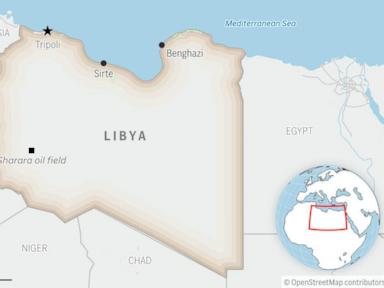
The International Organization for Migration (IOM) confirmed this latest tragedy. A rubber dinghy carrying around 80 people fell apart shortly after leaving the Libyan coast. Most were from Sudan, a country currently being ripped to shreds by a civil war that the world seems to have forgotten. Seventeen bodies were recovered, but let’s be honest, the real number is usually higher because the Mediterranean is a massive graveyard that doesn't always give back what it takes. Building on this theme, you can find more in: The Myth of Iranian Escalation and the Reality of Managed Theater.
Why the Central Mediterranean Route is a Meat Grinder
The Central Mediterranean remains the deadliest migration route on the planet. I’ve looked at the data from the Missing Migrants Project, and it’s grim. Since 2014, more than 30,000 people have disappeared in these waters. Libya isn't a functioning state with a unified coast guard. It’s a patchwork of militias and "official" units that often work with human traffickers.
When you hear "coast guard," you might think of a professional rescue service. In Libya, it’s often a group of armed men in a fast boat funded by European money to keep people away from EU shores. If you’re lucky, they pick you up and put you in a detention center where torture and extortion are the standard operating procedure. If you’re unlucky, your engine fails in the middle of the night and no one comes. Observers at Al Jazeera have shared their thoughts on this situation.
The boats aren't boats. They're inflatable rafts or rotting wooden shells meant to last exactly three miles—just long enough to get into international waters. Traffickers don't care if the boat makes it to Italy. They only care that the money cleared the account before the boat left the beach.
The Sudan Connection is the Elephant in the Room
We can't talk about these deaths without talking about what's happening in Khartoum and Darfur. Sudan is currently home to one of the worst humanitarian crises in the world. Since the conflict between the Sudanese Armed Forces (SAF) and the Rapid Support Forces (RSF) kicked off, millions have been displaced.
People aren't leaving Sudan because they want a better job in Marseille. They're leaving because their houses were shelled or their families were targeted in ethnic cleansing. They travel through the Sahara, which is just as deadly as the sea, only to reach Libya. Once they get there, they're trapped. You can't go back through the desert, and you can't stay in Libya because you’ll be kidnapped for ransom. The only way out is North.
This isn't "economic migration." It’s a mass exodus of people who have run out of options. When 17 Sudanese migrants die off the coast, it’s the final chapter of a story of failure that started thousands of miles away.
The Myth of Pull Factors
Politicians love to talk about "pull factors." They claim that rescue ships run by NGOs like Médecins Sans Frontières (MSF) or Sea-Watch actually encourage people to make the crossing. It’s a convenient lie.
Study after study, including data from the European University Institute, shows that people cross based on the conditions in their home country and the level of danger in Libya, not because there’s a rescue boat waiting for them. If your life is a zero-sum game, you take the risk. You don't check the news to see if the Geo Barents is patrolling before you decide to flee a war.
The Brutal Reality of Libyan Detention Centers
If you don't drown, you might wish you had. That sounds harsh, but ask anyone who has spent time in a Libyan "Direction for Combating Illegal Migration" (DCIM) facility. These places are hell on earth.
- Overcrowding: Hundreds of people packed into rooms with no space to lie down.
- Starvation: One meal a day if you're lucky, often just a piece of bread.
- Systematic Abuse: Guard-led violence is used to force migrants to call their families and demand more money for their release.
The UN has documented "crimes against humanity" in these centers. Yet, the international community continues to provide equipment and training to the very entities running this system. It’s a cycle of misery. The survivors of this latest shipwreck will likely be sent right back into this system, only to try the sea again in a few months if they can scrape together the cash.
Stop Thinking of Statistics and Start Thinking of Names
The 17 people who died this week had names. They had mothers in Omdurman who are waiting for a phone call that will never come. They had degrees, trades, and lives before the rockets started falling.
We’ve become desensitized to these numbers. 17 dead. 50 missing. 100 intercepted. When we talk about "migrants," we strip away the humanity. These are refugees by every legal definition, fleeing a conflict that has destroyed their state.
Libya is the bottleneck of human suffering. The desert is behind them, the sea is in front of them, and the militias are all around them. It’s a nightmare scenario that repeats every single week while the world looks the other way.
What Actually Needs to Happen
If you want the dying to stop, the solution isn't "better border security." That just makes the traffickers find more dangerous routes.
First, we need functional, safe, and legal pathways. If someone from Sudan has a legitimate asylum claim, they shouldn't have to pay a smuggler $3,000 to sit on a rubber tube in the Mediterranean. Processing centers in safe third countries could save thousands of lives.
Second, the funding for the Libyan Coast Guard needs to be tied to human rights benchmarks that actually mean something. Right now, there’s zero accountability. We’re paying for a "containment" strategy that results in mass graves.
Lastly, the war in Sudan needs actual diplomatic pressure. As long as Sudan is a firestorm, the Mediterranean will be a graveyard. You can't fix the sea until you fix the land.
The next time you see a headline about a boat capsizing, don't just shrug it off as another tragedy in a far-off place. It’s a direct result of policy choices made in comfortable offices. These deaths are preventable. We just choose not to prevent them.
Pay attention to the reports from the UN Refugee Agency (UNHCR) and support organizations that provide direct medical care on the water. Stay informed about the conflict in Sudan, because that's where this road begins. Don't let these 17 people become just another footnote in a year-end report.