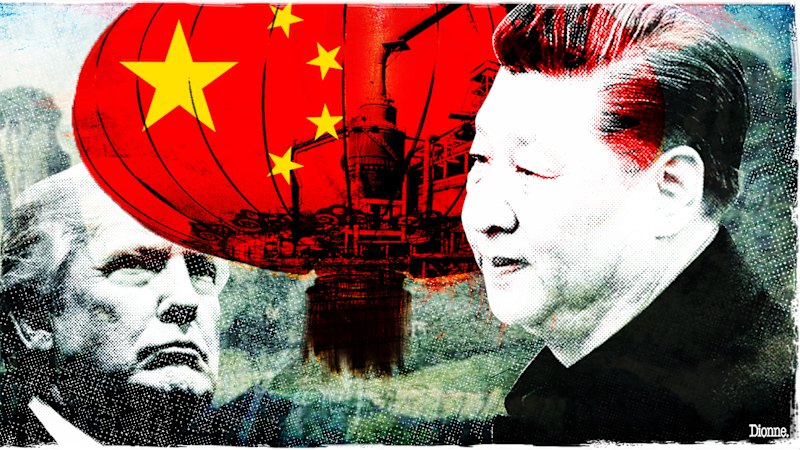
For years, the foreign policy establishment has repeated a comforting, lazy narrative: any American president who bypasses ideological bellicosity in favor of direct transactional negotiation with Beijing is guilty of grovelling. Commentators sitting safely in Western think tanks look at summit diplomacy, trade truces, and the avoidance of kinetic flare-ups, and they immediately cry appeasement.
They are wrong. Worse, they are dangerously blind to how real power operates in the twenty-first century.
The conventional consensus assumes that true strength in the Indo-Pacific means constant escalation, endless naval patrols, and a rigid refusal to talk turkey until the opponent capitulates to a liberal value system. When a leader steps off that predictable path, the chattering class panics. But what these critics mistake for weakness is actually a calculated, transactional prioritization of American leverage over moralistic posturing.
The Fallacy of the Endless Cold War
Let us define terms. Appeasement is the unrequited concession of vital interests to an aggressive power driven by ideology. Transactional realism is entirely different. It treats foreign policy as a balance sheet rather than a crusade.
Look at the mechanics of the current Sino-American relationship. Both Washington and Beijing recognize a stark economic reality: a total decoupling would drag down global markets faster than any regional dispute. When Donald Trump enters summit negotiations with Xi Jinping, he is not offering tribute. He is deploying leverage. By keeping trade channels open while maintaining targeted export controls and secondary tariffs, the White House extracts commercial concessions without writing blank checks for wars that American voters have zero appetite to fight.
The establishment pundits want a permanent state of high-alert friction because it validates their budgets and their memoirs. They ignore the structural constraints facing Beijing. China’s economic growth is heavily leveraged, its demographic cliff is arriving faster than its Communist Party planners can model, and its domestic consumption remains anemic. Beijing does not need coddling; it needs external stability to manage internal decline.
What the Pundits Miss About Regional Allies
The recurring panic across capitals from Tokyo to Canberra is that Washington will cut a "grand bargain" behind the backs of local partners, sacrificing regional security for a flashy photo-op. This view underestimates the agency of Asian middle powers entirely.
Nations like Japan, Vietnam, and the Philippines are not waiting passively for American permission to defend themselves. Japan is systematically expanding its defense capabilities and rewriting its security posture to account for regional realities. Australia is upgrading its long-range strike capabilities while explicitly maintaining strategic autonomy.
When Washington avoids accidental military escalation over localized maritime skirmishes, it gives these regional partners the breathing room to build local deterrence architectures without forcing them into a catastrophic premature trigger of a hot war. To call this dynamic "imperiling the Asia Pacific" is to confuse the absence of theater with the absence of strategy.
The Cost of Moralistic Posturing
The alternative to transactional diplomacy is not a secure Pacific; it is perpetual escalation with an unclear exit strategy. For decades, foreign policy elites pushed an interventionist dogma that bogged the United States down in endless Eurasian and Middle Eastern quagmires while China quietly built the world’s largest naval shipbuilding capacity.
Every hour spent lecturing Beijing on internal governance is an hour not spent securing rare earth mineral supply chains, protecting critical subsea infrastructure, or enforcing semiconductor restrictions. Trump’s approach strips away the diplomatic window-dressing. It focuses exclusively on what can be measured, traded, and enforced.
If you want a stable Asia-Pacific, stop praying for a moral crusade and start looking at the ledger. The real danger to the region is not a president willing to sit across the table from a rival; it is an intellectual class that would rather risk a global depression than admit that transaction beats ideology every single time.
This video provides an engaging look at popular collectibles, offering a lighthearted contrast to the high-stakes geopolitical analysis discussed above.