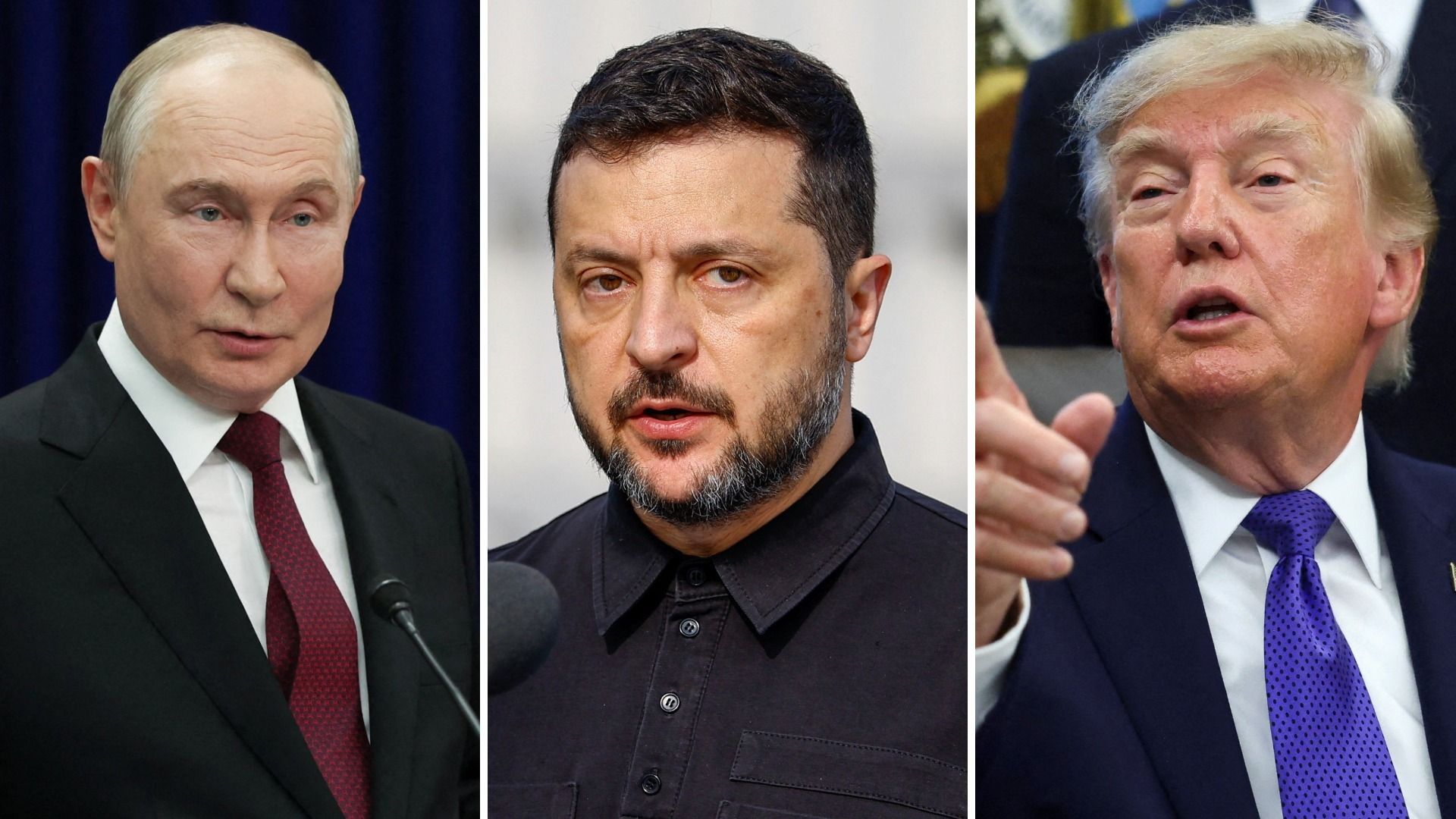
Within hours of Washington announcing a partial pause on strikes against energy infrastructure in Eastern Europe, Ukrainian President Volodymyr Zelenskyy accused Russian President Vladimir Putin of breaking the agreement with fresh attacks on Ukrainian power facilities. Moscow countered with its own allegations, claiming Ukrainian forces struck Russian energy depots while Russian troops were allegedly standing down. The rapid breakdown of the energy ceasefire exposes a fundamental disconnect between high-level diplomatic messaging and the brutal, automated realities of modern drone warfare.
Diplomats love clean, compartmentalized deals. War rarely cooperates.
When the White House and the Kremlin signaled an agreement to halt attacks on energy and infrastructure targets for thirty days, observers immediately questioned how such a narrow truce could function without a broader cessation of hostilities. In a conflict where power grids, fuel depots, and logistics hubs are deeply intertwined with military operations, drawing a neat line between civilian power and military supply chains is nearly impossible. Both sides entered the arrangement with fundamentally different definitions of what the truce actually covered, creating a diplomatic trap that snapped shut almost immediately.
The Anatomy of a Broken Truce
To understand why the energy ceasefire unraveled so quickly, you have to look at the exact language—and the glaring omissions—coming out of Washington, Moscow, and Kyiv. Following lengthy phone negotiations between U.S. President Donald Trump and Russian President Vladimir Putin, the White House readout described an agreement covering "energy and infrastructure." The Kremlin's official summary, however, was noticeably narrower, referring specifically to "energy infrastructure."
That single missing word matters enormously.
In wartime terminology, "infrastructure" encompasses bridges, railway junctions, ports, and telecommunications networks. "Energy infrastructure" narrows the scope strictly to power plants, electrical substations, oil refineries, and gas pipelines. By issuing divergent summaries of the exact same phone call, Washington and Moscow laid the groundwork for immediate disputes over compliance.
President Zelenskyy, who was not on the initial call between Trump and Putin, expressed cautious support for the concept of protecting power grids while demanding clarity on the enforcement mechanisms. Hours later, air raid sirens wailed across Ukraine. According to Ukrainian officials, waves of Russian drones and missiles struck civilian infrastructure, including a hospital in Sumy and power supply systems servicing the railway network in the Dnipropetrovsk region.
For Kyiv, the strikes were proof that Putin had rejected the truce in practice while accepting it in rhetoric. Zelenskyy stated publicly that Putin's words were completely at odds with reality, urging Washington to hold Moscow accountable and act as the primary guarantor of the agreement.
Moscow offered a radically different version of events. The Russian Defense Ministry claimed that Putin had immediately ordered the military to halt strikes on Ukrainian energy facilities, going so far as to allege that Russian air defenses had shot down seven of their own attack drones already airborne toward Ukrainian energy targets in the Mykolaiv region. Simultaneously, Russian officials accused Ukraine of launching a deliberate drone strike against an oil transshipment facility in Russia’s Krasnodar region just hours after the Trump-Putin call, framing Kyiv as the party sabotaging peace efforts.
Why Partial Ceasefires Rarely Survive Contact with Reality
History is littered with failed partial truces, and the physics of modern warfare makes them even harder to police. When two armies remain locked in active, high-intensity combat along a sprawling front line, expecting surgical restraint in the rear areas requires an extraordinary level of command discipline and mutual trust. Neither exists between Moscow and Kyiv.
The Dual-Use Dilemma
Modern militaries run on electricity and diesel. A substation that powers residential apartment blocks in Kharkiv or Odesa also powers the repair depots fixing armored vehicles and the rail lines transporting ammunition to the front. Similarly, an oil refinery in southern Russia generates fuel for civilian agriculture as well as the tanks and fighter jets operating inside Ukraine.
Under international humanitarian law, civilian power grids are protected objects. Yet in practice, both militaries view energy networks as dual-use arteries sustaining the enemy's war effort. When a commander orders a strike on a railway traction substation, Kyiv sees an attack on critical energy infrastructure; Moscow argues it is interdicting a military logistics line. Without a third-party monitoring mission on the ground to inspect impact craters and verify target coordinates, every explosion becomes a battle of competing narratives.
The Verification Vacuum
A ceasefire without a verification mechanism is merely a wish. During the Cold War and subsequent regional conflicts, arms control agreements and truces relied on exhaustive technical annexes, neutral observers, satellite data-sharing protocols, and direct military-to-military hotlines to prevent accidental escalation.
None of those structures were in place when the energy ceasefire was announced. There were no neutral inspectors stationed at Ukrainian thermal power plants or Russian oil depots. There was no agreed-upon list of protected coordinates shared between the belligerents. Instead, enforcement rested entirely on political pressure from Washington—a mechanism that operates on a timeline of days and weeks, while hypersonic missiles and long-range attack drones reach their targets in minutes.
Command Lag and Autonomous Systems
Even if a political leader issues an immediate stand-down order, translating that directive into action across a massive military apparatus takes time. Long-range strike packages are planned days in advance. Intelligence officers identify targets, flight paths are programmed into guidance computers to evade air defenses, and launch crews are positioned.
Furthermore, electronic warfare heavily saturates the skies over Ukraine and western Russia. Both sides deploy powerful signal jammers that spoof GPS coordinates and sever communication links between operators and unmanned aerial vehicles. A drone knocked off course by electronic countermeasures can easily crash into an electrical transformer miles away from its intended military target. In an environment thick with mutual suspicion, an errant drone strike is never viewed as an accident; it is immediately treated as a calculated violation of the truce.
Strategic Incentives Behind the Standoff
Beyond technical challenges, both Moscow and Kyiv face powerful strategic pressures that shape how they approach any pause in energy strikes. Understanding these incentives reveals why the energy ceasefire became a political football almost instantly.
For Russia, winter is fading, and the seasonal peak of Ukrainian heating demand has passed. Over the past several months, Russian missile and drone campaigns inflicted severe damage on Ukraine's thermal and hydroelectric generation capacity, forcing rolling blackouts and straining the Ukrainian economy. As spring arrives, the immediate humanitarian leverage Moscow gains from freezing Ukrainian cities diminishes.
At the same time, Ukraine’s long-range drone campaign against Russia’s oil and gas sector has steadily intensified. Ukrainian strikes have repeatedly hit refineries, storage depots, and pumping stations deep inside Russian territory, temporarily knocking offline significant portions of Russia’s refining capacity and driving up domestic fuel costs.
Viewed through this lens, critics of the Kremlin argue that a pause in energy strikes offers Moscow an asymmetric advantage. It shields Russia's vulnerable oil infrastructure from Ukrainian drones at a moment when Russia's own winter campaign against Ukraine's power grid has already achieved much of its seasonal disruption. Analysts aligned with Kyiv contend that Putin's willingness to discuss an energy truce was a tactical move designed to relieve pressure on Russian refineries while maintaining full freedom to pound Ukrainian cities and front-line positions with glide bombs and artillery.
Conversely, Russian commentators and officials argue that Moscow's agreement to pause energy strikes represented a genuine concession to Washington's diplomatic outreach. From the Kremlin's perspective, halting attacks on Ukrainian power plants deprives Russian forces of a major tool for degrading Ukraine's defense industrial base, which relies heavily on electricity to manufacture drones, repair hardware, and maintain communications. By accusing Ukraine of striking a Russian oil depot immediately after the Trump-Putin call, Moscow sought to portray Kyiv to the White House as an uncooperative partner actively obstructing Trump's peace initiative.
For President Zelenskyy, the stakes are existential. Ukraine's primary strategic objective is ensuring that Washington does not strike a bilateral deal with Moscow over Kyiv's head. By rapidly documenting Russian strikes on Ukrainian power and medical facilities, Zelenskyy aimed to demonstrate to American policymakers and the global public that Putin cannot be trusted to honor even the most basic humanitarian commitments. For Kyiv, exposing violations immediately is essential to maintaining Western military aid and preventing diplomatic concessions that could lock in Russian territorial gains.
The Limits of Transactional Diplomacy
The turbulent rollout of the energy ceasefire highlights the friction between transactional diplomacy and deeply rooted geopolitical conflicts. The White House approached the negotiations with the belief that securing a quick, visible confidence-building measure—protecting power plants and infrastructure—could build momentum toward a comprehensive, thirty-day general ceasefire and eventual peace talks.
In business negotiations, parties often start by agreeing on small, low-risk deliverables to establish goodwill before tackling contentious core issues. In existential wars, however, belligerents rarely grant goodwill, because any pause in fighting alters the balance of power on the battlefield.
When the United States acts as the sole mediator without concrete enforcement leverage on the ground, both sides inevitably lobby Washington rather than negotiating with each other. Every strike becomes evidence submitted to the court of American public opinion and the Oval Office. Instead of de-escalating the violence, the partial truce created a new arena for information warfare, with Moscow and Kyiv racing to blame the other for breaking a deal whose exact terms were never publicly ratified.
What Would Make an Infrastructure Truce Actually Work
If diplomats want a future pause on energy strikes to hold for more than a few hours, political statements will not suffice. Drawing on past conflict-resolution frameworks, security analysts point to several non-negotiable requirements that were conspicuously absent from the initial rollout:
- A Unified, Written Text: Both warring parties must sign off on the exact same written document defining what constitutes a protected facility. Ambiguous terms like "infrastructure" must be replaced with explicit categories—such as high-voltage transmission substations, thermal power plants, nuclear power plant switchyards, and civilian heating networks.
- Mutual No-Strike Lists: Similar to deconfliction mechanisms used in Syria and other complex theaters, both militaries would need to submit precise geographic coordinates of critical civilian energy facilities through a trusted intermediary, establishing clear exclusion zones around those sites.
- Independent Technical Monitoring: A neutral third party—whether a specialized United Nations agency, the International Atomic Energy Agency (which already maintains monitors at Ukrainian nuclear plants), or a coalition of non-aligned states—must have the mandate and satellite access to verify alleged strikes and determine whether damage resulted from direct targeting or air-defense debris.
- Pre-Determined Consequences: A truce without teeth invites testing. The mediating power must establish clear, automatic diplomatic or material penalties for verified violations before the ceasefire takes effect, removing the temptation for either side to probe the boundaries of the agreement.
Without these structural guardrails, any narrow truce remains vulnerable to the first drone launched in the dark. Until the underlying political and territorial disputes driving the war are directly addressed, power plants and oil depots will remain prime targets in a conflict where electricity and fuel are indistinguishable from ammunition.


