The polite consensus is currently scrambling to find a "silver lining" in Donald Trump’s recent rhetorical grenades. Commentators are whispering that perhaps his insults are a backhanded compliment or a wake-up call for Indian infrastructure. They are wrong. They are looking for emotional validation in a geopolitical ledger where only capital and leverage matter.
Stop looking for the "favor." Start looking at the arbitrage.
When a Western leader calls an emerging market a "hellhole," they aren't offering a critique; they are inadvertently signaling a massive valuation gap. If you’ve spent any time in private equity or managed cross-border supply chains, you know that the "hellhole" phase is exactly when the real money moves. By the time a country is called a "shining beacon of democracy" by a U.S. President, the returns have already been priced out.
The Myth of the Diplomatic Stimulus
The prevailing narrative suggests that India should use this friction to "prove him wrong." This is a loser's bracket mindset. National pride is a terrible investment strategy.
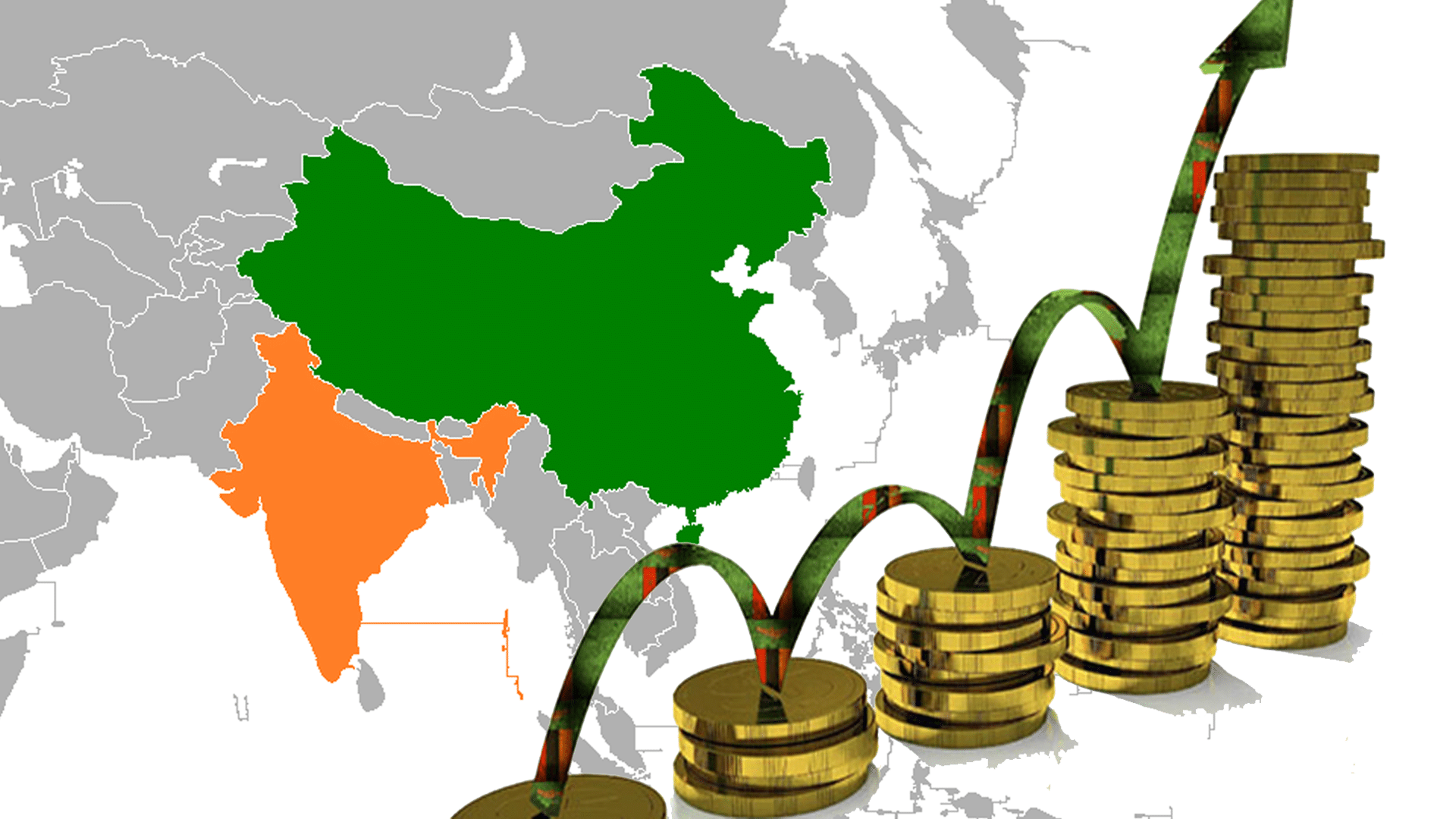
The "lazy consensus" argues that bad press hurts Foreign Direct Investment (FDI). I have sat in boardrooms where precisely the opposite happens. Sophisticated capital doesn't read headlines for sentiment; it reads them for entry points. Trump’s rhetoric creates a "noise discount." It scares off the timid, retail-level investors and leaves the field open for institutional players who understand that India’s GDP growth isn't tied to American approval ratings.
India’s growth is driven by internal consumption, a massive digital stack (UPI), and a demographic dividend that doesn't care about a rally speech in the Midwest.
The Tariff Trap: Why Protectionism is a Paper Tiger
Critics are obsessed with the threat of reciprocal tariffs. They claim India’s protectionist stance on Harley-Davidsons or American tech will lead to a trade war that cripples the subcontinent.
This ignores the fundamental shift in global manufacturing. The "China Plus One" strategy isn't a suggestion; it’s a survival mechanism for Apple, Samsung, and Foxconn. You can tweet about "hellholes" all day, but you cannot move a three-trillion-dollar supply chain back to Ohio overnight.
India holds the leverage because it holds the labor and the scale. If the U.S. imposes a 20% tariff, the cost is passed to the American consumer or the corporate margin. India isn't the one sweating in this scenario. The real risk isn't a trade war; it's India becoming too complacent by trying to play "nice" with a Western hegemony that is increasingly inward-looking.
Infrastructure is a Feature, Not a Bug
The "hellhole" comment usually targets Indian infrastructure—the grit, the heat, the chaos of the urban centers.
Western analysts see a lack of paved roads and see failure. A contrarian sees "The Green Field." When you have legacy infrastructure like the U.S. or Europe, you are stuck with 100-year-old rail lines and crumbling bridges that cost billions to repair. When you have nothing, you leapfrog.
India didn't build a massive landline telephone network; it went straight to 4G and 5G. It didn't build a legacy banking system; it built the Unified Payments Interface (UPI).
The Leapfrog Table: Legacy vs. Innovation
| Sector | Western Legacy Status | Indian Leapfrog Reality |
|---|---|---|
| Banking | Slow SWIFT transfers, high fees | Instant UPI mobile payments |
| Connectivity | Copper wire/Old Fiber | Massive 5G rollout / Satellite |
| Energy | Decaying Coal/Nuclear | Massive Solar/Green Hydrogen focus |
| Identity | Physical Passports/SSN | Aadhaar Digital Biometrics |
If this is a "hellhole," it’s one that’s currently running circles around the bureaucratic sludge of the DMV or the London Underground.
The Talent Arbitrage Nobody Discusses
The most tired argument is that derogatory comments from the U.S. will trigger a "brain drain" or alienate the Indian diaspora.
Actually, the "Reverse Brain Drain" is the real story. Ten years ago, the best Indian engineers stayed in Silicon Valley because the "Landscape" (oops, the environment) back home was stagnant. Today, the "hellhole" is where the action is.
I’ve seen founders leave $500k-a-year jobs at Google in Mountain View to start fintech companies in Bengaluru. Why? Because you can’t build a billion-user product in a saturated, over-regulated Western market. You build it where the friction is. Chaos is a catalyst for innovation. Peace is where startups go to die and become "lifestyle businesses."
Stop Asking if Trump is Right
People also ask: "Is India's infrastructure really that bad?"
The answer is: "Who cares?"
If you wait for India to look like Zurich before you invest, you’ve already lost. The profit is in the transition from "hellhole" to "global powerhouse." The friction that Trump points out is exactly what creates the necessity for local solutions that eventually become global exports.
India shouldn't be looking for a "favor" from the White House. It should be thanking its lucky stars that Western leaders still perceive it through a 1990s lens. That perception keeps the competition lazy and the valuations manageable.
The Professionalism of Being Disliked
There is a distinct advantage to being the "outsider" or the "difficult partner" in global trade. When Japan was the economic bogeyman in the 1980s, American politicians smashed Toshiba boomboxes on the steps of the Capitol. Japan didn't respond with "Opinion: Why this is a favor to us." They responded by buying Rockefeller Center and dominating the auto industry.
India is currently entering its "smash the boombox" phase in the American psyche. This is the ultimate validation. You don't insult a country that doesn't matter. You insult the one that is eating your lunch.
The Dirty Truth About FDI
Let’s talk about the downside. My contrarian view isn't without risk. The "noise discount" only works if the internal reforms keep pace. If India uses Western insults as an excuse to retreat into its own brand of toxic protectionism, the "hellhole" label becomes a self-fulfilling prophecy.
But as it stands, the data shows India’s manufacturing PMI (Purchasing Managers' Index) consistently outperforming global peers.
$$PMI > 50 = Expansion$$
India hasn't just been above 50; it has been screaming past its competitors while the West argues about whether or not to be offended by a tweet.
The Actionable Reality
If you are a CEO or an investor, ignore the diplomatic spat.
- Double down on the "Noise": When headlines are negative, check the fundamental volume of transactions. Are people still buying? Yes.
- Bet on the Leapfrog: Don't invest in companies trying to fix old problems; invest in companies making the old problems irrelevant.
- Weaponize the Criticism: Use the "hellhole" narrative to negotiate better terms, then execute on a 21st-century reality.
The world’s most successful entities are rarely "liked." They are necessary. India is becoming necessary. Whether a former or future President likes the scenery is entirely irrelevant to the bottom line.
If you want a friend, buy a dog. If you want a 7% GDP growth rate, buy India.
Stop looking for the favor. Start building the fortress.