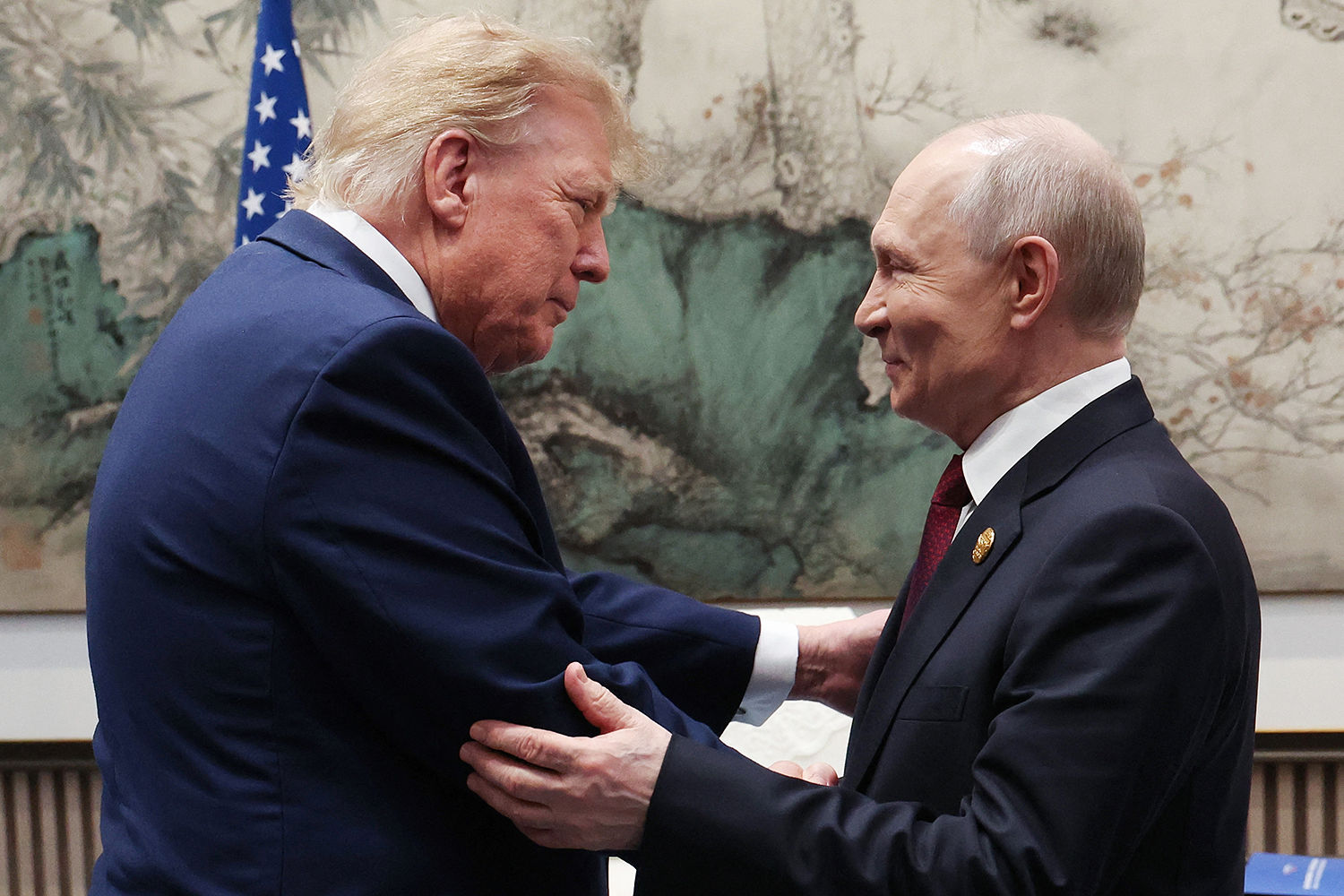
When Donald Trump referred to Russian President Vladimir Putin as "my friend" during a press exchange at the Asia-Pacific Economic Cooperation (APEC) summit, the reaction across Washington and allied capitals was immediate and severe. Critics from both major political parties, alongside European diplomats and national security veterans, argued that casual warmth toward a leader currently prosecuting a brutal war in Ukraine undermines decades of American deterrence. Defenders of Trump, however, countered that personalized rapport is a deliberate, high-stakes negotiating tactic designed to break diplomatic deadlocks where traditional statecraft has failed.
The phrase itself took less than two seconds to utter. Yet those two words collided directly with the foundational architecture of post-World War II American foreign policy.
The Anatomy of a Two-Word Diplomatic Shockwave
In international diplomacy, language is never merely decorative. Every adjective used by a U.S. president regarding a foreign adversary is parsed by intelligence agencies, financial markets, and defense ministries around the globe. When a sitting or former American leader describes the head of a rival nuclear state as a personal friend, it signals a departure from institutional consensus.
At the APEC summit, a forum historically focused on Pacific Rim trade, economic integration, and regional stability, Russia's presence is already a point of acute friction. Since Moscow's full-scale invasion of Ukraine in February 2022, Western delegations at multilateral gatherings have routinely staged walkouts, blocked joint communiqués, and worked to isolate Russian officials diplomatically. Against that backdrop, Trump's characterization of Putin struck critics as an abrupt dismantling of a carefully maintained diplomatic quarantine.
Democratic lawmakers were quick to condemn the remark. Several members of the Senate Foreign Relations Committee stated publicly that praising an authoritarian leader indicted by the International Criminal Court for alleged war crimes sends a dangerous signal to U.S. allies in both Europe and the Indo-Pacific. Their concern centers on alliance cohesion. If partners in NATO or East Asia begin to doubt Washington's commitment to collective security, they may hedge their bets, seek accommodations with Moscow or Beijing, or pursue independent nuclear capabilities.
Even within Republican foreign policy circles, the reaction exposed a widening ideological fault line. Traditional defense hawks—long aligned with the Reagan-era doctrine of peace through strength—expressed unease behind closed doors and in carefully worded press statements. For this faction, Russia remains an acute threat to European stability and American interests. Meanwhile, the populist, America First wing of the party viewed the backlash itself as proof of an out-of-touch foreign policy establishment obsessed with diplomatic etiquette over tangible outcomes.
Why Personal Diplomacy Appeals to Trump
To understand why Trump repeatedly uses terms of personal affection for strongmen—ranging from Putin to Chinese President Xi Jinping and North Korean leader Kim Jong Un—one has to look at how he views power. Traditional diplomats treat foreign policy as a clash of enduring national interests, institutional treaties, and ideological systems. Trump treats it almost exclusively as a series of bilateral transactions between individual alpha leaders.
In Trump's worldview, nations do not negotiate; people do.
From his decades in New York real estate and corporate branding, Trump developed a belief that flattering a counterpart's ego creates leverage. By publicly calling Putin a friend, he lowers the rhetorical temperature and invites the Russian leader into a personal dynamic where compromise can be framed as a favor between equals rather than a capitulation to American pressure. Supporters point out that during his first term, despite warm rhetoric toward Putin, his administration imposed sweeping sanctions on Russian oligarchs, expelled dozens of Russian intelligence officers, armed Ukraine with Javelin anti-tank missiles, and aggressively opposed the Nord Stream 2 gas pipeline.
In this reading, the warm words are a smokescreen—a way to keep communication channels open while maintaining hard power underneath. Proponents argue that freezing out Moscow entirely leaves the world with zero off-ramps from a grinding war of attrition that risks escalating into a direct NATO-Russia confrontation.
The Strategic Cost of Flattery in Moscow
Intelligence analysts and veteran Kremlin watchers see a critical flaw in applying boardroom psychology to Vladimir Putin. Putin is not a transactional businessman looking for a mutually profitable deal; he is a former KGB officer whose political survival and historical legacy are tied to rolling back Western influence in Eurasia.
In Russian political culture, public displays of friendliness from an American leader are rarely reciprocated with substantive concessions. Instead, Kremlin state media routinely broadcasts such clips domestically to demonstrate that Western sanctions have failed and that the United States still treats Russia as an indispensable superpower. When Trump calls Putin his friend, Russian propagandists present it to domestic audiences as validation of Moscow's resilience.
Furthermore, seasoned negotiators warn that offering public praise upfront surrenders psychological ground before talks even begin. In classic diplomatic bargaining, normalization and warm rhetoric are rewards granted after a rival modifies its behavior—such as withdrawing troops, releasing political prisoners, or halting cyberattacks. Granting the aura of friendship unconditionally removes an incentive for the Kremlin to change course.
The APEC Context and the Indo-Pacific Equation
The setting of the APEC summit added another layer of complexity to the controversy. While Ukraine sits thousands of miles away in Eastern Europe, leaders in Tokyo, Seoul, Taipei, and Manila watch Washington's posture toward Russia with intense scrutiny.
The strategic connection between Europe and the Indo-Pacific has become a central theme for modern defense planners. Chinese leadership closely observes how the United States and its allies respond to Russian territorial aggression. If Washington appears eager to normalize relations with Moscow without securing meaningful concessions, policymakers in Beijing may calculate that the West lacks the stamina to sustain long-term economic and military pressure in the event of a crisis in the Taiwan Strait or the South China Sea.
At APEC, where American diplomats spend months negotiating trade standards, supply chain resilience, and clean energy frameworks to counter Beijing's economic footprint, a single off-script remark can dominate the news cycle and overshadow substantive policy work. Regional diplomats noted privately that headlines about Trump and Putin displaced coverage of economic initiatives meant to reassure Pacific nations of sustained American engagement.
Historical Precedents for Presidential Warmth Toward Adversaries
Trump is hardly the first U.S. president to spark outrage by projecting personal warmth toward a Kremlin leader. History offers several instructive comparisons, though each unfolded under vastly different geopolitical conditions.
In June 2001, President George W. Bush met Putin for the first time in Slovenia and famously remarked that he had looked the Russian leader in the eye, found him to be "very straightforward and trustworthy," and managed to "get a sense of his soul." At the time, Bush hoped to build a post-Cold War partnership with Moscow, particularly on counterterrorism and missile defense. Within a few years, however, Russia's invasion of Georgia in 2008 and growing authoritarianism at home led Washington to abandon that optimism.
In 2009, the Obama administration launched its much-publicized "reset" with Russia, symbolized by Secretary of State Hillary Clinton presenting Russian Foreign Minister Sergey Lavrov with a plastic red button. That effort yielded the New START nuclear arms reduction treaty, yet it collapsed entirely following Russia's 2014 annexation of Crimea and military intervention in eastern Ukraine.
What distinguishes Trump's approach from those earlier episodes is the absence of a broader institutional strategy backing up the rhetoric. Bush and Obama operated within traditional interagency frameworks, pairing diplomatic outreach with clear multilateral benchmarks. Trump's personalized style bypasses the State Department and National Security Council entirely, leaving allies and adversaries alike uncertain whether his words reflect a coordinated policy shift or an impulsive moment before the cameras.
The Domestic Political Fallout
Within the United States, the backlash quickly became a proxy battle over the future direction of American foreign policy. Voters across the political spectrum are exhausted by two decades of costly foreign interventions, creating fertile ground for leaders who promise to end overseas conflicts quickly and avoid new entanglements.
Trump's defenders capitalize on this sentiment, arguing that critics in Washington are addicted to endless confrontation and lack a realistic plan to end the war in Ukraine. By framing himself as the only leader capable of picking up the phone and speaking directly to Putin, Trump appeals to voters who prioritize swift deal-making over ideological purity.
Conversely, his critics argue that abandoning democratic allies and legitimizing authoritarian aggression will ultimately make the world more dangerous—and more expensive—for Americans. They contend that unchecked aggression in Europe invites further instability, disrupts global energy and food markets, and increases the likelihood that U.S. troops will eventually be drawn into a larger conflict.
This divide is no longer a neat partisan split between Democrats and Republicans. It cuts across think tanks, editorial boards, and congressional caucuses, pitting internationalists against nationalists in a struggle that will define U.S. statecraft for years.
What Diplomatic Signals Actually Accomplish
Strip away the cable news outrage and partisan point-scoring, and the core question remains practical: what does calling Putin a friend actually achieve on the ground?
In high-level diplomacy, ambiguity can occasionally serve a purpose. Keeping an adversary guessing about your next move can deter reckless escalation. Yet strategic ambiguity only works when backed by credible, predictable commitments to allies. When friends are as confused as adversaries, deterrence erodes.
Real diplomatic breakthroughs between Washington and Moscow—from the Cuban Missile Crisis resolution to the Intermediate-Range Nuclear Forces Treaty—rarely hinged on public expressions of friendship. They succeeded because tough, unglamorous backchannel negotiations aligned concrete incentives with verifiable enforcement mechanisms. Reagan and Mikhail Gorbachev developed a genuine working rapport in the late 1980s, but it was built on years of rigorous arms-control talks and clear American military resolve, not casual praise at a press conference.
Calling an adversary a friend at an international summit generates immediate headlines and dominates political debate, yet it leaves the hardest work of statecraft untouched. Until rhetorical warmth is paired with verifiable concessions on the battlefield and at the negotiating table, those two words will remain a source of friction rather than a foundation for peace.


