Foreign policy gets messy when an ally says no. President Donald Trump recently ordered the Pentagon to scale back joint military exercises with South Korea, throwing a curveball into regional security dynamics. The trigger? A direct refusal from Seoul to assist with American military operations targeting Iran.
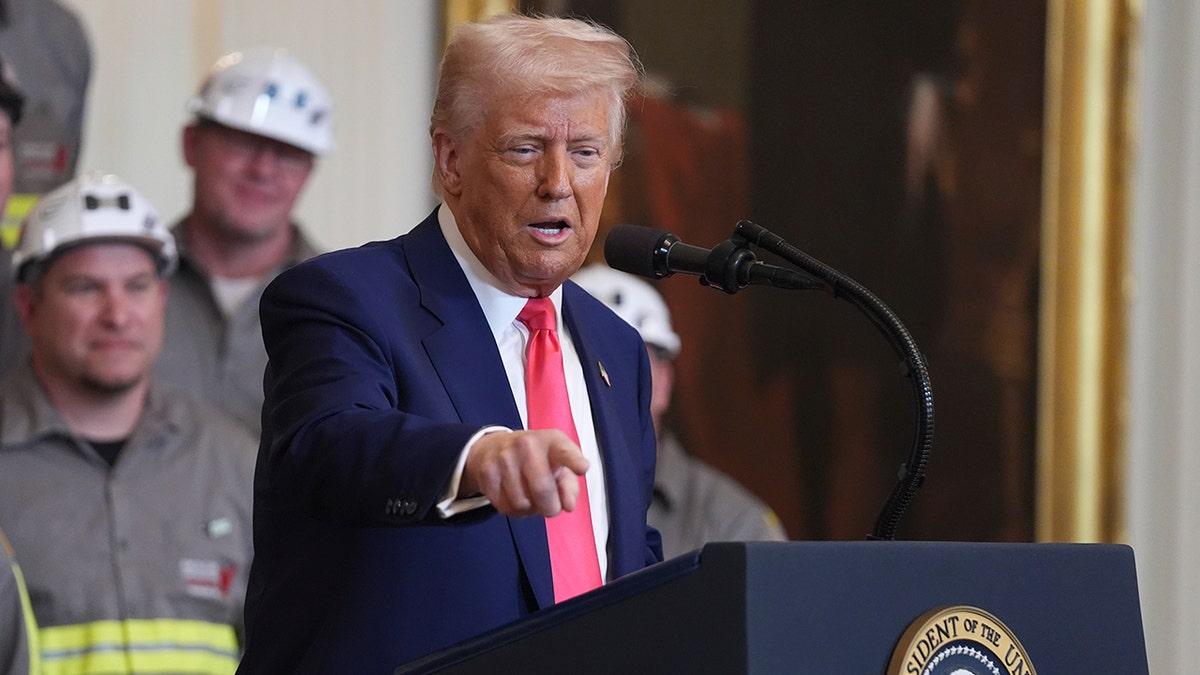
Trump didn't hide his frustration. Speaking from the White House, he pointed out the glaring imbalance in the alliance. He noted that Washington keeps thousands of troops stationed on the peninsula to deter North Korea, yet South Korean leadership politely declined to lend a hand in the Middle East. That friction instantly reshaped the annual Ulchi Freedom Shield drills.
The Real Trigger Behind the Drill Reductions
Most headline writers focused purely on Trump's warm remarks about Kim Jong Un. Granted, Trump cited his personal rapport with the North Korean leader as a reason to avoid provocative displays. He posted on social media that regular exercises send a hostile signal to a neighbor that has stayed relatively quiet during his presidency.
However, the financial and transactional grievance runs much deeper. Trump called out Seoul's response to a straightforward request.
"I said, 'Would you like to give us a little hand? We don't need help with Iran, but if you'd like, give us a hand with Iran.' He said, 'No thanks,'" Trump told reporters.
That polite rejection set off alarm bells in the Oval Office. The administration has long held the stance that security guarantees go both ways. If American taxpayers fund the defense of foreign borders, Washington expects reciprocity when global conflicts arise.
Crunching the Numbers on Peninsula Defense
People often throw around troop statistics without context. The U.S. military presence in South Korea serves as a permanent tripwire against Pyongyang's nuclear ambitions. Trump explicitly framed the issue around this heavy lifting, stating, "We have 39,000 soldiers over there guarding you from Kim Jong Un, your next-door neighbor, and you're not going to help us on a very easy military operation in Iran".
While traditional defense estimates usually place U.S. forces stationed in South Korea closer to 28,500, the broader point remains tied to massive logistical expenditures, base maintenance, and air defense commitments. Trump has repeatedly reminded voters that allies must pull their financial weight. During his first term, he successfully pressured Seoul into covering roughly $3 billion annually for stationing costs, a bargain that lapsed and remains a recurring point of contention.
How Seoul is Responding
South Korean officials find themselves in an impossible diplomatic box. On one side, they face an unpredictable North Korea that routinely labels joint exercises as invasion rehearsals. On the other side, they must manage a shifting U.S. commander-in-chief who views bilateral defense through a strict ledger of favors and financial output.
Seoul's presidential office made it clear they are keeping channels open, hoping to maintain close coordination with Washington while avoiding foreign entanglements in the Middle East that could threaten their own economic stability and energy imports. South Korea relies heavily on imported oil moving through contested maritime chokepoints, making direct military intervention in the Persian Gulf a domestic political hazard.
What Happens Next in East Asia
Defense analysts are already warning that cutting back on readiness training could degrade combat effectiveness. The Ulchi Freedom Shield exercises involve thousands of troops and simulate complex modern warfare, including drone swarms, cyber attacks, and GPS jamming. Trimming these drills leaves fewer opportunities to test integrated command structures.
At the same time, Trump claims his backchannel communications with Pyongyang are yielding positive signals. Whether those talks turn into concrete denuclearization steps or just buy North Korea more time to expand its nuclear arsenal is anyone's guess. For now, the alliance is paying the price for a geopolitical disagreement half a world away.