Donald Trump just floated an idea that made foreign policy analysts spill their morning coffee. He suggested meeting North Korean leader Kim Jong Un in China—and explicitly noted that President Xi Jinping could play a role in making it happen.
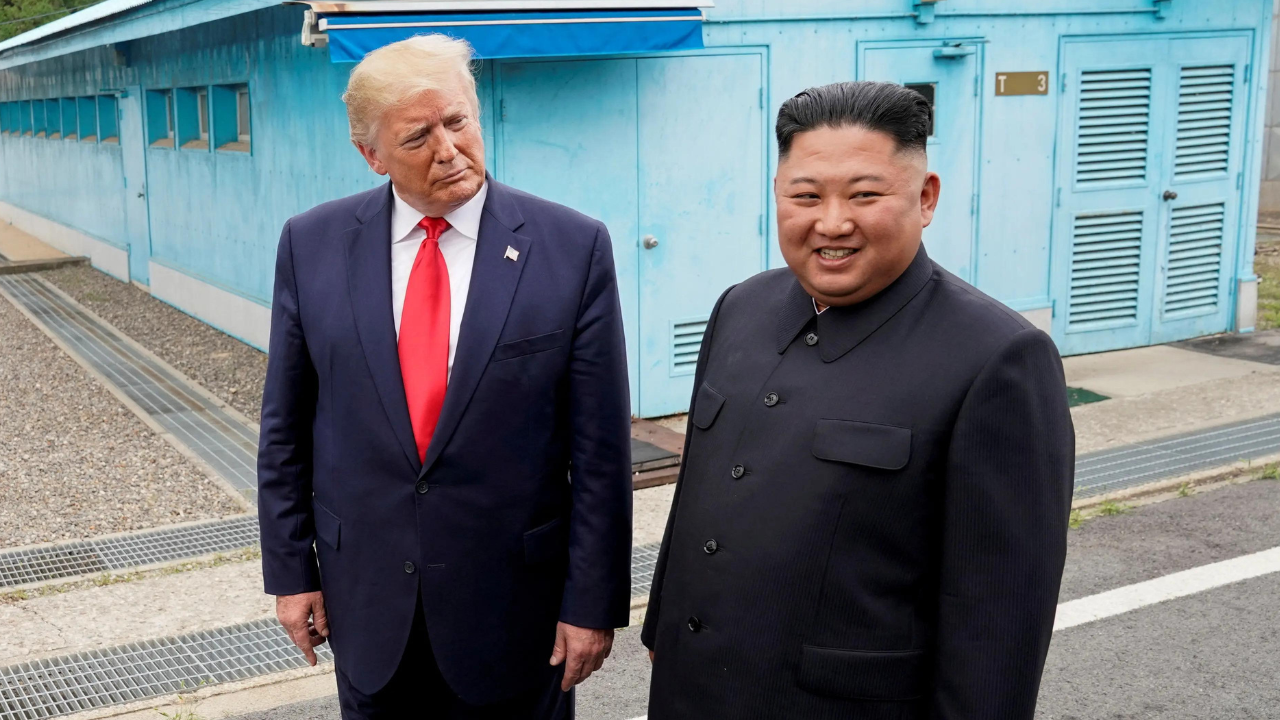
Sounds wild? Sure. Yet anyone who tracked the 2018 Singapore summit or the 2019 Panmunjom handshake knows Trump thrives on high-stakes, unconventional diplomacy. When Trump hints at meeting Kim Jong Un in China, he isn't just throwing red meat to cable news panels. He's signaling a massive shift in how Washington, Beijing, and Pyongyang might negotiate nuclear deterrence, trade tariffs, and regional security.
Let's break down what's actually happening behind the rhetoric, why China's involvement changes the math completely, and what you need to watch next if this trilateral summit moves from off-the-cuff remark to diplomatic reality.
What Trump Actually Said About Meeting Kim Jong Un in China
During recent remarks addressing Indo-Pacific security and U.S.-China trade friction, Trump brushed past traditional diplomatic channels. He referenced his past personal rapport with Kim Jong Un, argued that the Korean Peninsula was far safer when the two were talking, and casually dropped the possibility of sitting down with Kim on Chinese soil.
Then came the real kicker. Trump suggested Xi Jinping could help facilitate that meeting.
Most headlines treated this as another unpredictable Trump soundbite. That's a mistake. Look at the mechanics of what he's proposing. In his first term, Trump bypassed Beijing almost entirely during the initial Singapore and Hanoi summits, treating Kim as a direct bilateral counterpart. China hated being sidelined in its own backyard. By inviting Xi into the frame now, Trump is acknowledging a hard geopolitical truth: nothing moves on the Korean Peninsula without Beijing's quiet approval or active participation.
Why Beijing Is the Missing Piece in North Korea Diplomacy
You can't talk seriously about Pyongyang without talking about Beijing. China accounts for roughly 90 percent of North Korea's documented external trade, supplying everything from crude oil and grain to basic industrial machinery. Without Chinese economic life support, the Kim regime's economy wouldn't survive six months.
I've watched diplomatic teams spend years drafting sanctions packages at the United Nations, only to see them rendered toothless because border enforcement along the Yalu River quietly loosened. Washington holds the stick of military pressure and financial blacklists, yet Beijing holds the actual keys to Kim's survival.
If Xi Jinping agrees to host or broker a meeting between Trump and Kim, China gets massive diplomatic wins before anyone even signs a piece of paper.
- Instant leverage over Washington. Xi can trade cooperation on North Korea for tariff relief, eased semiconductor export controls, or softer U.S. posture on Taiwan.
- Reinforced regional dominance. Hosting the American president and the North Korean leader in Beijing cements China as the indispensable power broker of East Asia.
- Stability on its border. Beijing's worst nightmare isn't a nuclear North Korea—it's a collapsed North Korea sending millions of refugees across the border and putting U.S.-allied troops right next to Chinese territory.
For Xi, facilitating a Trump-Kim meeting in China solves multiple headaches at once. It keeps Kim from escalating missile tests that justify more American missile defense systems in South Korea and Japan. At the same time, it puts Trump in a position where he owes Beijing a diplomatic favor.
How Kim Jong Un Sees This Potential Summit
Don't mistake Kim Jong Un for a passive bystander waiting for Washington and Beijing to decide his fate. Since the collapse of the 2019 Hanoi summit, Kim has spent years systematically changing his strategic position.
He isn't the isolated leader who boarded an armored train to Vietnam hoping for partial sanctions relief anymore. Today, North Korea has expanded its ballistic missile arsenal, tested solid-fuel intercontinental ballistic missiles capable of reaching the U.S. mainland, and forged a deep military supply partnership with Russia. By shipping artillery shells and ballistic missiles to Moscow for the war in Ukraine, Kim secured Russian fuel, food, and potential aerospace technology—reducing his total dependence on China.
That gives Kim tremendous confidence. If he walks into a room in Beijing with Trump and Xi, he won't be negotiating denuclearization. That ship sailed years ago.
Instead, Kim wants arms control and de facto nuclear recognition. He wants Washington to accept North Korea as a permanent nuclear-armed state, freeze joint U.S.-South Korea military exercises, and lift crippling economic sanctions in exchange for a cap on new warhead production or long-range missile tests.
Honestly, Kim knows Trump loves a historic photo op. He also knows Trump views alliances like the U.S.-South Korea defense treaty through a transactional lens, frequently complaining about the cost of keeping 28,500 American troops stationed on the peninsula. Kim will try to exploit that exact friction.
The History Between Trump, Kim, and Xi You Need to Remember
To understand where this could go, look back at 2018 and 2019. Before Kim ever met Trump in Singapore, he made a secret trip to Beijing in March 2018 to meet Xi Jinping—his first foreign trip since taking power in 2011. Kim went to Beijing specifically to coordinate strategy and secure Chinese backing before facing the American president.
He repeated that pattern before and after every major interaction with Trump. Every time Trump and Kim met, Xi's shadow was already in the room.
What changed between 2019 and 2026? Almost everything.
First, U.S.-China relations have hardened into structural rivalry. Back in 2018, Washington and Beijing were still negotiating Phase One trade deals and debating whether cooperation was possible. Now, both parties in Washington view China as America's primary strategic competitor. A Trump-Kim summit hosted by Xi would play out against fierce bipartisan skepticism in Congress.
Second, North Korea's nuclear doctrine has shifted from deterrence to warfighting. Pyongyang passed laws authorizing preemptive nuclear strikes if its leadership feels threatened. When a country codifies first-use nuclear doctrine into law, walking it back through personal chemistry becomes exponentially harder.
Third, South Korea and Japan are watching with quiet alarm. Officials in Seoul and Tokyo remember how Trump abruptly announced the suspension of joint military drills after Singapore without consulting them first. If Trump cuts a deal in China that freezes North Korean ICBM tests (which threaten the U.S. homeland) while leaving short- and medium-range missiles untouched (which threaten Seoul and Tokyo), America's Asian alliances could fracture overnight.
What Most Commentators Get Wrong About Personal Diplomacy
Whenever Trump brings up Kim Jong Un, pundits split into two predictable camps. One side claims Trump is legitimizing a brutal dictator for nothing in return. The other side insists only a leader willing to break diplomatic norms can prevent war on the Korean Peninsula.
Both sides miss the practical reality of how authoritarian regimes operate.
In North Korea, power is centralized to an absolute degree. Mid-level diplomats at the State Department can spend five years negotiating with North Korean envoys in Geneva or Stockholm and accomplish zero progress because those envoys have zero authority to compromise. When you deal with Pyongyang, only the top leader can make a binding concession.
That's why Trump's top-down approach rattled North Korea's bureaucracy in 2018. For the first time, Kim had to make real-time decisions without hiding behind layers of diplomatic stalling.
Yet personal chemistry has a hard ceiling. You can build rapport over dinner, exchange flattering letters, and stage dramatic border crossings. None of that changes the underlying math of regime survival. Kim believes giving up his nuclear weapons means ending up like Muammar Gaddafi in Libya—overthrown and killed once his deterrent was gone. No amount of charm from Trump or pressure from Xi will convince Kim to sign away his ultimate insurance policy.
Could a Beijing Summit Actually Happen?
Right now, this is a trial balloon. Trump excels at floating bold scenarios in public to test reactions from allies, adversaries, and domestic voters before committing a single diplomat to preparatory talks.
For a Trump-Kim meeting in China to move from rhetoric to reality, three concrete steps have to happen behind closed doors:
- Backchannel signaling between Washington and Beijing. Senior envoys would need to establish whether Xi Jinping is willing to spend political capital pressuring Kim to freeze nuclear testing, and what price Beijing expects in return on trade or Taiwan.
- A halt to major provocations. Pyongyang would have to pause long-range missile launches and any planned seventh nuclear test to create a diplomatic window.
- Working-level agenda setting. Even Trump won't walk into a third summit after Hanoi's collapse without assurances that some tangible deliverable—like a freeze on plutonium and uranium enrichment at Yongbyon—is ready to sign.
Don't expect an announcement next week. Diplomacy with Pyongyang moves in sudden bursts separated by months of silence and missile launches.
If you want to know whether this hint is turning into real policy, stop listening to press conference soundbites and watch three specific indicators over the coming months: unannounced flights between Pyongyang and Beijing, sudden pauses in U.S.-South Korea military exercises, and quiet softening in White House rhetoric toward Chinese trade tariffs. When those three signals align, pack your bags—the diplomatic circus is heading back to East Asia.