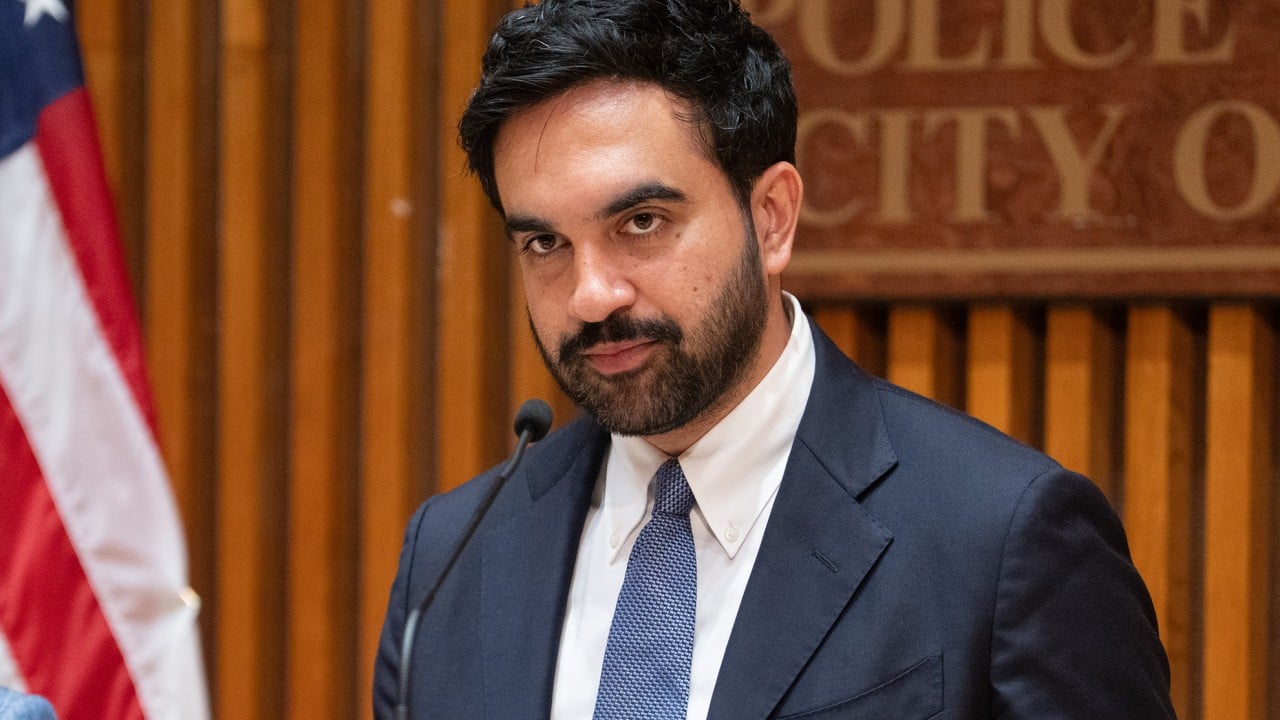
Every political commentator in America is currently losing their collective mind over a single, highly orchestrated piece of theater. The rumor mill and the front-page dispatches are hyperventilating about a planned summit between Donald Trump and New York State Assemblyman Zohran Mamdani during the United Nations General Assembly week. The mainstream consensus reads like a collective fainting spell in a Victorian parlor: How can the billionaire populist titan of the right possibly sit in the same room as a democratic socialist champion of the left? What does this mean for the ideological purity of the parties? Is the universe collapsing in on itself?
It is a masterpiece of manufactured bewilderment.
The entire premise of the shock is built on a fundamental misunderstanding of how power, attention, and modern political survival actually operate. The pundits want you to believe that politics is a pristine theological battlefield where left and right are locked in mortal, unyielding combat across a rigid civilizational fault line. They treat ideology like a blood type—mix the wrong ones together and the patient dies.
That view is utterly detached from reality. I have spent years watching consultants, strategists, and self-appointed political gurus hyperventilate over superficial anomalies while ignoring the structural plumbing of the system. The truth that nobody in the chattering classes wants to admit is simple: Trump and Mamdani are not ideological opposites locked in a cosmic clash; they are two sides of the exact same populist coin. They both operate on a shared operating system that treats traditional party gatekeepers as public enemies number one.
To understand why this meeting is happening—and why it terrifies the establishment far more than it confuses them—we have to dismantle the lazy consensus piece by piece.
The Myth of the Great Ideological Divide
The lazy consensus rests on the comforting fiction that American politics is governed by coherent ideological blocs. In this fairy tale, voters wake up every morning, consult a rigorous manifesto of left-wing or right-wing principles, and cast their ballots based on pristine policy consistency.
Look closer at the machinery and that fairy tale turns to dust.
Donald Trump rose to power by shattering the desiccated husk of the Reaganite conservative coalition. He rejected free trade, open borders, foreign interventionism, and corporate orthodoxy. He spoke directly to the working-class despair of the Rust Belt, offering a protectionist, nationalist alternative that horrified the traditional Republican establishment.
Zohran Mamdani operates in a parallel universe on the left, but his structural critique shares a strange, mirror-image DNA. He targets the neoliberal consensus of the Democratic Party—the corporate technocrats who spent decades hollowing out urban infrastructure, coddling real estate developers, and treating working-class communities as collateral damage for GDP growth.
When you strip away the culture-war aesthetics, the red ties versus the democratic socialist banners, you find a shared enemy: the institutional middleman. Both figures derive their political oxygen from the precise same pool of populist exhaustion. The average voter does not care about the theological fine points of marginal tax rates versus tariffs; they care that the system feels rigged, the elites are contemptuous, and the institutions are rotting from the inside out.
When the media gasps at the prospect of these two men interacting, they are revealing their own obsolescence. They still believe in the flat earth of the left-right spectrum. Trump and Mamdani inhabit a spherical reality where the extremes of populist disruption curve back around and touch each other, leaving the moderate center stranded and irrelevant.
The Currency of Disruption and the Attention Economy
Let us talk about the mechanics of the meeting itself. Why would Trump, a former and potentially future occupant of the Oval Office, give the time of day to a localized socialist assemblyman from New York? And why would Mamdani risk his left-wing bona fides by sitting down with a figure the progressive commentariat treats as a democratic existential threat?
The answer can be summarized in two words: attention arbitrage.
Modern political power is no longer mediated by party chairmen, editorial boards, or backroom caucus deals. It is won in the brutal, frictionless arena of the attention economy. Both Trump and Mamdani are master practitioners of the art of bypassing the gatekeepers. They understand that conflict generates coverage, and coverage generates momentum.
For Trump, expanding the map is an obsession. The populist playbook requires constantly breaking out of predictable demographic boxes. By engaging with figures from the urban left—particularly in a media capital like New York—Trump projects a pragmatic, deal-making persona that cuts against the caricature of a rigid, out-of-touch partisan. It signals to working-class voters in blue cities that he is willing to talk to anyone who challenges the entrenched municipal machine. It is a flex of dominance disguised as outreach.
For Mamdani, the calculus is even more transactional. Operating in the shadow of national politics, local insurgents face a perpetual wall of institutional invisibility. By entering the orbit of the most polarizing political figure on the planet, Mamdani instantly punctures that wall. He trades local insulation for national gravity. He proves to his base that he is not a cautious, careerist functionary climbing the safe rungs of the party ladder; he is a dangerous outsider willing to break every unspoken rule of polite political society to advance his platform.
The establishment calls this opportunism. I call it professional competence in the modern era. If you are not playing the game of attention, you are just background noise for someone else's campaign ad.
The Terror of the Institutional Gatekeepers
Why does this specific encounter cause such violent heartburn among the political class? Because it threatens to expose the great and powerful Oz behind the curtain.
The entire business model of the centrist political establishment—on both the center-left and the center-right—depends on maintaining the illusion of an unbridgeable chasm. They need you to believe that the other side is literally evil, that compromise is treason, and that the only solution to your problems is to hand more power and money to the professional managerial class who run the party apparatus.
When a populist right-winger and a democratic socialist can sit in a room, find areas of tactical overlap, or even just converse like human beings without bursting into flames, the whole narrative collapses. It reveals that the culture war is often a managed distraction designed to keep the populace divided while the structural looting of the economy continues unabated.
Think about the policy intersections that the pundits refuse to name. Both populist movements tap into a deep, justified fury over housing costs, corporate consolidation, stagnant wages, and the total unaccountability of unaccountable technocrats in federal and municipal agencies. When a socialist points out that real estate developers are destroying the fabric of New York City through unchecked speculation and political corruption, and a populist right-winger points out that globalist financial elites are pricing working families out of the American dream, they are diagnosing the exact same patient. They disagree violently on the prescription, yes—but the diagnostic phase is where the establishment loses its grip.
The gatekeepers do not fear that Trump and Mamdani will draft a joint socialist-nationalist manifesto. They fear that their voters will realize they have more in common with each other than they do with the hedge fund managers, consultants, and cable news hosts who claim to represent them.
The Dangerous Downside of Pragmatic Theater
To maintain intellectual honesty, I must admit the darker side of this entire spectacle. Contrarianism for its own sake is just another form of vanity, and every disruption carries a heavy collateral cost.
The danger of transactional populism is that it easily degenerates into empty performative nihilism. When politics becomes entirely about breaking things for the cameras, policy substance evaporates. You get a steady diet of viral moments, epic social media posts, and high-profile summits that generate endless heat but zero structural reform for the people living in the trenches.
I have seen countless political movements blow millions of dollars and thousands of volunteer hours chasing the high of disruption, only to wake up with a brutal hangover when the cameras turn off and the rent is still due. If Mamdani uses this meeting merely as a branding exercise to boost his donor lists without extracting tangible commitments on tenant protections or municipal spending, he becomes just another player in the media circus. If Trump uses it as a prop to prove his broad-mindedness while offering zero substantive relief to urban working classes, it is just another empty photo-op.
Performance art is not governance. The risk of the populist convergence is that we mistake the demolition derby for the construction of a better society. Breaking the old machine is only useful if you actually know how to build something functional in the ruins.
Navigating the Post-Partisan Wasteland
So where does this leave us? We are living through the death throes of the 20th-century political model. The neat little boxes of "liberal" and "conservative," "democrat" and "republican," are crumbling under the weight of economic reality and technological acceleration.
The meeting between Donald Trump and Zohran Mamdani—whether it yields a historic shift or turns out to be a fleeting media blip—is a symptom of a much deeper tectonic movement. The old coalitions are dead. The institutional middlemen are panicking. The voters are tuning out the orthodoxies of the past because those orthodoxies produced a world of unaffordable housing, endless foreign wars, and decaying domestic infrastructure.
If you are waiting for things to "return to normal," stop. Normal is never coming back. The future belongs to those who understand that the old ideological maps are useless, and that the real political battles of the 21st century will not be fought along the stale left-right spectrum of the past, but between the entrenched defenders of a broken status quo and the chaotic, unpredictable forces of total disruption.
Stop looking at the red and blue paint. Start watching the wrecking ball.


