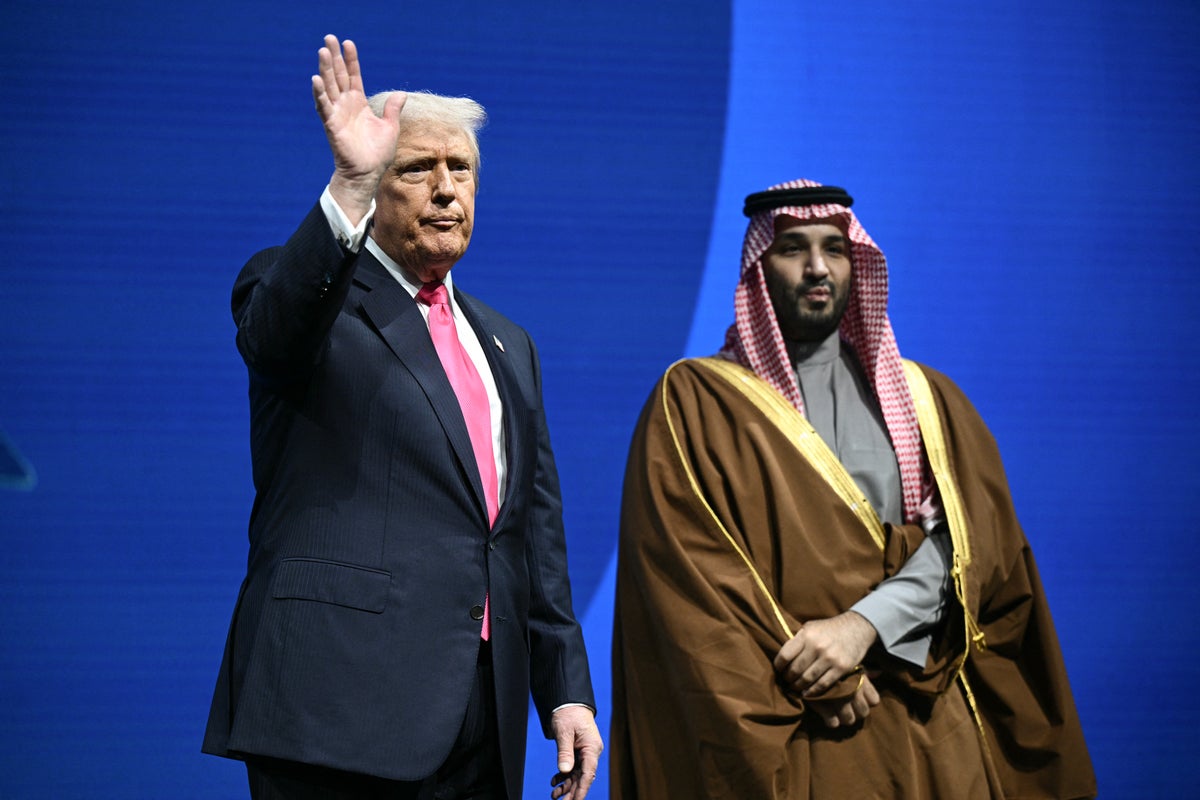
When Energy Secretary Chris Wright signed a landmark civilian nuclear agreement with Saudi Energy Minister Prince Abdulaziz bin Salman on Wednesday, Washington touted it as a major win for American industry. US energy companies would gain priority access to build reactors across the kingdom. Less than 24 hours later, Donald Trump completely upended his own administration's announcement with a single post on Truth Social.
The president declared that the nuclear deal would only go through if Saudi Arabia joins the Abraham Accords and normalizes diplomatic ties with Israel. He added another key caveat: there would be no uranium enrichment on Saudi soil.
The abrupt move caught foreign diplomats off guard. It also revealed the intense political friction building in Washington, Jerusalem, and Riyadh over one of the most sensitive foreign policy gambles in recent history.
The Sudden Turn That Catching Diplomats Off Guard
When the Department of Energy first unveiled the framework on Wednesday, there was no mention of Israel. The official documentation described a standard 123 Agreement under the US Atomic Energy Act. It focused on enabling American nuclear exports and helping the Saudis diversify their energy grid away from crude oil.
Then came Trump's social media post on Thursday morning.
"The Civil Nuclear Deal (There will be no enrichment of material!) being made between the United States Department of Energy and Saudi Arabia... will be approved, but is totally subject to Saudi Arabia joining the very respected and successful Abraham Accords," Trump wrote.
The sudden shift appears directly tied to mounting political pressure. Pro-Israel advocates and lawmakers in Washington immediately criticized the administration for offering high-level nuclear cooperation without securing a major geopolitical win in return. By making diplomatic recognition of Israel an explicit prerequisite, Trump attempted to reframe the entire agreement as a continuation of his foreign policy legacy.
White House Press Secretary Karoline Leavitt confirmed that conversations with Saudi counterparts would continue, even though Trump had not spoken directly to Saudi Crown Prince Mohammed bin Salman after making the post.
What the Saudi Nuclear Accord Actually Contains
To understand why this agreement sparked such fierce debate, you have to look at what the 123 Agreement involves.
Saudi Arabia wants to build civil nuclear reactors to power its domestic energy grid, allowing the kingdom to export millions of extra barrels of oil instead of burning them at home. Harvard proliferation expert Matthew Bunn points out that using nuclear power domestically is a calculated financial strategy for Riyadh. It maximizes crude exports while transitioning the kingdom toward long-term energy diversification.
The deal lasts 30 years and gives US energy companies a direct pipeline to build advanced reactors, such as the Westinghouse AP1000.
However, security analysts pointed out several crucial details in the fine print:
- Enrichment rights: The original framework left room for debate over whether American companies could eventually build a joint enrichment facility on Saudi soil. Trump's latest statement explicitly rules out domestic enrichment, insistence aimed at easing fears of a regional arms race.
- IAEA Safeguards: The agreement does not obligate Saudi Arabia to sign the International Atomic Energy Agency's Additional Protocol. That protocol gives international inspectors short-notice access to undeclared facilities.
- Third-party technology: While the agreement prohibits Saudi Arabia from reprocessing American nuclear fuel for military purposes, critics point out it doesn't explicitly stop Riyadh from using non-US technology to enrich fuel provided by third parties.
These gaps created instant political pushback in Tel Aviv and Washington.
Firestorm in Tel Aviv and Congressional Resistance
Israeli officials reacted with deep anxiety to the news of a nuclear agreement in their backyard.
While Prime Minister Benjamin Netanyahu's office praised Trump's demand for Saudi Arabia to join the Abraham Accords, opposition politicians in Israel slammed Netanyahu for failing to block the nuclear partnership in the first place. Former Defense Minister Avigdor Lieberman warned that giving nuclear capabilities to Riyadh risked pulling the Middle East into an uncontrollable arms race. Opposition leader Yair Lapid called the agreement a major strategic failure for Netanyahu ahead of Israel's upcoming general election.
In Washington, lawmakers from both parties expressed alarm. Democratic Senator Ed Markey blasted the agreement, arguing that providing nuclear technology to Riyadh undermines decades of non-proliferation policy.
Critics like Trita Parsi of the Quincy Institute argue that Washington is operating from a position of weakness. By lowering safeguards, the US is offering advanced technical support while receiving fewer long-term non-proliferation commitments than it demanded from other allies in the past. When the United Arab Emirates signed its nuclear deal with the US in 2009, Abu Dhabi voluntarily surrendered all domestic enrichment and reprocessing capabilities.
Supporters of the deal argue the opposite point. If Washington refuses to supply nuclear technology to the Saudis, Riyadh will simply buy reactors from China or Russia. Keeping Saudi Arabia tied to American technology, even with imperfect safeguards, keeps Washington in the driver's seat.
Why Crown Prince Mohammed bin Salman Is in a Tough Spot
Trump's demand puts Crown Prince Mohammed bin Salman in a difficult political position.
Saudi Arabia has repeatedly stated that formal diplomatic recognition of Israel will not happen without a clear, credible path toward an independent Palestinian state. Given the ongoing conflict in Gaza and Netanyahu's firm refusal to accept a Palestinian state, immediate Saudi entry into the Abraham Accords is almost impossible politically. Public opinion across the Arab world has hardened significantly over the past two years, making formal ties with Israel extremely controversial inside the kingdom.
At the same time, Riyadh wants American nuclear technology and security guarantees. If Trump refuses to sign off on the 123 Agreement without Israel's inclusion, Saudi Arabia faces a choice: delay its nuclear ambitions, accept diplomatic conditions that anger its domestic audience, or pivot to international competitors like Beijing.
Practical Steps for Following the Federal Review
The nuclear agreement now enters a critical regulatory window that will decide its fate.
- Monitor the 90-day congressional review: The administration has formally submitted the 123 Agreement to Congress. Lawmakers have 90 session days to evaluate the text. To block the deal, Congress must pass a joint resolution of disapproval with a veto-proof two-thirds majority in both chambers.
- Watch for diplomatic language adjustments: Pay close attention to official statements from the Saudi Foreign Ministry. Any subtle change in how Riyadh describes its conditions for joining the Abraham Accords will signal whether a compromise is secretly in the works.
- Track IAEA monitoring updates: Keep an eye on reports from the International Atomic Energy Agency regarding voluntary inspection agreements with Saudi Arabia, which could serve as a middle ground to satisfy skeptical US lawmakers.