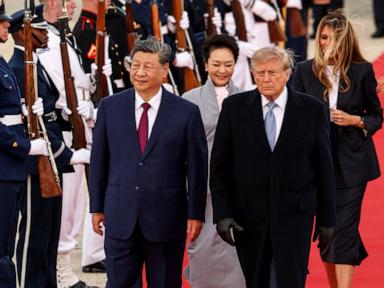
When Donald Trump greeted Chinese President Xi Jinping on the tarmac at Joint Base Andrews, complete with a red carpet and a military flyover, political pundits rushed to misinterpret the optics. Washington insiders called it a sudden soft-turn, while critics accused the administration of rolling over for Beijing. They missed the forest for the trees. This wasn't about appeasement or a sudden burst of diplomatic warmth. It was a calculated transactional maneuver driven by pragmatism, power politics, and the stark reality of modern global competition.
If you look past the pomp of the White House arrival ceremony and the state dinner, a very different picture emerges. Let's talk about why this summit happened, who actually won the narrative war, and what it signals for the future of international relations.
The Tarmac Surprise and the Realpolitik of Optics
Let’s be honest: sitting presidents rarely greet foreign leaders at the tarmac. Normally, that’s reserved for lower-tier officials while the commander-in-chief waits comfortably at the White House. By stepping out onto the Joint Base Andrews tarmac alongside First Lady Melania Trump, Trump broke protocol to send an unmistakable message. He wanted to project strength, confidence, and personal control over the bilateral relationship.
Yet, optics can cut both ways. While US media obsessed over the military band, the B-2 bombers, and a viral video of staff adjusting the red carpet, Beijing played a masterclass in domestic and international messaging. China's state apparatus immediately published Xi's full remarks, emphasizing stability, trade cooperation, and mutual respect. Meanwhile, the White House kept its official readouts much leaner. Analysts watching the soft-power scoreboard noted that Xi used the visit to position himself as a steady, predictable statesman, contrasting sharply with the turbulent currents of American foreign policy.
Secretary of State Marco Rubio defended the high-stakes summit aggressively, arguing that refusing to talk would be profoundly irresponsible for the world's two largest economic superpowers. He's right. You don't have to love your counterpart to recognize that managing a multi-trillion-dollar economic rivalry requires keeping the lines of communication wide open.
What Was Actually on the Table
Beneath the fanfare of military flyovers and visits to the National Archives, the core issues remained intensely pragmatic. Both Washington and Beijing are navigating a delicate economic truce. China is aggressively doubling down on domestic tech and military modernization despite ongoing Western restrictions on advanced semiconductor chips. Simultaneously, the Trump administration has been frantically securing rare earth partnerships and pushing for a fairer, more reciprocal trade framework.
Artificial intelligence also loomed large over the discussions. While Trump has routinely downplayed strict domestic AI regulations to avoid handing Beijing a competitive edge, Xi came prepared to shape the global discourse on tech governance. The divergence in how both nations handle emerging tech underscores a fundamental truth: cooperation on global safety nets is necessary, but the underlying technological arms race isn't slowing down anytime soon.
The Global Ripple Effects
You cannot view this summit in a vacuum. Around the world, America's allies and rivals are watching closely. Leaders from Ottawa to European capitals are recalibrating their own trade strategies, attempting to insulate themselves from shifting American tariffs while quietly stabilizing their own channels with Beijing. When Washington and Beijing lock horns—or temporarily roll out red carpets—the shockwaves reshape supply chains, defense budgets, and diplomatic posture across every continent.
The takeaway isn't that US-China relations have suddenly transformed into an alliance. Cooperation remains limited, and deep structural mistrust persists. What we witnessed was an exercise in high-stakes management. Both leaders walked away with what they needed for their domestic audiences: Trump projected personal dominance on home turf, while Xi secured the global imagery of a co-equal superpower anchoring international stability.
Keep your eyes on how these diplomatic agreements translate into concrete policy changes over the coming months. The red carpet might be rolled up, but the real work of managing the world's most consequential rivalry is just getting started.