The legacy media is currently hyperventilating over a "missed opportunity." They see a canceled trip to Pakistan as a diplomatic failure. They view a scrapped delegation as a sign of chaos. They are wrong. What the pundit class calls a snub is actually a surgical strike on the outdated, bloated bureaucracy of international relations.
For decades, the United States has operated under the delusion that "showing up" is the same thing as "winning." We send massive delegations, book five-star hotels in Islamabad or Davos, and engage in "meaningful dialogue" that results in nothing but a vague joint statement and a taxpayer-funded bar tab. For a different look, consider: this related article.
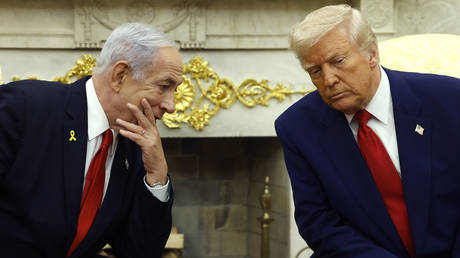
Donald Trump’s decision to pull the plug on the delegation's trip for talks regarding Iran isn't an abandonment of diplomacy. It is the commodification of American presence. By saying "they can call us," he has flipped the script from the U.S. being a desperate suitor to being the prize.
The Myth of the Necessary Envoy
Standard diplomatic theory suggests that face-to-face meetings are the bedrock of conflict resolution. I’ve seen state departments waste years and billions of dollars on this premise. They treat the process as the product. If a meeting happens, they count it as a win, regardless of whether the needle moved a single millimeter on nuclear enrichment or regional proxy wars. Further insight on this matter has been published by The Guardian.
This is the "sunk cost" fallacy applied to global security. We assume that because we have a State Department, we must use it for every minor negotiation. But in the digital age, the physical presence of a mid-level delegation often does nothing but provide a platform for the adversary to perform for the cameras.
When you send a team to Pakistan to discuss Iran, you aren't just talking to Iran. You are navigating the complex, often treacherous ego of the Pakistani ISI, the internal politics of the host nation, and the optics of the international press. By canceling, Trump stripped away the theater. He removed the "middleman" energy of the host nation.
Power is Not Found in the Middle
The "lazy consensus" among foreign policy "experts" is that Pakistan serves as a vital bridge to Tehran. This is a fundamental misunderstanding of how power functions in the Middle East and South Asia.
Pakistan has its own agenda—primarily securing IMF bailouts and maintaining a delicate balance with Beijing. When the U.S. uses Islamabad as a backchannel, we give Pakistan leverage over us. We become beholden to their facilitation.
The contrarian truth? Direct lines are the only lines that matter. If Tehran wants to talk, they have the number to the White House. The idea that we need a caravan of bureaucrats to trek across the globe to signal "readiness" is a relic of the 19th century.
- The Bureaucratic Trap: Delegations are designed to seek compromise.
- The Principal's Advantage: A leader is designed to seek a deal.
By keeping the delegation at home, the U.S. signals that it is not hungry for a deal. In any negotiation—whether it’s a real estate acquisition or a nuclear non-proliferation pact—the party that wants the deal less has the upper hand. The media views the "they can call us" line as arrogant. In reality, it is a textbook application of $Negotiation Power = \frac{1}{Desire}$.
The Cost of "Meaningful Dialogue"
Let’s talk about the math that the news cycles ignore. Every time a high-level U.S. delegation travels, the security apparatus alone costs millions. We are talking about C-17s carrying armored limousines, hundreds of Secret Service agents, and advanced communications arrays.
Beyond the fiscal cost, there is the Political Capital Expenditure.
When a delegation returns with "progress" (which is code for "we agreed to meet again"), the administration looks weak. They’ve spent the capital and brought back a receipt instead of a result. By refusing to play the game, Trump avoids the negative ROI of a failed summit.
If the goal is to stop Iran from obtaining a nuclear weapon or to cease their funding of regional instability, a three-day sit-down in a neutral territory won't achieve it. Only the threat of overwhelming economic isolation or kinetic action moves that needle. A delegation is a carrot when the situation requires a sharper stick.
The "People Also Ask" Fallacy
If you look at the common questions surrounding this move, you see the bias:
- "Does this isolate the U.S. from its allies?" * "Is the U.S. losing influence in the region?"
The premise of these questions is flawed. Influence is not a popularity contest. Influence is the ability to dictate terms.
You don't lose influence by being the person everyone is waiting for; you lose influence by being the person who shows up to every party and stays too late. By withdrawing the delegation, the U.S. becomes the "absent center." Every conversation in Islamabad and Tehran will now revolve around why the Americans aren't there and what it will take to get them back.
That is how you manufacture demand for American engagement.
The Risks of the Solo Act
Is there a downside? Of course. This approach relies entirely on the credibility of the "threat" and the strength of the leader's personal brand. If the phone never rings, the "they can call us" strategy can look like a bluff that was called.
But consider the alternative: we go, we talk, we give concessions to "keep the process alive," and Iran continues its centrifuges anyway. That isn't diplomacy; it's managed decline. I’d rather bet on the strategy that prioritizes the result over the ceremony.
Realism Over Romanticism
The critics are romanticists. They believe in the "tapestry" (to use a forbidden word of the weak) of international cooperation. They think the "world order" is maintained by handshakes in wood-panneled rooms.
The realist knows the world order is maintained by the credible threat of consequences.
Sending a delegation to talk about Iran via Pakistan is a sign of a nation that is trying to "manage" a problem. Refusing to send that delegation is a sign of a nation that is demanding the problem be solved.
We’ve seen the results of the "manage" strategy for forty years. It has led to a nuclear-capable North Korea, a dominant China, and a Middle East on a permanent simmer. It’s time to stop the theater.
If the Iranians want to talk, they know the zip code. If they don't, no amount of tea in Islamabad was going to change their minds anyway.
Stop mourning the "missed trip." Start recognizing the shift from being a participant to being the arbiter.
The era of the traveling circus is over. The era of the high-stakes ultimatum has begun.
Pick up the phone or don't. The terms remain the same.