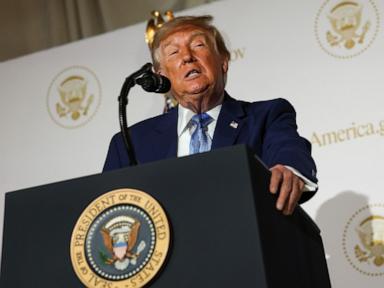
The conventional media analysis surrounding political campaign stops during a midterm cycle is routinely lazy. When headlines blasted that a sitting president was bypassing purple battlegrounds to hold rallies in deep red states like Alabama and Oklahoma, the pundit class instantly rushed to a single, comfortable narrative: panic. They claimed the floor was falling out, that safe zones were suddenly being defended out of sheer terror, and that conservative strongholds were turning into panicky firewalls.
That theory collapses under basic logistical scrutiny and a proper understanding of modern political mobilization.
The lazy consensus assumes that a president's physical presence on a stage is exclusively about winning over undecided voters in that exact ZIP code. But modern campaigns do not operate like 1950s whistle-stop train tours. A rally in Mobile, Alabama, or Tulsa, Oklahoma, is never just about the local electorate. It is a broadcast-and-mobilization node engineered to bleed influence across state lines.
Look at the geography. Mobile sits right next to the Florida panhandle. Rallies in core southern territory serve media markets that spill directly into competitive suburban districts where ground-game energy is hard to manufacture. Media saturation in the digital age means a physical event functions primarily as video asset generation for targeted digital ads, text-banking drives, and volunteer coordination networks. When operatives claim that red-state events mean a party is playing defense, they ignore how remote digital infrastructure allows fired-up volunteers in deep-red territory to execute high-volume voter contact operations in genuinely competitive regions miles away.
Furthermore, treating red-state rallies as a sign of weakness misreads the actual math of midterm enthusiasm gaps. Midterms are historically referendum elections where the party out of power relies on organic momentum, while the incumbent party fights an uphill battle against voter apathy. Telling a base to stay home because their state is "already safe" is a recipe for suppression. Energy is perishable. By touching down in foundational territories, leadership aims to cement baseline turnout numbers that ripple into neighboring House and Senate races.
The mistake analysts make is looking at the map through a twentieth-century lens. They think proximity equals target. In reality, a rally is a media engine, a volunteer recruiting hub, and a signal flare designed to wake up a sleeping base across regional media footprints. Panic looks like retreat; what actually happened was a centralized push to weaponize the safest terrain available.
Stop reading the map like a traditional broadcast viewer. The game isn't fought where the cameras park.