The financial press is sleepwalking again.
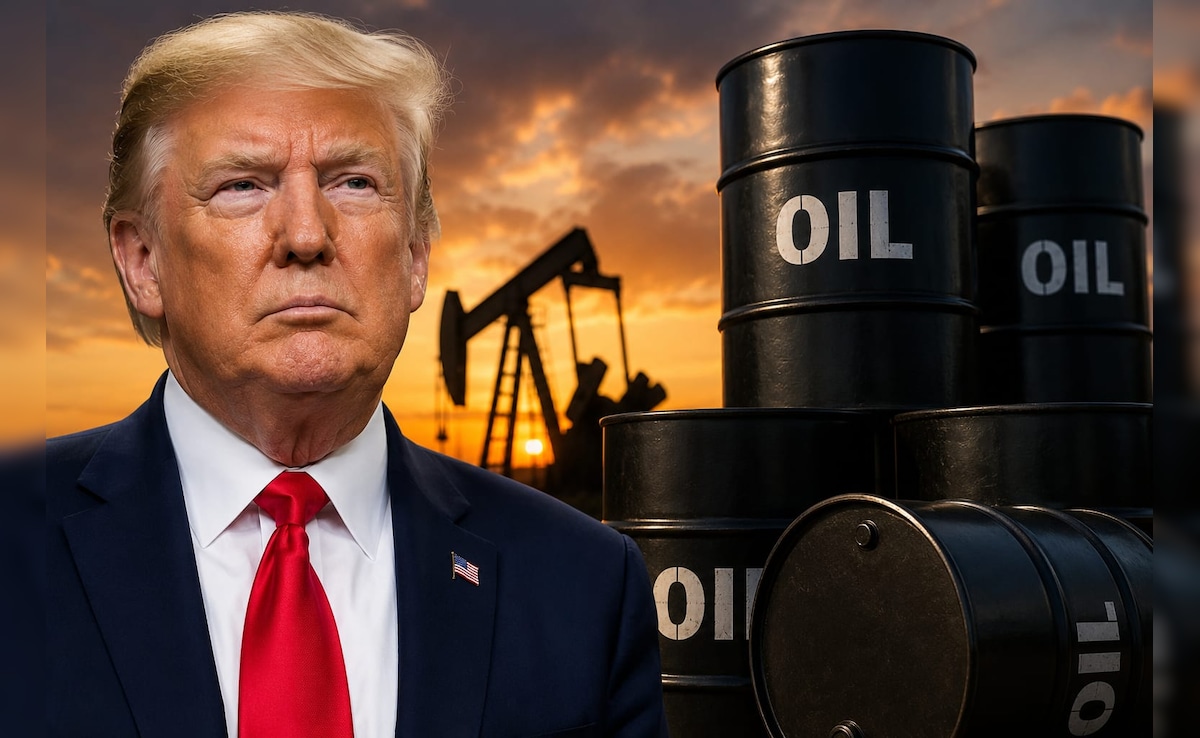
Open any mainstream market report today and you will see the same lazy narrative plastered across the headlines: geopolitical tensions eased, Donald Trump promised a rapid resolution to conflicts in the Middle East, and oil markets breathed a sigh of relief, sending crude prices down. Learn more on a connected subject: this related article.
It sounds logical on the surface. War threatens supply; peace secures it. Therefore, talk of peace should lower prices.
It is a comforting bedtime story for algorithmic traders and retail investors. It is also completely wrong. More journalism by The Motley Fool explores similar perspectives on this issue.
The consensus view completely misunderstands the structural mechanics of global energy markets, the reality of spare capacity, and the actual geopolitical dynamics at play. If you are selling energy positions or shorting crude based on the naive belief that a swift diplomatic handshake will flood the world with cheap oil, you are positioning yourself for a financial beating.
The reality is far more volatile. A forced, rapid de-escalation or a sudden shift in the American enforcement of sanctions will not stabilize energy markets. It will rupture them.
The Myth of the Immediate Supply Flood
Let us dissect the primary fallacy driving the current market dip: the assumption that an immediate end to conflict opens up an instant faucet of oil.
Mainstream analysts love to look at charts of Iranian production capacity and assume that a resolution means millions of barrels smoothly entering the global economy. I have spent two decades analyzing energy infrastructure and navigating trading desks. If there is one immutable truth in this business, it is that bringing offline or sanctioned production back to maximum capacity is a logistical nightmare, not a policy switch.
When an energy-producing nation operates under heavy sanctions or in a high-conflict environment, its infrastructure rots.
- Wellheads suffer from a lack of advanced technical maintenance.
- Storage facilities degrade.
- Pipelines sit vulnerable or under-maintained.
- Foreign capital and essential engineering firms vanish.
You cannot just turn a valve and expect $ Brent to stabilize. If a sudden diplomatic breakthrough occurs, the market will immediately price in a supply surge that cannot physically materialize for 12 to 18 months.
More importantly, look at where Iranian oil is actually going right now. Despite heavy U.S. sanctions, a massive shadow fleet of tankers regularly delivers Iranian crude to independent refiners in China, often routed through dark ship-to-ship transfers in the South China Sea. This oil is already in the market. A formal "peace deal" or a relaxation of enforcement does not suddenly double this volume; it merely legitimizes it, moving it from the discounted black market to the transparent, fully priced official market.
By removing the "risk discount" that buyers like China demand for purchasing illicit oil, the price of that specific crude actually normalizes upward. The lazy consensus assumes a supply shock. The reality is merely a spreadsheet realignment.
The Real Danger of the Decreasing Geopolitical Risk Premium
Market commentators are celebrating the reduction of the geopolitical risk premium. They are looking at the wrong metric.
When oil prices "ease" on peaceful rhetoric, traders are pricing out the immediate threat of a catastrophic supply disruption—such as the closure of the Strait of Hormuz. But removing the acute fear of a hot war exposes a far more dangerous, underlying reality: a structurally undersupplied market held together by thin margins.
Consider the baseline mechanics of global supply. For the past several years, global capital expenditure in traditional upstream oil and gas exploration has been chronically depressed. Wall Street demanded capital discipline, ESG mandates forced institutional investors to pivot, and major oil companies chose share buybacks over drilling new holes in the ground.
We are currently living off the fumes of past investment cycles.
Global Oil Demand: Rising steadily toward historic highs
Global Spare Capacity: Concentrated in only a handful of OPEC nations
U.S. Shale Productivity: Plateauing as tier-one acreage gets depleted
When a geopolitical crisis flares up, it acts as a artificial cap on demand expectations because markets fear an imminent global economic slowdown. When a political leader steps up and declares that the conflict will end "very quickly," they are inadvertently signaling to the market that economic growth is back on the menu.
If the threat of war evaporates, global industrial activity accelerates. Aviation demand ticks up. Consumer confidence rises.
You are injecting a massive dose of demand stimulation into a global supply architecture that is already stretched to its absolute limits. The moment the market realizes that a peaceful Middle East means a massive surge in consumption without a matching structural surge in supply, the price floor collapses upward.
The OPEC Factor Everyone Is Ignoring
Let us address the elephant in the room that the mainstream financial press routinely ignores: the Organization of the Petroleum Exporting Countries (OPEC) and its allies.
The current narrative assumes that if the U.S. brokers a quick resolution in the Middle East, global energy dynamics return to a harmonious baseline. This completely discounts the strategic objectives of Riyadh and Moscow. OPEC+ has spent the better part of two years aggressively managing production cuts to maintain a price floor, defending their national budgets against soaring domestic fiscal breakeven requirements.
Imagine a scenario where a rapid American diplomatic intervention threatens to bring official Iranian barrels back into the compliance matrix of global quotas. Do you truly believe Saudi Arabia will simply step aside, surrender market share, and watch prices tumble to support a Western political victory?
Absolutely not. I have watched energy ministers navigate these exact standoffs behind closed doors. If a sudden influx of official barrels threatens the price stability OPEC+ has fought to maintain, the cartel will respond with swift, retaliatory production cuts. They have the spare capacity to choke supply faster than any Western diplomat can sign a treaty.
By celebrating a rhetorical end to a conflict, the market is mispricing the counter-moves. A drop in Iranian risk will be met with a tightening of the OPEC vice. The net result is not cheaper fuel; it is a highly concentrated, weaponized supply chain controlled by a cartel that has zero interest in helping Western politicians lower inflation.
Dismantling the Flawed Premises of Market Observers
Let us address the questions that retail investors and corporate energy buyers are asking right now, and expose how fundamentally flawed their underlying assumptions are.
Does a stronger U.S. diplomatic stance always lower energy costs?
No. This is a classic correlation-versus-causation error. A aggressive or highly active U.S. foreign policy stance often introduces immense unpredictability into energy markets. Traders despise uncertainty far more than they dislike known risks. When a political administration promises to end complex, decades-old theological and territorial conflicts "very quickly," the market initially reacts to the headline. But when the details inevitably prove messy, convoluted, and fragile, the market snaps back with a vengeance. Volatility spikes, and volatility always commands a premium.
If war ends, won't global insurance rates for tankers drop, lowering the price of oil?
This is a micro-economic solution applied to a macro-economic reality. Yes, war risk insurance premiums for vessels transiting the Gulf of Oman or the Red Sea will decrease if hostilities cease. This shaves a few cents off the per-barrel shipping cost. But focusing on insurance premiums while ignoring structural depletion and demand spikes is like celebrating a coupon for free floor mats while your car's engine is on fire. The structural deficit dwarfs the maritime shipping premium by an order of magnitude.
Can't U.S. shale just fill the gap if prices start to climb again?
The golden age of American shale growth is dead. The independent drillers who used to flood the market at the first sign of a price spike have been replaced by consolidated, risk-averse corporations answerable to institutional shareholders who demand dividends over production volume. Furthermore, the premier inventory in the Permian Basin is finite. Sweet spots are being drilled out. Supply elasticity in the United States is nothing like it was in 2018. The cavalry is not coming.
The Cost of Being Wrong on Energy Volatility
Traders who buy into the "peace equals cheap oil" thesis are exposed to severe downside.
If you are a corporate treasurer hedging fuel costs, a portfolio manager allocating capital, or an entrepreneur relying on logistics, treating this temporary price dip as a permanent structural shift is a critical mistake. The downside of under-hedging based on political rhetoric is devastating.
When you strip away the political grandstanding and look at the hard physics of the energy sector, the numbers do not lie. We are in a structural supply deficit that no amount of diplomatic theater can fix.
Stop trading the headlines. Stop believing that complex geopolitical friction can be unwound with a single administrative decree without triggering massive economic counter-forces. The current easing of oil prices is an artificial anomaly—a brief calm before a supply-driven storm.
Secure your positions. Lock in your energy hedges while the rest of the market is intoxicated by the illusion of an easy peace. The window of cheap crude is closing fast, and those who believed the promises of a quick fix will be the ones left funding the next rally.