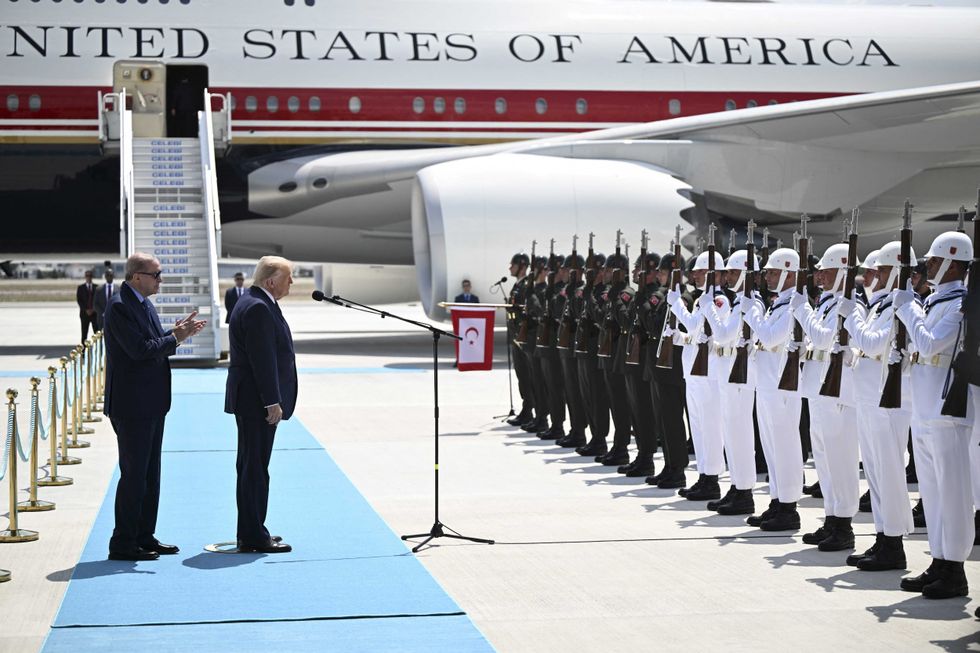
Donald Trump just landed at the NATO Summit in Ankara, Turkey, and he didn't waste any time breaking the internet. Sitting right next to Turkish President Recep Tayyip Erdogan, Trump resurrected one of his most infamous foreign policy ambitions. He flat out said Greenland should be controlled by the United States, not Denmark.
This isn't just a random rerun of an old news cycle. It's a calculated geopolitical play that has been brewing for years. If you think this is just a bizarre obsession with a giant block of ice, you're missing the bigger picture. The reality of Arctic geopolitics has shifted dramatically. This latest outburst has pushed the entire Western military alliance into a corner.
The immediate reaction from European leaders was predictable eye-rolling. Danish Prime Minister Mette Frederiksen quickly fired back. She made it clear that while Washington's desire to take over Greenland is well known, it simply isn't going to happen. But Trump isn't backing down. He tied the Greenland issue directly to the US military presence in Europe. He threatened to pull all American troops out of the continent if NATO allies keep blocking his ambitions. The stakes are much higher than they look on the surface.
The Real Power Play Behind the Arctic Push
Let's look at why Greenland matters so much right now. Trump's core argument is that the island is surrounded by Chinese and Russian ships, and he is not entirely wrong. As Arctic sea ice melts, new shipping routes are opening up. More importantly, massive untapped deposits of critical minerals are becoming accessible. These aren't just any rocks. They are the exact minerals needed for advanced electronics, electric vehicle batteries, and military hardware. Right now, China dominates that supply chain.
The military geography is even more critical. Greenland sits directly between North America and Europe. It is the ultimate high ground for missile defense and space surveillance. The US already runs the Pituffik Space Base, formerly known as Thule Air Base, in northwestern Greenland. From a pure defense standpoint, controlling the whole island gives Washington total lock on the Arctic theater.
Trump is using a classic transactional business approach to international diplomacy. His argument is straightforward. The US spends billions defending Europe from Russia. Meanwhile, Denmark isn't spending enough to protect or develop Greenland. In his eyes, if Europe won't help the US with its strategic goals, like the recent conflict in Iran, then the US has no obligation to keep paying for Europe's security blanket.
A History of Threats and Military Friction
This tension has been building for a long time. Back in January 2025, Trump threatened a 25% tariff on the UK and other allies unless Denmark agreed to negotiate a sale of Greenland. That threat caused total panic. NATO leaders were so alarmed they actually deployed troops to the island to prevent any sudden military moves.
Things quieted down slightly after a meeting with NATO Secretary General Mark Rutte at Davos, but the underlying resentment never went away. Trump is clearly still smarting over how European allies treated him during the outbreak of the Iran war. He openly complained in Ankara that France, Germany, and Italy turned down US requests for assistance.
To try and smooth things over before Trump even landed in Turkey, NATO allies announced a massive $50 billion package of new defense contracts. Rutte praised the investments, framing them as a major boost to European security and a sign that Europe is stepping up. But Trump didn't care about the defense deals. Instead, he chose to praise Erdogan, lift CAATSA sanctions on Turkey over their purchase of Russian S-400 missile systems, and dangle the sale of F-35 stealth fighters. It was a clear message to the rest of the alliance. If you play ball with Washington, you get rewarded. If you don't, you get threatened with a total troop withdrawal.
The Problem with Assuming Greenland is For Sale
The biggest mistake the White House is making here is ignoring the people who actually live there. Greenland is a semi-autonomous territory. While Denmark handles its foreign policy and defense, the local government has a massive say in its own future. Public opinion polls in Greenland show overwhelming, almost universal opposition to becoming an American territory or state.
They don't want to be traded like a piece of real estate. The local government has said they are happy to cooperate with the US on security and economic projects, but a total transfer of sovereignty is a non-starter. By treating the island as a prize to be bought or seized, the US is actively destroying its own reputation in the region. Local trust has plummeted.
This transactional approach also damages the core foundation of NATO. The alliance is built on collective defense, the idea that an attack on one is an attack on all. By tying American military commitment to real estate deals and political favors, Trump is showing adversaries like Russia and China that the US commitment to Europe is highly conditional.
What Happens Next in the Arctic Standoff
The diplomatic fallout from the Ankara summit is going to ripple out for months. If you want to understand where this situation is heading, you need to watch three specific areas:
- Watch the military deployments around Pituffik Base. Look closely at whether the US starts expanding its footprint or upgrading infrastructure unilaterally without Copenhagen's explicit blessing.
- Track Danish defense spending in the Arctic. Denmark will likely have to shift serious money toward maritime patrols and northern defense to prove to Washington that they can secure the territory on their own.
- Keep an eye on critical mineral mining contracts. The real battle won't be fought with soldiers, but with corporate bids. Watch whether Greenland awards major mining concessions to US companies or keeps them diversified among European partners.
Don't expect Trump to drop this issue anytime soon. It fits perfectly into his broader critique of international alliances. For European leaders, the strategy of trying to buy him off with large defense contracts isn't working anymore. They have to decide whether to call his bluff on pulling troops out of Europe, or find a way to give the US more strategic control in the Arctic without formally rewriting the global map.