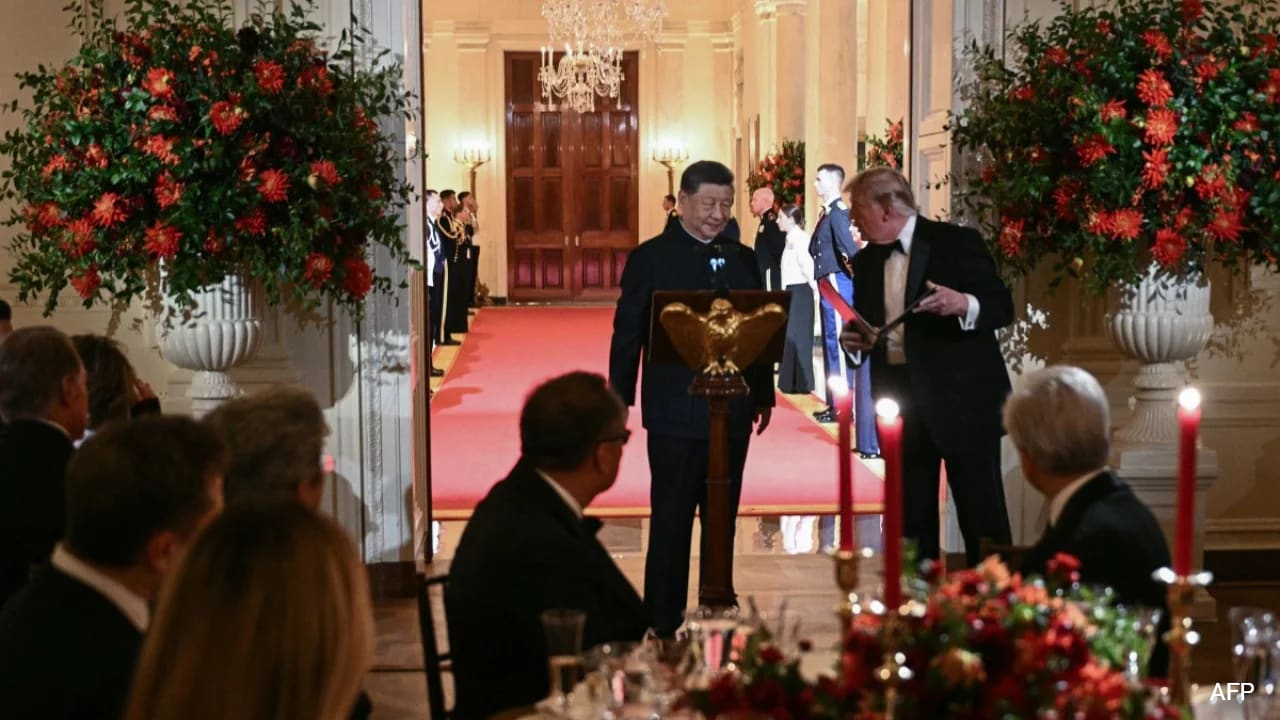
Pomp and pageantry rarely solve geopolitical friction, yet Donald Trump and Xi Jinping still rolled out the red carpet at the White House. Beneath the heavy dose of ceremony, helicopter tours, and state dinners, the core disputes between the world's two largest superpowers remain entirely intact. If you expected a grand reset on global trade, tech policy, or regional security, you missed the reality of what happened behind closed doors.
Both leaders managed to buy time rather than deliver permanent breakthroughs. Let's break down what actually transpired and what it means for the near future.
The Short-Term Trade Truce Keeps the Peace
Trade took center stage early, resulting in a two-month extension of the existing trade truce. US Treasury Secretary Scott Bessent pointed out that while China has kept up its end of the bargain on soybean purchases, lagging agricultural targets and shortfalls in rare-earth element deliveries continue to frustrate Washington.
This extension isn't a permanent trade agreement. It is a temporary band-aid. Businesses relying on predictable supply chains shouldn't breathe a sigh of relief just yet. The underlying tariffs, export restrictions, and compliance pressures are locked in place until the clock runs out on this new deadline.
Diverging Views on Artificial Intelligence
Artificial intelligence sparked an interesting public contrast between the two leaders. Trump rebranded the technology as "super intelligence" (SI) and signaled a hands-off approach, stating a preference to avoid heavy government guardrails and leave enforcement to the Department of Justice.
Xi struck a different chord, publicly emphasizing that both nations share a responsibility to keep advanced algorithms under strict human control. Despite these rhetorical differences, concrete policy harmonization on semiconductors, compute power, or safety standards remains deadlocked. Private tech firms are left navigating two completely different regulatory realities without a unified global framework.
Taiwan Remains the Unmovable Flashpoint
Taiwan continued to be the most sensitive fault line in the room. Xi pressed the White House to handle the issue with extreme caution and explicitly urged Washington to oppose Taiwanese independence.
The White House kept its official public readout quiet on the specifics of this exchange. Meanwhile, lawmakers in Congress continue debating pending security assistance and arms packages, leaving the region in a tense geopolitical holding pattern. The lack of a firm public stance from the administration shows that Washington is trying to thread a very narrow needle between deterrence and escalation.
The Thucydides Trap and Strategic Posturing
Xi explicitly invoked the concept of the "Thucydides Trap," warning that rising powers and established hegemons risk catastrophic conflict if they view international competition as a zero-sum game. His framing stressed that cooperation must outweigh confrontation.
Trump focused more on transactional dialogue and areas of historical cooperation. Yet, without robust, institutionalized military communication channels, these philosophical reminders do little to eliminate the day-to-day friction in the South China Sea and surrounding trade routes.
Diplotainment Versus Hard Reality
Critics were quick to label the summit "diplotainment," arguing that grand gestures overshadowed substantive policy negotiations. When rare-earth minerals, semiconductor restrictions, and defense commitments take a backseat to public spectacle, markets are left guessing.
Keep your eyes on supply chain diversification and upcoming regulatory shifts. Do not assume that temporary extensions signal long-term stability. Build contingency plans into your operations today.
Trump-Xi Jinping Summit: Trade Truce Holds, But Taiwan, AI And Tariffs Remain Major Fault Lines
This video provides additional context on how the trade truce and technical disagreements played out during the Washington meetings.