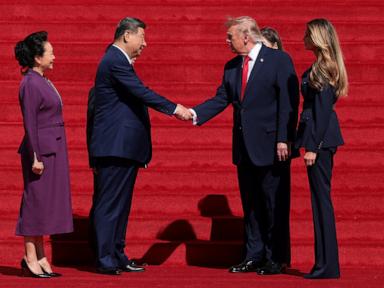
When Donald Trump hosted Xi Jinping at the White House, the red carpet treatment was impossible to miss. There was an elaborate ceremonial arrival, a high-profile state dinner featuring tech giants like Jensen Huang and Sam Altman, and a casual tour of the South Lawn's new helipad. Yet, beneath the heavy layer of diplomatic pageantry—or "diplotainment," as critics quickly dubbed it—hard details were scarce.
If you are trying to parse what actually came out of those closed-door meetings, you have to look past the photo ops and examine the concrete policy shifts. The reality of US-China relations isn't found in toasts about World War II alliances or remarks about granite. It is found in trade extensions, rare earth bottlenecks, and strategic standoffs over Taiwan.
The Trade Truce Extension
Let's start with the most tangible outcome: the temporary patch on economic tensions. Treasury Secretary Scott Bessent confirmed that the two sides agreed to a two-month extension on the trade agreement keeping prior tariffs from blowing up.
For global supply chains and corporate planners, this delivers a familiar kind of anxiety. Tariff rates remain lower for the moment, but companies still have to make long-term capital investments against a shifting political backdrop.
Beijing has kept pace with specific agricultural requirements, such as purchasing soybeans, but has lagged behind on other agricultural commitments and critical mineral deliveries like rare earths. Trump secured a commitment for China to import at least 10 million metric tons of US coal annually across 2027 and 2028, a win aimed squarely at domestic energy sectors. But without structural reforms to address massive manufacturing export waves, businesses are left running in place.
The Artificial Intelligence Standoff
Artificial intelligence got plenty of airtime, but little in the way of hard guardrails. Trump took to social media ahead of the talks to coin a new phrase for advanced systems, calling it "Super Intelligence," and signaled he wanted to leave the sector largely alone from heavy-handed federal oversight.
Xi echoed a desire to keep AI under human control, but tech analysts are skeptical that ideological competitors will find genuine common ground. When two superpowers are racing for technological supremacy, voluntary cooperation usually takes a backseat to domestic acceleration. Expect intense competition to override any symbolic joint statements made over dinner.
The Taiwan Pressure Point and Congressional Pushback
Behind closed doors, Xi pressed Washington to adopt stricter language opposing Taiwan independence. Beijing wants a definitive break from the long-standing US formulation that merely avoids stating support for independence.
The White House resisted taking the bait on rewriting its official stance, preserving strategic ambiguity. At the same time, Trump's decision to keep a $14 billion arms package for Taiwan in limbo as a "negotiating chip" has drawn sharp pushback from Capitol Hill. Senate Democrats and regional allies are watching closely, worried that trading security assistance for superficial diplomatic warmth weakens long-term deterrence in the Indo-Pacific.
Substance Versus Style
Summits like this often tell us more about what leaders want the public to see than what they are willing to compromise on. China wants stability to manage its domestic economic pressures, while Washington wants manageable headlines ahead of upcoming political cycles.
If you strip away the ceremonial tours and the tech-heavy guest lists, the structural fault lines remain right where they were. Watch the upcoming international forums in November and December. If subsequent meetings yield the same lack of binding security agreements, you will know that the pageantry was just buying time.