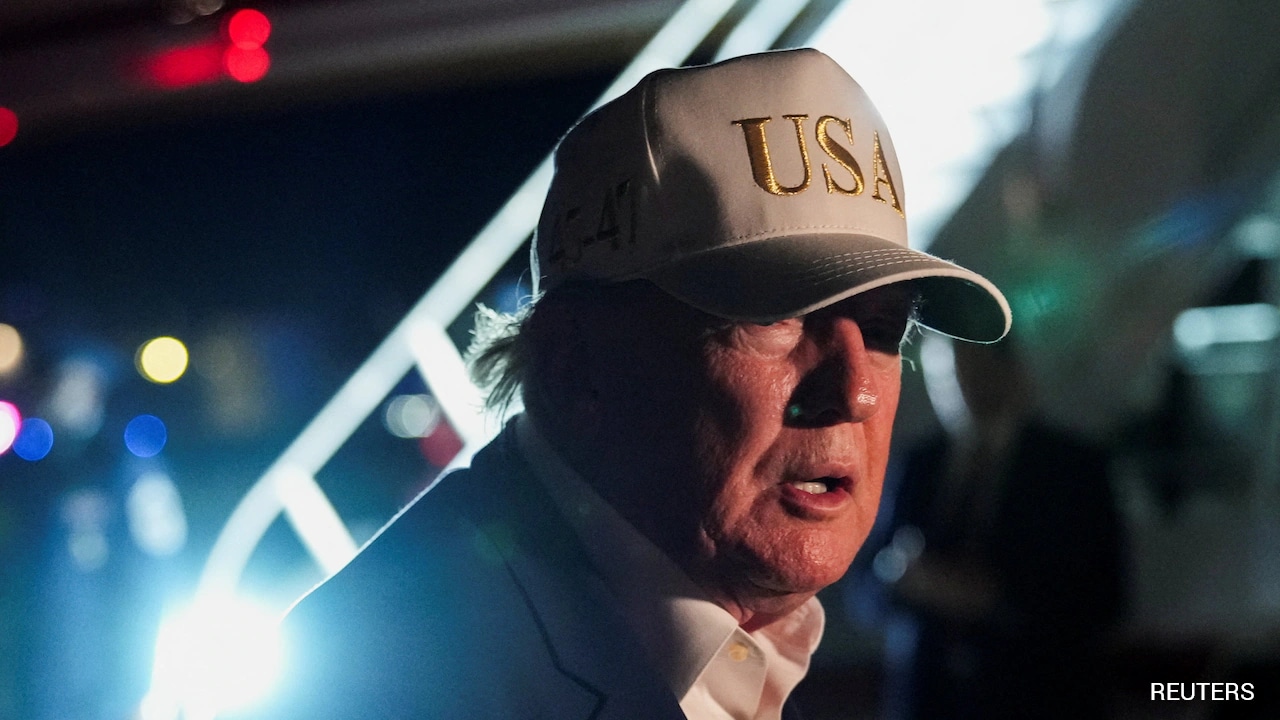
Donald Trump says Qatar and Saudi Arabia want a peaceful Iran deal while the United States stands ready for military strikes if diplomacy fails. Sounds straightforward on paper. It isn't.
When you actually look at what's happening behind closed doors in Riyadh, Doha, and Washington, that statement reveals a massive gap between American political messaging and Gulf survival instincts. Having tracked Middle Eastern security policy and energy markets for over a decade, I can tell you that Gulf monarchies don't view a US-Iran conflict as an abstract chess match. To them, it's an existential threat sitting right across the water.
Here's the immediate reality. Saudi Arabia and Qatar are pushing aggressively for de-escalation because their economies, desalination plants, and oil infrastructure sit well within range of Iranian ballistic missiles and drones. Meanwhile, Trump's dual-track rhetoric—offering negotiations with one hand while threatening military action with the other—puts Gulf leaders in an impossible bind.
What Trump Actually Said And Why It Matters Now
Let's strip away the cable news noise and look at the core message. Trump's framing relies on classic coercive diplomacy. By stating publicly that key Arab partners want a peaceful settlement with Tehran, he positions Washington as the ultimate guarantor of regional stability. At the exact same time, emphasizing that American forces are ready to strike sends an unmistakable warning to Iran's leadership.
Why does this matter right now? Because the margin for miscalculation in the Persian Gulf has shrunk to almost nothing.
For years, Washington operated under the assumption that maximum economic pressure combined with credible military threats would force Tehran back to the negotiating table on favorable terms. That theory ran straight into reality during Trump's first term after the 2018 withdrawal from the Joint Comprehensive Plan of Action (JCPOA). Instead of folding, Iran expanded its nuclear enrichment program, hardened its underground facilities, and demonstrated through proxies—and direct strikes like the 2019 Abqaiq-Khurais attack on Saudi Aramco—that it could inflict severe economic pain across the region.
Trump's current stance tries to thread a needle. He wants to avoid dragging the United States into another costly Middle Eastern ground war, something his domestic political base fiercely opposes. Yet he also refuses to look weak on Iranian nuclear ambitions or regional aggression. Calling out Qatar and Saudi Arabia's preference for peace gives him diplomatic cover while keeping the Pentagon's strike options front and center.
Why Saudi Arabia And Qatar Are Desperate For An Iran Deal
If you want to understand why Riyadh and Doha are lobbying so hard against military strikes, stop listening to ideological talking points and follow the infrastructure map.
Saudi Arabia's Vision 2030 Cannot Survive A Regional War
Crown Prince Mohammed bin Salman has staked his entire legacy—and trillions of dollars—on transforming Saudi Arabia from a petro-state into a global hub for tourism, tech, and finance. Projects like NEOM, the Red Sea developments, and Riyadh's massive urban expansion require one thing above all else: absolute stability.
Foreign investors don't wire billions of dollars into a war zone. Airlines don't route international hubs through airspace filled with interceptor missiles.
Riyadh learned this lesson the hard way in September 2019, when a coordinated drone and cruise missile strike temporarily knocked out roughly half of Saudi Arabia's oil production. The Saudi leadership noticed something critical during that crisis. Despite decades of buying tens of billions of dollars in American weaponry, the United States didn't launch a retaliatory strike on Iran.
That single event triggered a quiet revolution in Saudi foreign policy. By March 2023, Riyadh shocked Washington by signing a Chinese-brokered diplomatic normalization agreement with Tehran. They didn't do it because they suddenly trusted the Iranian regime. They did it because they realized Washington's security umbrella had limits, and they needed direct communication channels with Tehran to protect their own borders.
Qatar's Unique Balancing Act
Qatar's calculus is even more delicate, and honestly, much more complicated.
On one hand, Doha hosts Al Udeid Air Base, the largest US military installation in the Middle East and the forward headquarters for US Central Command (CENTCOM). If the United States launches major air strikes against Iranian nuclear or military sites, Al Udeid becomes an obvious focal point for retaliation—or at least intense diplomatic pressure.
On the other hand, Qatar shares the world's largest natural gas field with Iran. The South Pars / North Dome field is the lifeblood of the Qatari economy. Doha cannot afford a shooting war with the country sitting on the other half of its primary revenue source.
Over the past several years, Qatari diplomats have carved out a niche as the region's indispensable mediators. Whether facilitating prisoner swaps between Washington and Tehran or brokering ceasefires in Gaza, Doha thrives when talking replaces shooting. A US military strike on Iran would instantly evaporate Qatar's diplomatic leverage and put its liquefied natural gas (LNG) export terminals directly in harm's way.
The Dangerous Gap Between Washington's Deterrence And Gulf Reality
Here's where most political commentators get it wrong. They assume that because Saudi Arabia and Qatar are close US security partners, they will quietly fall in line if Washington decides to bomb Iranian targets.
They won't. In fact, Gulf states have repeatedly signaled to Washington that they won't allow their airspace or bases to be used for offensive strikes against Iran unless Tehran attacks them first.
Think about what that means operationally for the Pentagon. Launching sustained air campaigns against deeply buried Iranian nuclear sites like Fordow isn't like running isolated strikes against militia outposts in Iraq or Syria. It requires massive aerial refueling, intelligence, surveillance, and reconnaissance (ISR) flights, and regional staging grounds. Without full, unrestricted access to Gulf bases and airspace, US military planners face severe logistical headaches.
There's also a massive blind spot in how Washington views "limited" military strikes. American policymakers often talk about surgical strikes—hitting a few enrichment facilities or Revolutionary Guard naval assets to restore deterrence without starting a full-scale war.
Iran doesn't play by those rules. Tehran's military doctrine relies on asymmetric escalation. If bombed, Iran doesn't try to match the US Air Force plane for plane. Instead, it threatens the Strait of Hormuz, where roughly a fifth of the world's petroleum liquids pass through daily. Even a temporary disruption in the Strait would send global oil prices skyrocketing, trigger inflation spikes across Western economies, and hammer global stock markets.
For Trump, whose political brand is heavily tied to low gas prices and economic growth, an oil shock caused by a Middle Eastern conflict would be politically devastating.
What Most People Miss About Iran's Current Leverage
It's easy to look at Iran's struggling economy, domestic unrest, and battered regional proxies and assume Tehran is cornered. That's a mistake. A cornered regime with advanced missile capabilities and near-weapons-grade enriched uranium isn't docile—it's unpredictable.
According to assessments from the International Atomic Energy Agency (IAEA), Iran has accumulated stockpiles of uranium enriched up to 60 percent purity. Technically, the jump from 60 percent to weapons-grade 90 percent takes a remarkably short amount of time once a political decision is made.
Military strikes can certainly set Iran's physical infrastructure back by months or even a couple of years. Nobody disputes the destructive power of US bunker-busting munitions like the GBU-57 Massive Ordnance Penetrator.
You cannot bomb knowledge out of existence, though.
Iranian nuclear scientists already possess the technical know-how. Even worse, hardliners inside Tehran have openly debated changing Iran's long-standing religious fatwa against nuclear weapons if the country faces direct existential attacks. A strike intended to stop an Iranian bomb could end up being the exact catalyst that convinces Tehran's leadership that building a bomb is their only survival guarantee.
How Investors, Businesses, And Policymakers Should Read The Signals
When headlines blare about impending military strikes alongside whispers of secret Gulf peace talks, it's easy to get whiplash. If you're trying to make sense of where this actually heads—whether you're managing geopolitical risk for a business, watching energy markets, or simply following global affairs—stop reacting to every press conference and watch three concrete indicators instead.
- Track Gulf Airspace And Basing Agreements. Rhetoric is cheap, logistics aren't. Watch for reporting from outlets like Reuters or the Wall Street Journal regarding whether Saudi Arabia, the UAE, or Qatar publicly or privately restrict US offensive operations from their territory. As long as Gulf capitals refuse to host offensive sorties, a massive US air campaign remains much harder to execute.
- Watch Brent Crude Spreads And Tanker Insurance Rates. Energy traders and maritime insurers at Lloyd's of London price in real risk long before politicians admit a crisis exists. If war-risk premiums for tankers transiting the Strait of Hormuz spike sharply, diplomatic backchannels are failing. If oil prices stay relatively flat despite tough talk from Washington, the market is betting that Trump's strike threats are purely a negotiating tactic.
- Monitor Direct Riyadh-Tehran High-Level Visits. Pay close attention to unscheduled trips by Saudi Defense Minister Khalid bin Salman or Foreign Minister Faisal bin Farhan to Tehran—or Iranian officials visiting Riyadh. Frequent, high-level face-to-face meetings mean Gulf states are actively carrying messages between Washington and Tehran to keep the diplomatic track alive.
The Real Endgame In The Persian Gulf
Trump's statement isn't a contradiction. It's a snapshot of a region stuck between two competing realities.
Washington wants to project overwhelming strength and force Iran into concessions without getting bogged down in another endless conflict. Meanwhile, Saudi Arabia and Qatar have moved past the era of relying solely on American military protection. They've built their own diplomatic bridges to Tehran because they know they'll be the ones paying the immediate price if those bridges burn.
Ultimately, peace in the Gulf won't come from a sudden breakthrough in trust between Washington and Tehran. It'll come down to whether Trump decides that a messy, imperfect diplomatic deal brokered with Gulf help beats the economic and military chaos of a regional war. Keep your eyes on Riyadh and Doha—because when the shooting starts or stops, they'll be the first to know.