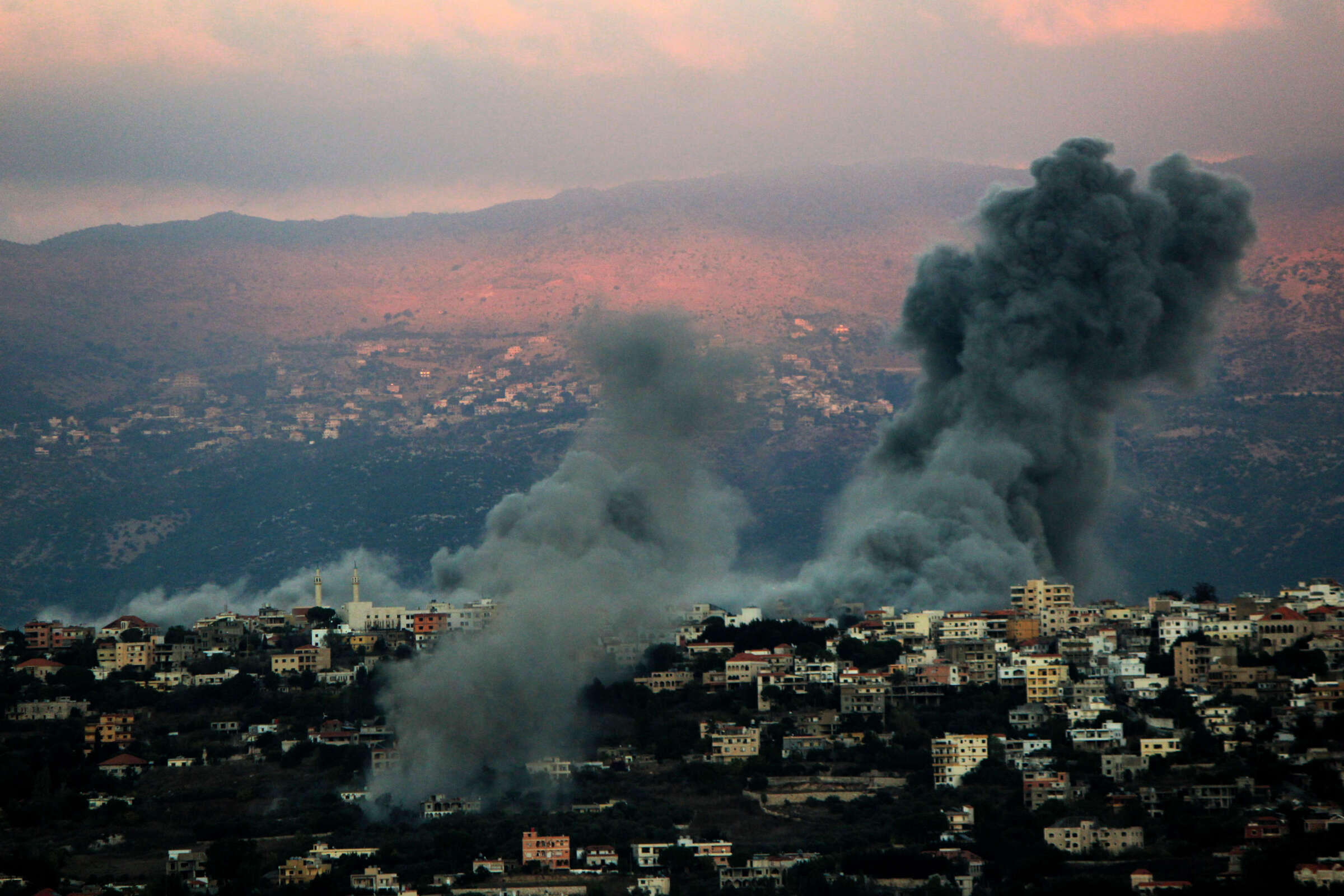
Israel’s massive intelligence and military operation on September 17 and 18, 2024, famously dubbed Black Wednesday in Lebanon, didn't just break the back of Hezbollah’s communication network. It shattered the sense of safety for an entire civilian population. While the military objective targeted thousands of pagers and walkie-talkies used by Hezbollah operatives, the reality on the ground was far messier than a "surgical strike." If you think this was a clean hit on a terrorist group, you’re missing the terrifying complexity of how modern asymmetric warfare spills into grocery stores, funeral processions, and living rooms.
The operation was unprecedented. Thousands of small electronic devices exploded simultaneously across Lebanon and parts of Syria. Hospitals were instantly overwhelmed. Doctors who had seen decades of civil war and Israeli incursions described the scenes as some of the most horrific of their careers. The fundamental question remains. Was this a legitimate strike against a militant group, or a reckless gamble that knowingly put thousands of non-combatants in the line of fire? Discover more on a similar subject: this related article.
The Massive Scale of the Device Explosions
On that Tuesday and Wednesday, the buzz of a pager wasn't a message. It was a detonator. Hezbollah had switched to these low-tech devices to avoid Israeli GPS tracking and signal intelligence. It was a security move that backfired with lethal irony. Israeli intelligence—specifically Mossad and Unit 8200—likely spent years setting up front companies like BAC Consulting in Hungary to manufacture these "Trojan horse" devices.
The explosions weren't just in military barracks. They happened in fruit markets. They happened in cars stuck in midday traffic. They happened in homes where children were sitting next to their fathers. According to the Lebanese Ministry of Public Health, at least 37 people died over the two days, and nearly 3,000 were wounded. These aren't just numbers. These are thousands of people who lost eyes, fingers, or suffered deep abdominal wounds because they happened to be near a beep. Further analysis by TIME highlights comparable views on the subject.
The sheer volume of casualties in such a short window paralyzed the Lebanese medical system. In Beirut, the American University of Beirut Medical Center (AUBMC) and Mount Lebanon Hospital became focal points of a crisis they couldn't possibly prepare for. Most of the injuries were to the face and hands. Why? Because the pagers beeped before exploding. People picked them up and held them to their eyes to read the "message."
Why the Proportionality Argument Fails for Civilians
International law is pretty clear on paper but a nightmare in practice. The principle of distinction requires militaries to distinguish between combatants and civilians. Israel argues that since the pagers were distributed to Hezbollah members, they were military targets. But Hezbollah is more than a militia. It’s a massive political party and social service provider in Lebanon.
Think about the guy who works in a Hezbollah-run hospital or a local municipality office. He carries a pager. Is he a "combatant" in the eyes of a drone operator? Probably not. Was his pager rigged to explode while he stood in line at a pharmacy? Yes. Human Rights Watch and various UN experts pointed out that booby-trapping objects used by civilians—or objects that look like everyday items—is generally prohibited. You can't just turn the civilian infrastructure of a country into a minefield.
The psychological toll is perhaps even heavier than the physical one. After Black Wednesday, a wave of paranoia gripped Lebanon. People started throwing away their power banks. They were afraid of their laptops. There were reports of people refusing to ride in elevators with anyone carrying an electronic device. This wasn't just a hit on Hezbollah. It was a terrorizing event for every Lebanese citizen, regardless of their politics.
Behind the Intelligence Failure of Hezbollah
Hezbollah leader Hassan Nasrallah had warned his followers months prior to ditch their smartphones. He called them "collaboration devices." He thought pagers were the "silent" solution. He was dead wrong. The group's internal security, which they pride themselves on, was completely compromised at the supply chain level.
The devices—specifically the Gold Apollo AR-924 pagers—were reportedly intercepted and fitted with small amounts of PETN explosive before they ever reached Lebanon. This means Israel didn't just "hack" the devices. They owned the manufacturing process. It’s a level of infiltration that makes traditional spying look like child’s play.
Hezbollah’s military wing took a massive hit, not just in manpower, but in morale. Thousands of their guys were suddenly out of commission, many permanently blinded or maimed. In a culture that prizes "martyrdom" and strength, having your warriors incapacitated by their own pockets is a humiliation that’s hard to quantify. But the price of that humiliation was paid by the bystanders who had no part in the conflict.
The Human Cost Outside the Militia
If you look at the names of the dead, you see people like Fatima Abdullah. She was a 10-year-old girl in the Bekaa Valley. She wasn't a Hezbollah commander. She was at home when her father’s pager started beeping. She picked it up to bring it to him. It exploded in her hands.
This is where the "surgical strike" narrative falls apart. When you detonate thousands of devices blindly, you aren't aiming. You're hoping. You're hoping that the target is alone. You're hoping the device isn't being held by a kid. In Lebanon’s dense urban environments, those hopes are statistically impossible.
The healthcare workers were also caught in the crosshairs. Many Hezbollah-affiliated paramedics carry these pagers for emergency dispatch. On Black Wednesday, the very people supposed to respond to the victims were victims themselves. It created a horrific feedback loop where the emergency response was decapitated at the exact moment it was needed most.
What This Means for the Future of Warfare
The "pager attack" changed the rules. We’re now in an era where the supply chain is the battlefield. You don't need to drop a 2,000-pound bomb if you can put three grams of explosive in a guy's pocket. It’s more "efficient" for the military, but it’s infinitely more dangerous for global stability.
If this becomes a standard tactic, every piece of imported technology becomes a potential weapon. This isn't just a Lebanon problem. It’s a global trade problem. It invites every other nation to start looking at their electronics with suspicion. If Israel can do it to Hezbollah, what’s stopping a state actor from doing it to a political rival's communication network?
How to Stay Informed on the Ground
The situation in Lebanon is still volatile. The border clashes have only intensified since Black Wednesday. If you're following the news, don't just look at the headlines about "militant hits." Look at the reports from the Lebanese Ministry of Health and independent NGOs like Médecins Sans Frontières (MSF). They provide the raw data on who is actually filling the hospital beds.
If you’re concerned about the broader implications of supply chain security, start looking into hardware provenance. This event proved that software encryption means nothing if the physical hardware is compromised. For those in conflict zones or high-risk professions, the move back to truly "dumb" tech or verified, air-gapped systems isn't just a conspiracy theory anymore. It’s a survival strategy. Keep your eyes on the de-escalation efforts, but don't expect the paranoia in Beirut to fade anytime soon. The beep of a pager is no longer just a sound—it's a trigger.