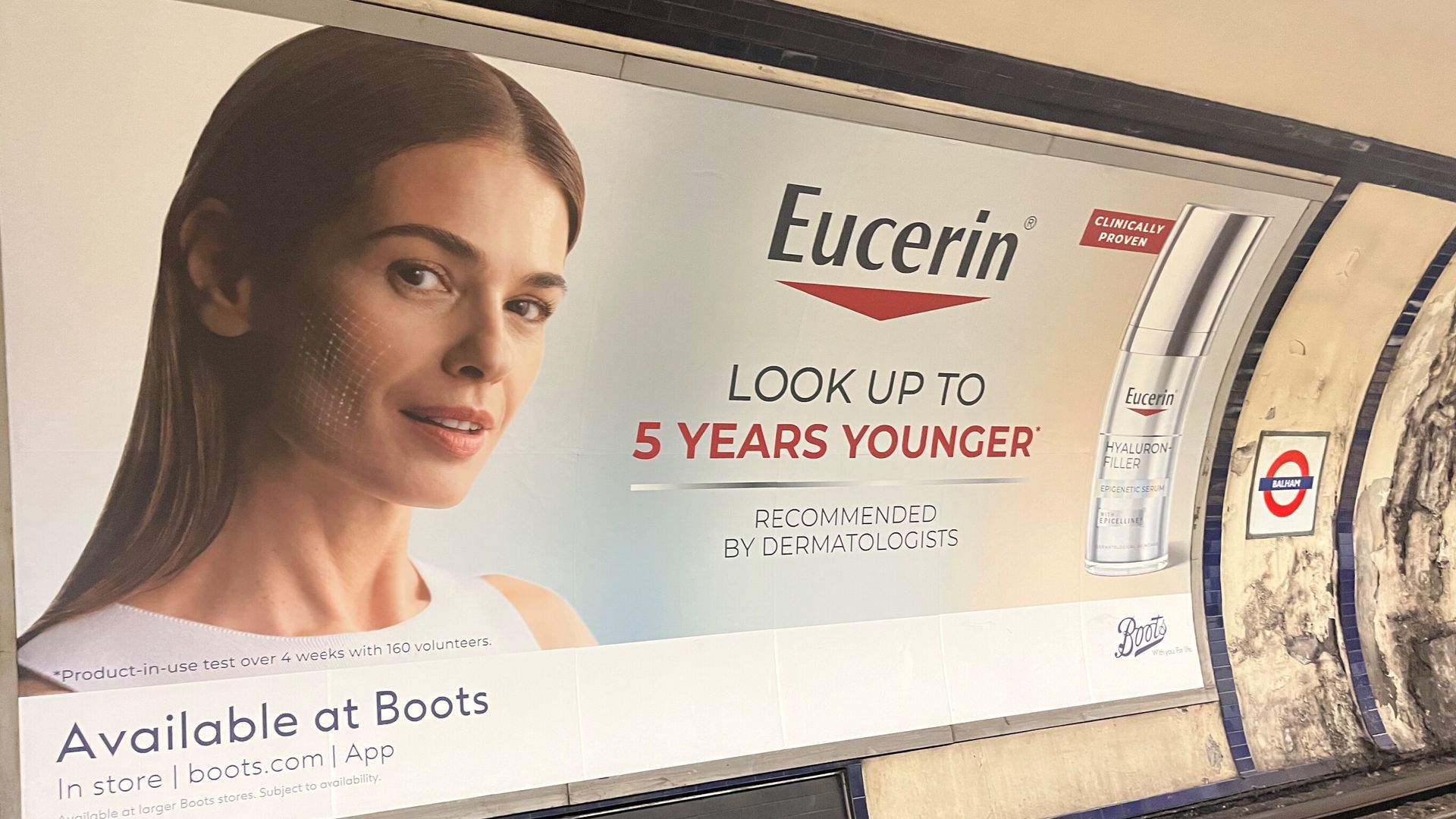
Your skin doesn’t lie, but skincare ads definitely do. We’ve all seen the glossy campaigns promising to "erase a decade" or "rewind the clock" in just a few drops. Usually, these brands get away with it by burying a tiny disclaimer in the fine print. Not this time. The UK's Advertising Standards Authority (ASA) just pulled the plug on a major skin serum ad because it made the bold, specific claim that users would look five years younger.
It’s a win for truth in beauty. For years, the industry has lived in a gray area where "clinical trials" are often just internal surveys with twenty people who were paid to be there. This ban isn't just about one brand. It's a warning shot to every company trying to sell bottled miracles without the data to back them up. If you're going to put a number on age reversal, you better have a mountain of evidence. Most don't.
Why the Five Years Younger Claim Failed the Reality Test
The ASA doesn't ban things on a whim. They look at whether a "reasonable consumer" would take a claim literally. When an ad says you’ll look five years younger, that isn't just marketing fluff. It's a quantifiable promise. The brand in question failed to provide peer-reviewed, independent evidence that their serum actually changes the structural appearance of the skin to that specific degree.
I've looked at countless "anti-aging" studies over the years. Most of them measure things like "perceived brightness" or "temporary hydration." While a serum might make your skin look plumper because it's full of hyaluronic acid, that isn't the same as actually reversing the aging process. The ASA saw right through the smoke and mirrors. They noted that the data provided was based on subjective self-assessments rather than objective, scientific measurements of wrinkle depth or skin elasticity across a statistically significant group.
It’s easy to fool a consumer. It’s much harder to fool a regulator with a background in data verification. Brands often confuse "consumer perception" with "clinical efficacy." Just because 80% of women say they feel younger doesn't mean they actually look five years younger by any measurable standard.
The Problem With Skincare Math
Marketing teams love numbers. Numbers feel like facts. But in the beauty world, these figures are often manipulated to create a false sense of certainty. You’ve seen them. "95% of women saw a reduction in wrinkles." What they don't tell you is that those 95% might only include 19 out of 20 people in a room.
The "five years younger" claim is particularly egregious because it targets a deep-seated insecurity. It sets an expectation that no topical product can realistically meet. To actually look five years younger, you usually need a combination of genetics, professional-grade dermatological procedures, and a very strict lifestyle. A £40 serum isn't going to do the heavy lifting of a facelift or a series of deep chemical peels.
We need to stop falling for "Skincare Math." If a brand claims a specific numerical result, ask yourself these questions.
- Was the study independent or funded by the brand?
- How many people were in the test group?
- Did they use high-resolution imaging or just mirrors?
- Was there a control group using a basic moisturizer?
Most of the time, the "results" disappear if you stop using the product for three days. That isn't aging reversal. That's just temporary surface smoothing.
Regulators are Finally Catching Up to Photoshop and Filters
This ban isn't happening in a vacuum. It follows a series of crackdowns on the use of filters and heavy retouching in beauty ads. For a long time, brands would claim a serum fixed "fine lines" while showing a model who had been airbrushed into digital perfection. That’s fundamentally dishonest.
The ASA is making it clear that if you show a "before and after" or make a specific age claim, it has to be representative of what a normal person can achieve. You can't use lighting tricks. You can't use post-production. And you certainly can't tell people they'll look like they've traveled back in time unless you have the receipts.
This matters because it protects the most vulnerable consumers. People spend hundreds, sometimes thousands, of pounds on products that promise the world and deliver almost nothing. When a regulator steps in, it forces brands to be more honest about what their products actually do. Usually, they just hydrate. And while hydration is great for skin health, it isn't magic.
How to Spot a Misleading Beauty Ad Before You Buy
You don't have to wait for the ASA to ban an ad to know it's probably full of it. You can train your eye to see the red flags. Brands that rely on "revolutionary" or "miracle" language are usually compensating for a lack of actual active ingredients.
Look at the ingredient list instead of the billboard. If the "star ingredient" is at the very bottom of the list, behind water and glycerin, it’s basically a homeopathic dose. It won't do anything for your wrinkles. Also, watch out for "clinically proven" labels that don't link to an actual study. If they won't show you the data, the data probably isn't very good.
Watch for These Marketing Tricks
- The "Self-Assessment" Trap: If the ad says "88% agreed," that’s an opinion, not a fact. Opinions are cheap.
- The High-End Comparison: Some brands claim to be "better than a leading filler." They aren't. No cream can mimic the volume-adding effects of an injectable.
- The Artificial Glow: If the model looks like she’s glowing, check the ingredient list for mica or bismuth oxychloride. These are tiny shiny particles that reflect light. They make you look better for an hour, but they don't change your skin.
What This Means for the Future of Skincare Branding
Expect to see a shift. Smart brands are moving away from "anti-aging" language entirely. They're talking about "skin health," "resilience," and "radiance." These are safer bets for marketing because they're harder to disprove and less predatory.
The companies that continue to push the "look younger" narrative are going to find themselves in the crosshairs of regulators more often. This recent ban is a precedent. It proves that the "five years younger" claim is officially off-limits unless you’ve got the most rigorous scientific backing in the history of the industry.
Honestly, it's about time. We've been lied to for decades about what a bottle of lotion can do. If you want to look five years younger, sleep more, wear sunscreen every single day, and maybe talk to a dermatologist about tretinoin. Everything else is mostly just expensive water.
Stop buying the hype. Next time you see an ad promising to shave years off your face, remember this ban. Check the fine print. Look for the "consumer perception" disclaimer. If the brand is making a promise that sounds too good to be true, it is. Buy products for what they actually do—moisturize, protect, and clean—not for the fairy tales they tell on the box. Support brands that use transparent labeling and skip the "miracle" claims. Your wallet will thank you, and your skin won't know the difference.