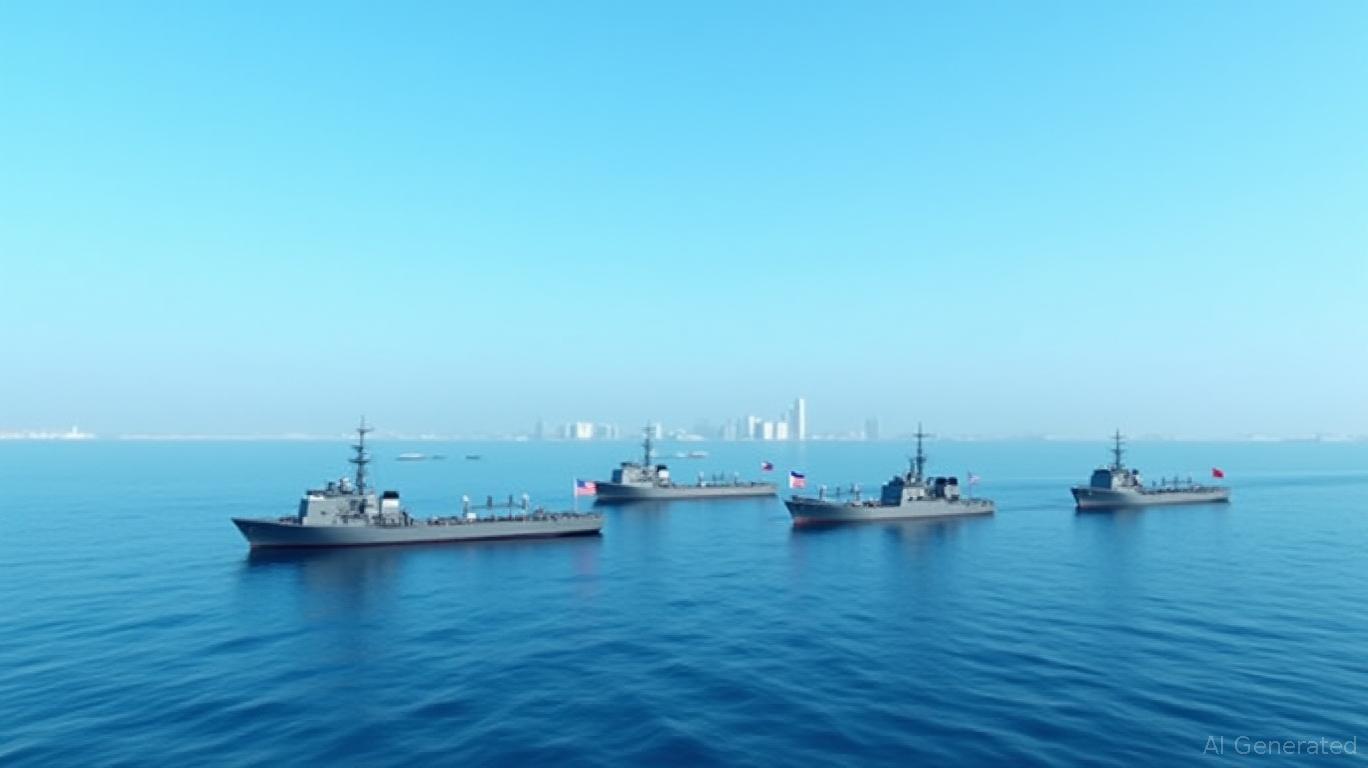
The Strait of Hormuz is basically the world's jugular vein for oil. When things go sideways in the Middle East, this narrow stretch of water becomes the most watched real estate on the planet. Following the weekend's military escalations, everyone expected a complete shutdown or a permanent spike in shipping activity. What actually happened was a chaotic, short-lived surge in vessel movement followed by a noticeable, heavy silence. It's a classic case of market whiplash.
If you're looking at the data, the knee-jerk reaction from global markets wasn't just about fear. It was about logistics. Ship owners and commodity traders don't wait for the dust to settle. They move fast or they stop entirely. We saw a brief window where tankers scrambled to clear the area, followed by a standoff that has left the world's most critical maritime chokepoint looking uncharacteristically quiet. Also making headlines in related news: The Brutal Reality of Survival After Five Days Floating in the Mediterranean.
Why the Initial Traffic Spike Was a False Signal
Markets love to overreact. When the news of the attacks broke, AIS (Automatic Identification System) data showed a flurry of activity. This wasn't because trade was booming. It was a mass exodus. Captains were pushing engines to get through the 21-mile-wide passage before any potential blockades or further strikes could trap them inside the Persian Gulf.
Think of it like a theater fire. Everyone runs for the exit at once. That creates a "spike" in traffic at the door, but it doesn't mean the theater is doing great business. Most of these vessels were VLCCs (Very Large Crude Carriers) carrying millions of barrels of oil destined for Asian markets, particularly China and India. They had to move. Additional information regarding the matter are detailed by USA Today.
The spike was also driven by insurance premiums. Once a region is designated as a "Listed Area" by the Joint War Committee in London, the cost to sail through it skyrockets. Ship owners who were already in the vicinity rushed to exit the Strait to avoid the massive "war risk" surcharges that kick in the moment a conflict scales up. If you can save $200,000 in insurance by hitting the throttle for six hours, you do it.
The Chilling Effect of Sustained Tension
After that initial burst of speed, the numbers tanked. Why? Because the risk-reward math stopped making sense for new entries. We’re now seeing a "wait and see" approach that is slowing down the global supply chain in real-time.
When traffic slows in the Strait of Hormuz, it isn't just a local problem. This waterway handles roughly 20% of the world's total consumption of liquid petroleum. That's about 20 million barrels every single day. When the flow stutters, refinery schedules in South Korea and Japan start to glitch.
The current slowdown is defined by three main factors:
- Direct Orders: Many state-owned shipping lines have issued "hold" orders, telling their fleets to drop anchor in safe zones outside the Gulf of Oman.
- Dark Ships: We're seeing an increase in vessels turning off their transponders. This makes "official" traffic look lower than it might actually be, but it also increases the risk of collisions in one of the world's most crowded lanes.
- Rerouting Realities: Unlike the Red Sea, where you can just go around Africa (at a massive cost), there is no "around" for the Persian Gulf. If you want the oil from Kuwait, Iraq, or the UAE, you go through Hormuz or you don't get it.
The psychological impact on the maritime industry is huge. Sailors aren't just numbers on a spreadsheet. They're people who don't want to be on a target. When a drone or a missile hits a hull, the labor unions and the crew management companies start pushing back. This human element is often what actually drives the slowdown more than the high-level politics.
The Insurance Crisis Nobody Is Talking About
Everyone looks at the price of Brent Crude, but the real indicator of trouble is the insurance market. Underwriters are the ones who actually decide if a ship moves. Right now, the "war risk" premium for a single transit through the Strait has jumped significantly.
For a tanker worth $100 million, a 1% premium means $1 million just for the privilege of sailing through the Strait once. That cost gets passed directly to the consumer. It’s a hidden tax on every gallon of gas and every plastic product made from those petrochemicals.
We’ve seen this movie before. During the "Tanker War" of the 1980s, hundreds of ships were attacked. The difference now is the technology. Cheap suicide drones and precision missiles mean that even a sophisticated navy can't guarantee 100% protection for every slow-moving tanker. This asymmetrical threat is what's keeping ship owners awake at night.
Comparing This to Previous Disruptions
It’s easy to get caught up in the "unprecedented" nature of today's headlines. But history gives us a roadmap. In 2019, when several tankers were sabotaged with limpet mines, we saw a similar pattern: a spike in fear, a surge in insurance, and a temporary dip in volume.
The difference today is the fragility of the global economy. In 2019, we didn't have the same level of inflation or the same level of geopolitical polarization. Today, a week-long slowdown in the Strait could trigger a much more severe reaction in Western markets.
Energy security isn't just about having oil; it’s about the reliability of the delivery mechanism. The Strait of Hormuz is a geographic bottleneck that cannot be engineered away. While Saudi Arabia and the UAE have pipelines that can bypass the Strait (like the East-West Pipeline to Yanbu), these pipes don't have the capacity to handle the full volume of Gulf exports. The world is stuck with Hormuz.
What to Watch in the Coming Days
Don't just look at the total number of ships. Look at the type of ships. If the LNG (Liquefied Natural Gas) carriers start to slow down, that’s when you should really worry. While oil can be stored in massive strategic reserves, gas markets operate on much tighter "just-in-time" schedules. A disruption in LNG flow from Qatar through the Strait would send European power prices into a tailspin almost instantly.
You should also keep an eye on the "shadow fleet." These are older, poorly insured vessels used to move sanctioned oil. They often ignore safety protocols and are more likely to take risks during a conflict. If an accident happens involving a shadow fleet vessel because they were rushing to beat a blockade, the environmental disaster alone could close the Strait more effectively than any navy.
The situation is fluid. One day of high traffic doesn't mean "business as usual." It usually means everyone is trying to get out while the getting is good. The true health of the Strait is measured by the steady, boring, rhythmic flow of tankers. Right now, that rhythm is broken.
Practical Steps for Tracking This Crisis
If you're trying to make sense of the noise, stop reading the panicked tweets and look at the hard data.
- Check the TankerTrackers data: They use satellite imagery to verify what’s actually happening, regardless of whether a ship has its transponder on or off.
- Watch the Suezmax and VLCC spot rates: When these rates climb, it means the market is pricing in extreme risk or extreme demand for quick exits.
- Monitor the "Bunker" prices in Fujairah: This is a major refueling hub just outside the Strait. If ships aren't stopping there to fuel up, they aren't planning on heading into the Gulf.
The reality is that the Strait of Hormuz remains the ultimate geopolitical lever. Whether traffic is up or down this afternoon matters less than the fact that the lever is being pulled. The slowdown we're seeing now is the market holding its breath. When it finally exhales, the price at your local gas station will be the first thing to feel it. Don't be fooled by a single day of "busy" traffic. The trend is moving toward caution, and caution in the shipping world is always expensive.