Every November, the lifestyle complex wheels out the exact same tired playbook. Magazines, blogs, and sponsored social media posts converge on a single, insidious lie: that Thanksgiving can be easy, stress-free, and frictionless if you just buy enough single-use gadgets, pre-chopped vegetables, and microwaveable shortcuts.
They sell you a fantasy of effortless holiday entertaining. They tell you to brine your turkey in a disposable bag, buy frozen pie crusts, and treat the meal like an assembly line so you can spend more time sipping wine in your living room.
It is a grift.
When you strip the friction out of Thanksgiving, you strip out the meaning. Cooking a massive, multi-course meal for a crowd is supposed to be hard. It is an arduous, high-stakes logistical challenge that demands physical labor, precise timing, and a minor psychological toll. That friction is the point. The dinner table does not bond people together because the carrots were pre-peeled; it bonds them because everyone survived the kitchen floor together.
I have spent decades watching hosts panic over dry turkey and sunken soufflés because they bought into the myth of the frictionless holiday. They end up serving lukewarm processed convenience food while pretending to be relaxed. Stop chasing the frictionless holiday. Embrace the chaos, master the craft, and let go of the industrial lie that convenience equals hospitality.
The Myth of the Make-Ahead Master
The cornerstone of the easy Thanksgiving industrial complex is the make-ahead schedule. You are told to cook everything days in advance, shove it into aluminum pans, and reheat it when the guests arrive.
This is culinary malpractice.
Roast turkey left in a fridge for forty-eight hours loses its structural integrity. Mashed potatoes reheated in a casserole dish turn into wallpaper paste as the starches retrograde and the butter breaks. Green bean casseroles made with canned soup taste like sodium and despair.
Real food physics does not care about your hosting timeline. When you decouple cooking from serving, you destroy texture. Moisture redistributes into places you do not want it. Crispy things get soggy. Soft things get dense.
Instead of spreading your labor across a week of miserable prep, compress it. Focus on what actually needs to happen on the day of the feast. A fresh turkey roasted in a ripping-hot oven cannot be simulated by a bird you baked on Tuesday and zapped on Thursday. If you want a great meal, you have to accept the tax of doing it live.
The Equipment Trap
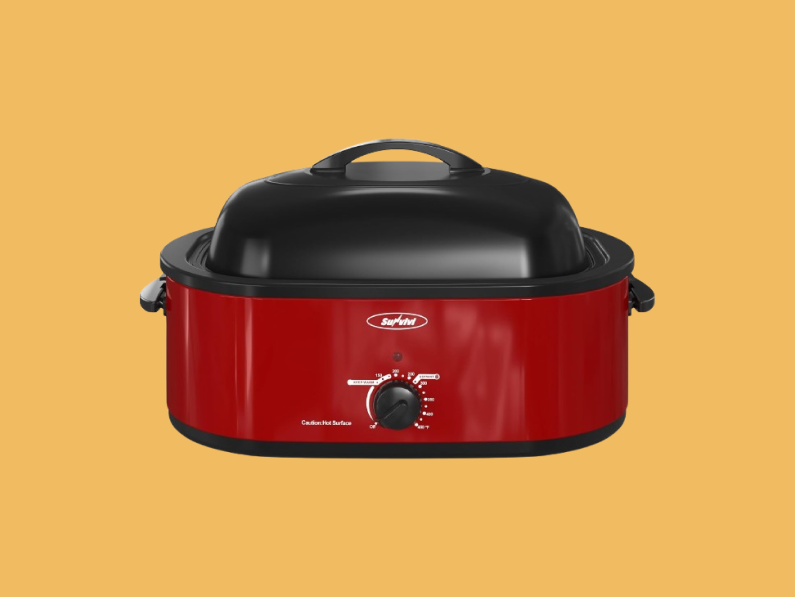
Walk into any big-box kitchen store in November, and you will see an aisle dedicated to unitasking Thanksgiving plastic. Turkey lacers, electric carving knives, disposable foil roasters, and electronic meat thermometers that cost more than a decent steak.
Here is a hard truth from someone who has run commercial kitchens: you need a heavy-gauge roasting pan, a sharp chef knife, a stable cutting board, and an instant-read digital thermometer. Everything else is garbage designed to separate you from your cash.
Disposable aluminum roasting pans are structural disasters. They flex when you try to lift a twenty-pound bird, splashing boiling fat across your oven door and risking third-degree burns. They also conduct heat poorly, resulting in pale, soggy skin on the bottom of your turkey while the top scorches.
Stop buying specialized gadgets for a single day of the year. Invest in heavy stainless steel or cast iron. Treat your kitchen tools like instruments, not disposable novelties.
The Menu Bloat Fallacy
Another pillar of the easy Thanksgiving narrative is variety. The magazines insist you need three different stuffings, four vegetable sides, five pies, and a grazing board that costs as much as a round-trip plane ticket.
This is amateur hour.
More options do not equal better hospitality; they equal operational failure. When you have six dishes competing for oven space at different temperatures, you turn your kitchen into an air traffic control tower with no radar.
Simplify the menu, but elevate the execution. You do not need five kinds of potatoes. You need one masterclass in starch: smooth, heavily-buttered mashed potatoes made with Yukon Golds and heavy cream, or crispy roasted potatoes rendered in duck fat.
Focus on three pillars: a properly cooked bird, a transcendent starch, and an acidic element to cut through the heavy fats. Everything else is noise. When you cut the menu fat, you suddenly find you have the time and bandwidth to cook real food without popping blood vessels in your eyes.
The Hospitality Lie
We have been sold the idea that a good host is invisible. The modern etiquette industrial complex wants you to believe that the ultimate dinner party is one where the host sits at the table, completely unruffled, looking like they just stepped off a yachting brochure.
Guests do not want an undisturbed host. Guests want to feel like they are being welcomed into a living, breathing home where work is happening. There is profound psychological comfort in watching a host pull a bubbling pan from the oven, carve the bird with confidence, and pour the gravy with a slightly flushed face.
That is not stress; that is care.
When you sanitize the process with pre-packaged shortcuts and microwave assembly, you remove the human element. You are no longer feeding your friends and family; you are catering to them. There is a vast, unbridgeable chasm between catering and hosting. Catering is transactional. Hosting is intimate, messy, and inherently demanding.
The Uncomfortable Truth About the Turkey
Let us address the bird in the room. Everyone is terrified of dry turkey. This fear has spawned a multi-million-dollar industry of brining kits, injection needles, and complicated roasting bags.
The fear is entirely self-inflicted.
Commercial turkeys are bred to yield massive, dry breast meat while the dark meat takes twice as long to cook. The solution is not a chemical brine or a plastic bag. The solution is butchery.
Stop roasting whole turkeys. Break the bird down. Roast the breasts and legs separately, pulling them from the heat the exact second they hit their respective target temperatures. If you refuse to butcher your bird, at least spatchcock it so it lays flat and cooks evenly.
Will it look less traditional on the carving platter? Yes. Will it taste exponentially better, with crisp skin and succulent, juicy meat throughout? Absolutely. Function beats form every single time in a serious kitchen.
Embracing the Burn
Here is the downside to my approach: your kitchen will be a mess. You will have flour on the counter, dishes in the sink, and grease on the backsplash. You might even burn a batch of rolls.
Good. That means you are actually cooking.
The obsession with cleanliness during holiday prep is a symptom of people who view cooking as content rather than nourishment. Real meals leave debris. Real kitchens get loud, hot, and crowded.
Stop trying to curate an aesthetic experience for people who only want food. Feed them. Feed them real things made with real butter, real heat, and real effort. Stop buying the shortcuts. Stop listening to the lifestyle influencers who have never worked a line in their lives.
Get into the kitchen. Make mistakes. Fix them on the fly. Burn your fingers a little bit. That is where the meal comes alive.
The Real Work Begins Now
The next time someone tells you how to hack your Thanksgiving or streamline your holiday hosting into a low-effort exercise in consumerism, walk away. They are selling you a sanitized version of an event that derives its entire soul from its difficulty.
Throw out the disposable pans. Ditch the pre-made pastry. Buy a whole bird, sharpen your knife, and accept that greatness requires friction.
Dinner is served. Deal with the heat.


