There is a specific, quiet despair that settles into the human chest at 6:45 PM on a Tuesday. It has nothing to do with global economics or the state of modern art. It lives in the refrigerator.
You open the door, seeking refuge or inspiration, only to be met by the unmistakable scent of defeat. A bag of spinach, purchased with the best of intentions just four days prior, has surrendered to the dark arts of oxidation, turning into a suspicious, liquefied green sludge. Beside it, a box of open pasta spirals has tipped over, spilling like tiny plastic bones across the glass shelf. Next to that, craft supplies, misplaced in a frantic Sunday tidy-up, share airspace with a half-sliced block of cheddar that now wears a coat of pale, furry armor.
Chaos.
We live in a culture obsessed with grand transformations. We buy workout gear to conquer our bodies, planners to conquer our time, and self-help manifestos to conquer our minds. Yet, we are routinely brought to our knees by a 12-ounce container of leftover chicken tikka masala and a pantry that sounds like a dry-goods avalanche every time someone reaches for the cinnamon.
The problem is not our willpower. The problem is our geometry.
Consider Sarah, a hypothetical graphic designer living in a modest apartment with a kitchen built for one person and tolerated by two. Sarah does not dream of complex spreadsheet-based meal prepping. Sarah simply wants to open her pantry without a box of stale crackers falling directly onto her toe. She wants to buy a head of romaine lettuce and discover, seven days later, that it still possesses the crisp, watery crunch of something freshly picked, rather than the limp structural integrity of a wet gym sock.
For years, the market offered us two distinct choices for this domestic war zone. We could buy cheap, flimsy plastic bins that warped the moment they encountered a microwave wave, staining a permanent, tragic orange from tomato sauce on the first use. Or, we could take out a small personal loan to finance thick, crystal-clear architectural glass containers that weighed as much as an anvil, ensuring that bringing lunch to work felt less like a midday meal and more like a punishment for upper-body weakness.
Neither option understood the physics of living.
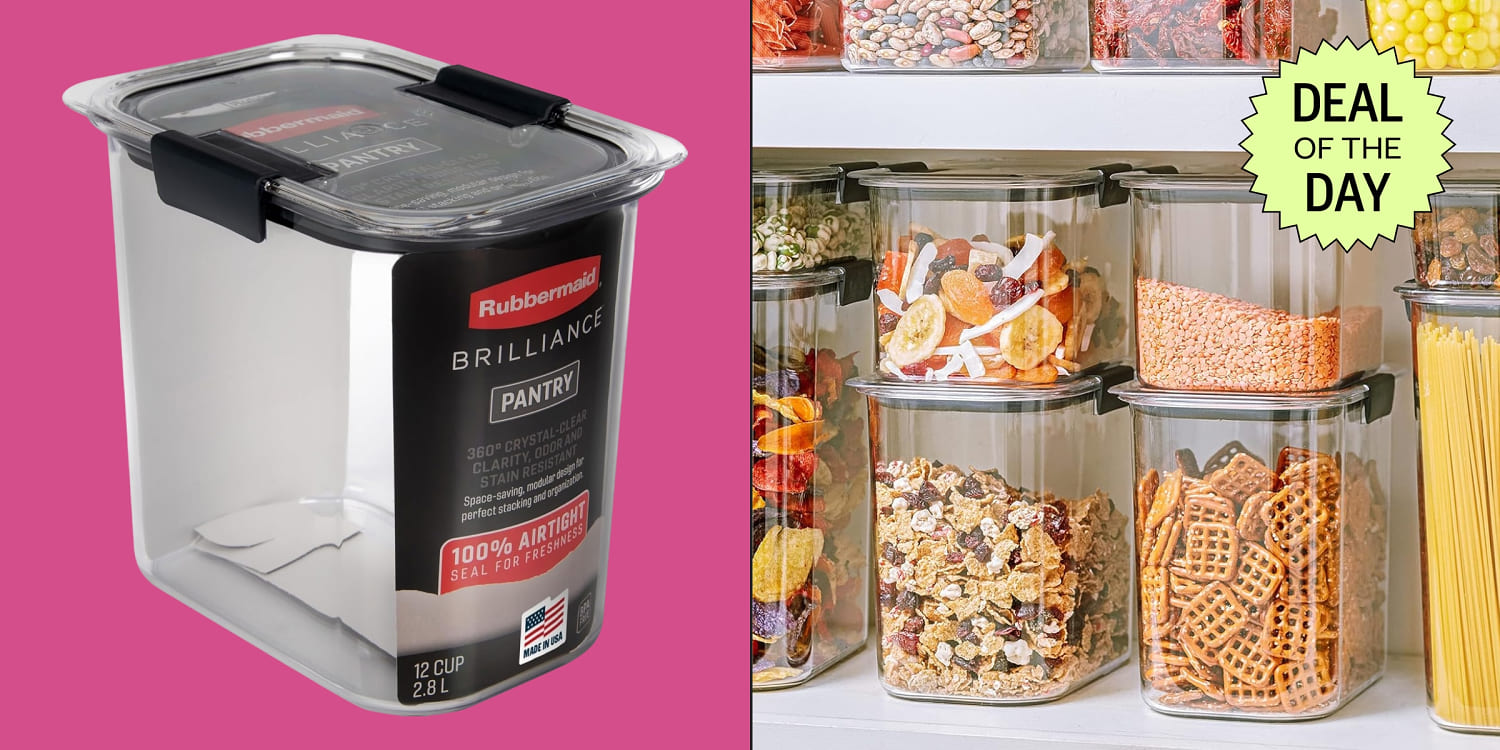
Then came the quiet shift. A piece of engineering so unassuming it barely registered on the cultural radar. It is a humble Rubbermaid container, currently sitting at an accessible twelve dollars, and it has quietly altered the domestic equilibrium of thousands of kitchens.
To understand why this matters, we must look at how we got our storage philosophy completely backward. For decades, packaging was designed for the shelf, not the human hand. Manufacturers treated containers as static tombs rather than dynamic tools. They focused on airtight seals while forgetting about stacking friction, lid compatibility, and the brutal reality of the dishwasher.
When you hold a truly well-designed storage vessel, you notice what is missing. There are no tiny, impossible-to-clean crevices where mold stages secret rebellions. The lid does not require a wrestling match involving two thumbs and a muttered curse word to snap into place. It seals with a clean, satisfying click that tells the nervous system: this is contained. The entropy has paused.
Let us talk about the science of keeping things fresh, stripped of corporate marketing speak. Food decays because it is alive, or because it interacts with things that are alive. Oxygen is the enemy of crispness. Moisture is the architect of rot. When you drop produce into an unsealed or poorly sealed container, you are throwing a party for ambient bacteria.
A proper container acts as a micro-climate regulator. It manages the atmospheric pressure and humidity inside its own little plastic walls. In the case of this specific twelve-dollar marvel, the secret lies in the modular discipline of its design. It fits into the weird, dead space of a cramped pantry like a missing tooth in a puzzle. It slides into the refrigerator door shelf without demanding an awkward rearrangement of every condiment bottle you own.
Imagine the tactile satisfaction of opening a pantry shelf where every box of lentils, every bag of rice, and every container of dried oregano stands at attention. No loose flaps. No rubber bands holding together bags of brown sugar that have somehow turned into a geological monolith of hardened molasses.
This is not merely about tidiness. Tidiness is an aesthetic; order is a psychological sanctuary.
When your environment is chaotic, your brain allocates a tiny, persistent fraction of its processing power to managing that chaos. You walk past the messy pantry, and a sub-routine in your mind fires off: I need to fix that someday. You open the fridge, see the mess, and another sub-routine whispers: I am failing at adulting. Multiply this by a dozen micro-frustrations every single day, and you have a recipe for low-grade, chronic exhaustion.
Fixing the container does not fix your life. But it clears the static.
When you spend twelve dollars on a piece of kitchen utility that actually works, you are buying back cognitive bandwidth. You are casting a vote for a world where your Tuesday night does not end with scraping liquefied spinach into the trash can while questioning your life choices. You are buying the right to open your refrigerator and see clarity, modular and gleaming under a forty-watt bulb.
The container sits there on the shelf. It does not demand applause. It does not promise to change your destiny. It simply holds the line against the relentless, messy tide of daily existence, keeping the spinach crisp and the chaos at bay until the morning light finally breaks across the counter.