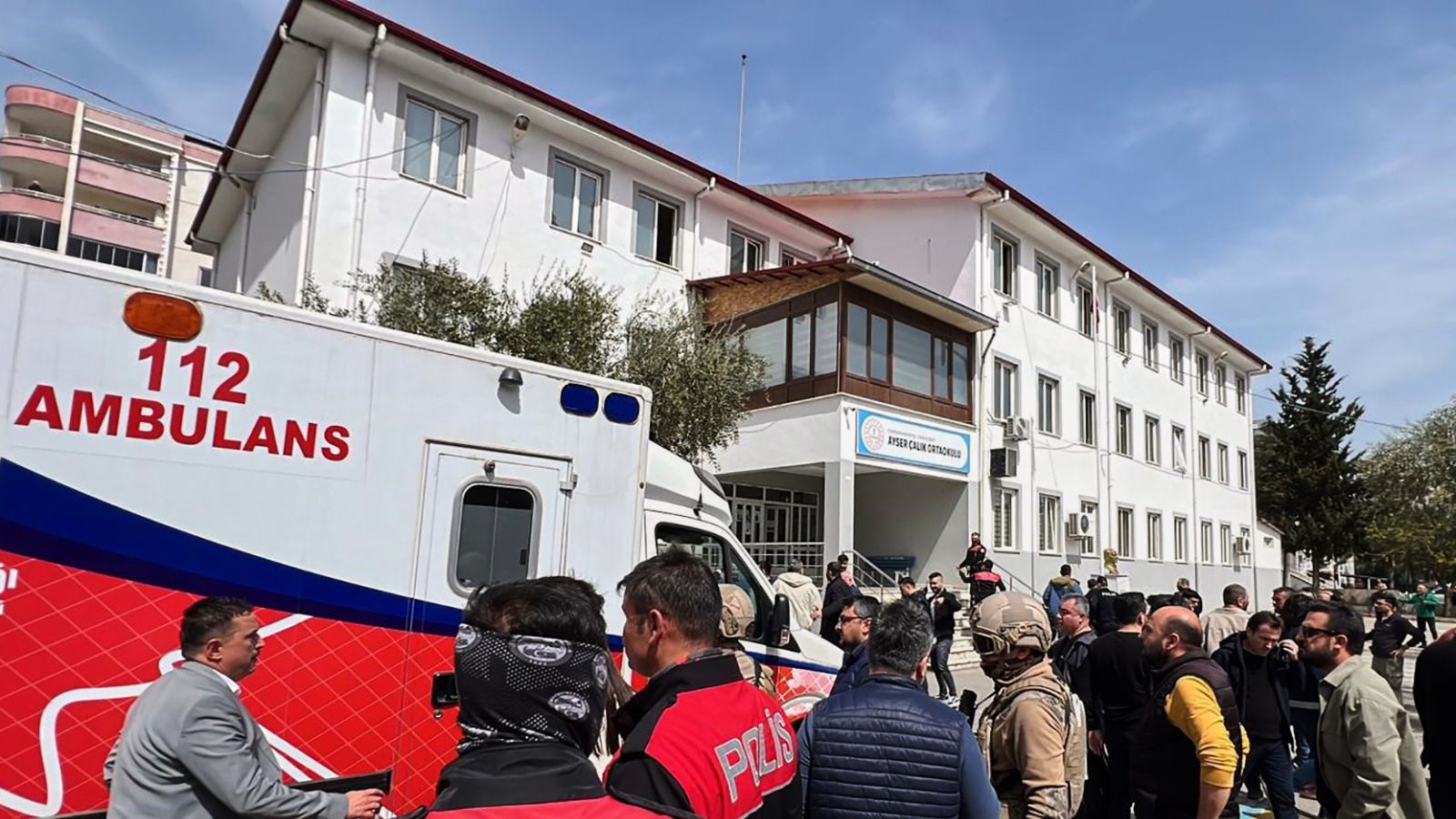
The quiet corridors of Turkish education have been shattered by a terrifying pattern of violence that many officials hoped would never cross their borders. In a span of just forty-eight hours, two separate incidents involving armed students have left the nation reeling. The most recent horror involves a 14-year-old student who opened fire at a school in Turkey, resulting in the deaths of nine individuals. This isn't an isolated tragedy. It is the bloody manifestation of a deepening crisis involving unregulated access to firearms, a lack of psychological support in schools, and a social media environment that radicalizes marginalized youth before the state even knows they are struggling.
The first shooting happened less than two days prior. When the second occurred, the narrative shifted from "freak accident" to a systemic emergency. Turkey now faces a grim reality that was once considered a uniquely American pathology. The suspect in the second shooting, a minor whose identity remains protected by Turkish law, reportedly entered the premises with a level of tactical focus that suggests premeditation rather than a momentary lapse of reason. Nine families are now planning funerals while the government scrambles to explain how a child managed to bypass security and execute a massacre of this magnitude.
The Myth of School Security
For years, Turkish schools have relied on a "security theater" approach. There are gates. There are occasionally guards. However, these measures are designed to keep outsiders out, not to monitor the students who walk through the doors every morning with resentment simmering in their backpacks.
Security experts argue that focusing on physical barriers is a losing game. Metal detectors and turnstiles cannot detect the intent of a 14-year-old who has spent months absorbing extremist rhetoric or bullying. The failure here is not a lack of locks, but a lack of behavioral intervention. In both recent cases, there were red flags. Peers reported erratic behavior. Social media posts hinted at a fascination with previous mass killers. Yet, the mechanism to report these warnings and trigger a mental health response simply did not exist.
Unregulated Firearm Access in the Shadows
Turkey has strict gun laws on paper, but the reality on the ground tells a different story. The black market for firearms, particularly unrecorded handguns and modified hunting rifles, is thriving. Investigative leads suggest that the weapons used in these shootings were not legally registered to the households.
The Rise of Ghost Guns and Illegal Sales
The proliferation of illegal arms is fueled by several factors:
- Online marketplaces that operate in the gray areas of encrypted messaging apps.
- Inadequate border controls that allow small arms to flow from neighboring conflict zones.
- Cultural normalization of firearm ownership in certain rural and peri-urban provinces.
When a 14-year-old can get their hands on a lethal weapon, the legislative framework has already failed. This isn't just about "bad parenting." It's about a supply chain that treats deadly weapons like any other commodity. The government's current crackdown on illegal sellers is a reactive measure that comes far too late for the victims in this latest tragedy.
The Digital Echo Chamber of Violence
We cannot ignore the role of the internet in shaping the psyche of these young shooters. These aren't just kids who "snapped." They are often participants in niche online subcultures that glorify violence, nihilism, and the "incel" ideology.
In Turkey, the language barrier used to act as a buffer against Western-centric extremist trends. That buffer is gone. Translation tools and globalized memes have allowed toxic ideologies to permeate Turkish youth circles. The shooter in this case reportedly spent significant time on forums where mass shooters are treated as "saints." This creates a feedback loop where a marginalized teenager sees a massacre not as a crime, but as a path to immortality.
A Mental Health System in Shambles
The ratio of school counselors to students in Turkey is abysmal. In many public schools, a single counselor is responsible for over a thousand students. Under these conditions, "counseling" becomes a bureaucratic exercise in paperwork rather than a lifeline for troubled kids.
Psychological distress among Turkish teenagers has spiked over the last five years. Economic instability, the pressure of high-stakes entrance exams, and a crumbling social fabric have created a pressure cooker. When a child is drowning in this environment, they often lash out. If they have access to a gun, that lashing out becomes a national tragedy.
Why Early Detection Fails
- Stigma: Seeking mental health help is still viewed as a weakness in many traditional Turkish households.
- Training: Teachers are trained to deliver curriculum, not to spot the clinical signs of a brewing violent episode.
- Resources: Even if a teacher identifies a problem, the referral pipeline to a child psychiatrist is often months long.
The Political Fallout and Public Anger
The public response has been one of unmitigated fury. Parents across the country are demanding to know why their children are no longer safe in the one place they are supposed to be protected. The Ministry of Education has promised an investigation, but "investigations" are the standard currency of political stalling.
Critics of the current administration point to a broader "culture of impunity." When political rhetoric becomes increasingly polarized and aggressive, it filters down to the youth. If the adults in the room solve their problems with threats and force, the children will eventually follow suit.
The Logistics of the Attack
The details of the shooting itself are harrowing. It occurred during a mid-morning break. The shooter targeted specific areas where students gather, showing an awareness of the school's schedule. This indicates a level of predatory planning that is chilling for a person of that age.
Witnesses describe a scene of pure chaos. There was no "active shooter" protocol in place. Teachers and students didn't know whether to barricade or run. This lack of preparedness contributed to the high death toll. In many ways, the school was a soft target, despite having a perimeter fence. The danger was already inside.
Breaking the Cycle
If Turkey wants to prevent a third shooting, it must move beyond thoughts and prayers. This requires a three-pronged assault on the status quo.
First, there must be a total crackdown on illegal firearm sales, specifically targeting the digital platforms where these deals are brokered. It isn't enough to arrest the person who pulls the trigger; the person who sold a 14-year-old a gun is just as complicit.
Second, the Ministry of Education must overhaul its approach to student welfare. This means hiring more counselors and giving them the authority to remove students from the classroom environment if they pose a credible threat, while simultaneously providing those students with intensive psychiatric care.
Third, there needs to be a national conversation about the radicalization of young men. This isn't just a security issue; it's a social one. We have to address the void that these extremist ideologies are filling.
The blood on the classroom floors is a map of our failures. Every hour spent debating politics instead of implementing concrete safety and mental health reforms is an hour that another troubled youth spends loading a magazine. We are no longer in a period of warning. We are in a period of consequences.
Stop looking for excuses and start looking at the gaps in the system that allowed a child to become a mass murderer. The weapons are in the hands of the youth because the adults failed to guard the door and failed to heal the mind.