The steel hull of a Nimitz-class aircraft carrier is a cathedral of American power. It rises twenty stories above the water, a floating city of five thousand souls, protected by a phalanx of destroyers and the most sophisticated radar systems ever devised. But inside the Combat Direction Center, the air is cold, and the tension is a physical weight. On the glowing screens, a nightmare is unfolding. It isn't a Soviet-style submarine or a high-altitude bomber.
It is a speck. Then ten specks. Then fifty.
They move with a frantic, jagged energy that defies the graceful arcs of traditional naval warfare. These are the Boghammars and the Zulfiqars—small, fast, and deceptively simple. In the jargon of the Pentagon, this is "asymmetric threats." In the reality of the Strait of Hormuz, it is a swarm of hornets descending on a giant.
The giant can crush a dozen hornets with a single swipe. But the giant only has two hands. The swarm has a hundred stingers.
The Geography of a Chokepoint
To understand the danger, you have to look at the map not as a blue expanse, but as a narrow hallway. At its tightest point, the Strait of Hormuz is only twenty-one nautical miles wide. Because of the way shipping lanes are partitioned to prevent collisions, the actual path for a massive oil tanker is even narrower—a two-mile wide strip of deep water.
On one side sits the Omani Musandam Peninsula. On the other, the jagged, arid coastline of Iran. Nearly thirty percent of the world’s seaborne oil flows through this needle's eye. If you want to collapse a global economy, you don't need to invade a country. You just need to park a few hundred angry hornets in this hallway.
The Iranian Revolutionary Guard Corps (IRGC) Navy doesn't try to out-build the United States Navy. They know they can't. Instead, they have perfected the art of the "Mosquito Fleet." They have spent decades refining a doctrine that prizes quantity, speed, and sacrificial aggression over the survival of any single vessel.
The Psychology of the Swarm
Consider a hypothetical young IRGC commander named Abbas. He isn't sitting in a mahogany-paneled office; he is strapped into a twin-engine speedboat that bounces violently over the chop at fifty knots. His boat is fiberglass, barely twenty feet long. It would be disintegrated by a single 20mm burst from a Phalanx Close-In Weapon System.
But Abbas isn't alone. He is part of a pack.
His boat is armed with a dual-use toolkit: a heavy machine gun, perhaps a few shoulder-fired missiles, or a crate of old-fashioned naval mines. In some configurations, his entire boat is the weapon—a remote-controlled or piloted suicide craft packed with hundreds of pounds of high explosives.
When the swarm attacks, they don't approach from one direction. They come from 360 degrees. They weave between the massive hulls of commercial tankers, using the innocent civilians as human shields. They know that a US destroyer captain faces an agonizing moral and tactical dilemma: if they open fire too early, they risk an international incident by hitting a merchant ship. If they wait too long, Abbas is close enough to see the rivets on the destroyer's hull before he pulls the trigger.
This is the "saturation" strategy. It relies on a simple mathematical truth: every defensive system has a limit. A billion-dollar Aegis destroyer can track hundreds of targets, but it only has a finite number of missiles in its vertical launch cells. It can only traverse its guns so fast. If you send sixty boats at once, the sixty-first boat is going to hit home.
The Invisible Stakes of a Broken Chain
Why does this matter to someone sitting in a suburban living room five thousand miles away? Because the Strait of Hormuz is the carotid artery of the modern world.
When a swarm of speedboats harasses a tanker, it isn't just a military skirmish. It’s a financial shockwave. The moment a "red alert" goes out in the Strait, the insurance premiums for every vessel in the Persian Gulf skyrocket. These are not small numbers. We are talking about millions of dollars in added costs per voyage, overnight.
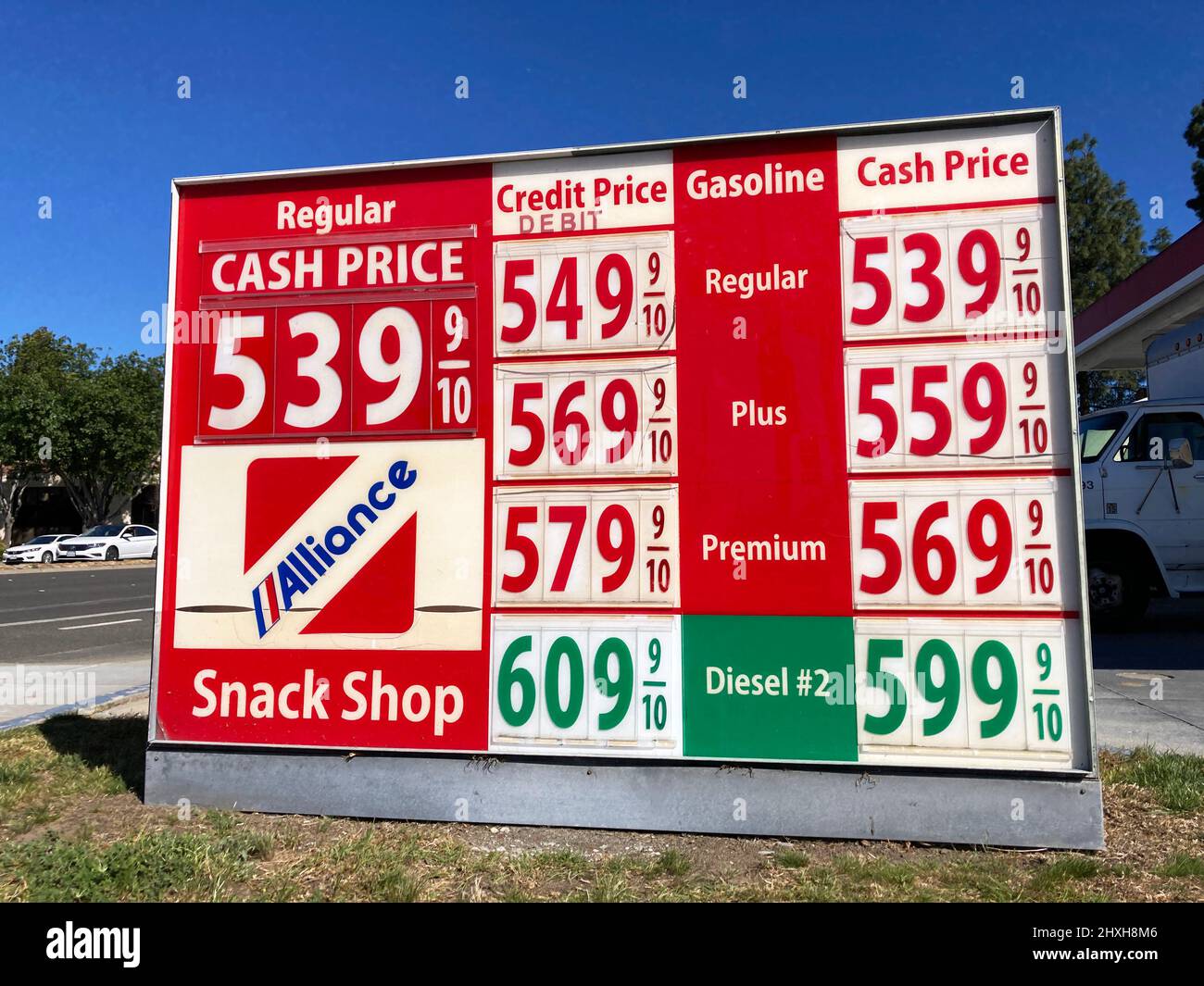
Those costs don't vanish into the ether. They filter down. They manifest as a five-cent jump in the price of a gallon of gas at a station in Ohio. They show up in the price of plastic, the cost of shipping a container from Shanghai to Rotterdam, and the stability of pension funds heavily invested in energy markets.
The Mosquito Fleet doesn't even have to fire a shot to "win." They only have to prove that they could. By maintaining a constant, buzzing presence, they exert a form of "slow-motion blockade." They turn the most important waterway on earth into a high-risk gamble.
The Evolution of the Stinger
The technology of the swarm is moving faster than the bureaucracy of traditional navies. In the 1980s, during the so-called "Tanker War," these boats were mostly just fast transport for men with RPGs. Today, they are sophisticated platforms.
Iran has begun integrating Unmanned Aerial Vehicles (UAVs) into their swarm tactics. Imagine the scenario now: the speedboats are the distraction, drawing the eyes and the sensors of the fleet downward. Meanwhile, low-flying, "kamikaze" drones—the same Shahed models seen in modern land conflicts—are screaming in from the blind spots above.
The IRGC has also mastered the art of the "smart mine." In the past, mines were dumb chunks of iron that floated until something bumped into them. Now, they can be programmed to ignore small fishing vessels and only detonate when they sense the specific acoustic signature of a massive oil tanker or a carrier's nuclear turbines.
This creates a psychological minefield. A captain can no longer trust the water. Even if the speedboats retreat, the threat lingers beneath the surface, invisible and patient.
The Human Dilemma on the Bridge
Step onto the bridge of a Western warship. The officer of the deck is looking through high-powered binoculars. They see the IRGC boats approaching. They are within "bridge-to-bridge" radio range.
The Americans broadcast a warning: "Small craft, you are approaching a coalition warship in international waters. Your intentions are unclear. Alter your course immediately."
The response is often silence. Or, more chillingly, a taunt in broken English.
The boats zigzag. They kick up massive white wakes. They come within yards of the bow. The crew on the destroyer is at "General Quarters." They are sweating in their flash gear, fingers hovering over triggers. They know that if they fire, they might start a war. They also know that if they don't fire, and one of those boats is a suicide craft, their ship could be the next USS Cole.
It is a game of chicken played with thousands of lives and trillions of dollars.
The Fragility of the Giant
We often think of power as something that scales upward—the bigger the gun, the more powerful the nation. But the Mosquito Fleet is a lesson in the power of the small. It is a reminder that a sufficiently motivated, clever, and ruthless actor can use the very size of their opponent against them.
A carrier strike group is a marvel of engineering. It is also an incredibly "concentrated" asset. Losing one is a national catastrophe. The IRGC navy is "distributed." Losing ten boats is Tuesday.
This imbalance creates a strategic paralysis. The giant is hesitant to move because the cost of a mistake is too high. The hornets are emboldened because they have so little to lose.
The water in the Strait is a deep, shimmering turquoise. On a calm day, it looks like a paradise. But beneath that surface, and skimming across it at sixty miles per hour, is a new philosophy of conflict. It is one where the expensive, the slow, and the heavy are being hunted by the cheap, the fast, and the many.
The world depends on the giant being able to walk through that hallway. But as the buzzing grows louder, the giant is starting to realize that the hallway is getting very, very narrow.
The next time you look at the price on a fuel pump, remember the speck on the radar. Remember Abbas in his fiberglass boat, bouncing over the waves with a thumb on a detonator. The global economy isn't held together by treaties or high-flown rhetoric. It is held together by the thin, fragile peace in twenty miles of water, where a swarm of mosquitoes waits for the giant to blink.