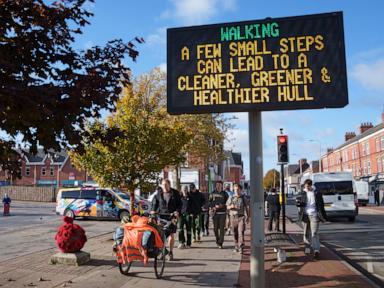
The kettle in Hull, England, has been waiting nearly three decades to boil for the same pair of boots.
Consider a hypothetical evening in November 1998. Imagine a twenty-nine-year-old former British paratrooper standing at the edge of the world in Punta Arenas, Chile, looking north toward an unbroken ribbon of dirt, ice, asphalt, and ocean that stretches thirty-one thousand miles back to his mother’s front door. Most people plan a vacation two weeks in advance. Some ambitious souls map out a gap year. Nobody—not even the men who taught him how to jump out of airplanes in the dark—seriously expects a man to lace up his boots and walk home across four continents without ever once stepping inside a motorized vehicle.
Yet that is precisely what Karl Bushby did. And in doing so, he exposed a quiet, uncomfortable truth about how the rest of us measure time, ambition, and the terrifying weight of a promise kept past its expiration date.
The Arithmetic of Stubbornness
To understand the sheer, almost absurd scale of the Goliath Expedition, you have to strip away the romance of travel brochures and look at the cold math of human endurance. Thirty-one thousand miles. Roughly fifty thousand kilometers. If you drove it at highway speeds without stopping for sleep, fuel, or borders, it would take you nearly three weeks. When you do it at three miles an hour, pushing a two-wheeled cart loaded with tents, stove fuel, and survival rations across the Darien Gap, the frozen crust of the Bering Strait, and the endless steppes of Central Asia, the math stops being geographical. It becomes existential.
Bushby’s rules were simple, brutal, and absolute. Every inch of the journey had to be completed on foot. No planes. No trains. No buses. No hitchhiking in the back of a dusty pickup truck when the desert heat turned the horizon into liquid glass. If a visa expired, or a war broke out, or a winter storm locked a mountain pass in six feet of snow, he had to stop, fly home or wait out the season, and then return to the exact GPS coordinates where he had lifted his boot from the earth before taking another step forward.
Think about that discipline for a second.
We live in an era engineered to eliminate friction. If a webpage takes four seconds to load, we close the tab. If a package takes three days instead of two, we feel mildly wronged by the universe. We optimize our mornings, automate our bills, and abandon side projects the moment the initial surge of dopamine wears off. Now picture standing in a muddy ditch in Siberia, thousands of miles from anyone who knows your middle name, knowing that a bureaucratic stamp on a piece of paper means you have to abandon your progress, fly back to England, work construction to pay off debt, and return months later to stand in that exact same ditch just to keep your word to yourself.
That is not adventure. That is a hostage negotiation with your own pride.
The Invisible Walls Between Us
The physical hazards of walking around the planet are easy to picture because we have seen them in survival movies. You can imagine the frostbite creeping into your toes at minus forty degrees on the shifting sea ice between Alaska and Russia—a feat Bushby and fellow adventurer Dimitri Kieffer accomplished in 2006, becoming the first people in history to walk across the Bering Strait. You can feel the suffocating humidity of the Darien Gap between Colombia and Panama, a lawless tangle of swamp, venomous snakes, and armed militias where roads simply give up and die. You can hear the crunch of gravel under worn soles across the Gobi Desert, where water is a daily riddle and shade is a luxury.
But ask anyone who has ever attempted an expedition measured in decades rather than days, and they will tell you that nature is rarely the enemy that breaks you. Mountains do not care about your schedule, and rivers do not hold grudges. Humans do.
The real wall Karl Bushby walked into was made of paper, ink, and geopolitics.
After surviving the lethal shifting ice of the Bering Strait, Bushby was promptly arrested by Russian border guards because he had not entered the country through an official port of entry—a logistical impossibility when you arrive on foot across frozen ocean from Alaska. What followed was years of bureaucratic purgatory. Five-year bans. Visa rejections. Diplomatic stalemates. For a man whose entire identity was built on forward motion, standing still was a slow form of suffocation.
During those stalled years, the world he had left behind kept spinning without him. When Bushby took his first step in Patagonia in 1998, Bill Clinton was in the White House, Tony Blair was in Downing Street, Nokia phones were the height of personal technology, and the concept of carrying a supercomputer in your pocket belonged to science fiction. While he was navigating border checkpoints, diplomatic red tape, and the long, lonely stretches of Kazakhstan and Mongolia, the planet rewired itself. Wars started and ended. Financial markets collapsed and rebuilt. Friends married, raised children, grew gray, and buried their parents.
To walk around the world for twenty-eight years is to become a time traveler moving in slow motion. You leave a world you recognize, and by the time you walk back into it, you are a stranger fluent in a forgotten language of patience.
What Happens When the Horizon Runs Out
There is a specific psychological phenomenon that haunts long-distance mountaineers, marathoners, and polar explorers, though few talk about it until the cameras are turned off. It is the quiet terror of the finish line.
For nearly three decades, every morning of Karl Bushby’s life began with a single, unambiguous question: Which way is east? Whether he was nursing blisters in a cheap roadside motel, melting snow over a camp stove, or swimming across the Caspian Sea in 2024—a grueling thirty-one-day, hundred-and-seventy-nine-mile open-water crossing undertaken alongside swimmer Angela Maxwell to bypass impassable geopolitical borders in Iran and Russia—his purpose was absolute. Pain had a direction. Hunger had a coordinate. Even despair had a map.
Consider a hypothetical runner training for a single marathon. For four months, their entire diet, sleep schedule, and social life orbit around that twenty-six-mile Sunday morning. When they finally cross the line and receive the foil blanket, the elation lasts about forty-eight hours before a strange, hollow quiet sets in. Now multiply that four-month obsession by eighty-four.
When a single goal consumes your twenties, your thirties, your forties, and half of your fifties, the destination stops being a place on a map. It becomes the architecture of your identity. To finally arrive in Hull, England, and step through the doorway of his mother Angela’s house is a triumph of human grit that belongs alongside the great polar expeditions of the twentieth century. Yet it also marks the sudden death of the only mission he has known for his entire adult life.
The Lesson Hidden in the Dust
We do not read stories about men walking thirty-one thousand miles because we plan to pack a rucksack and abandon our mortgages tomorrow morning. Most of us have school runs to make, spreadsheets to reconcile, and aging parents to care for. Nor should we romanticize the brutal personal cost of an obsession that leaves decades of ordinary domestic life behind.
We read it because, somewhere deep beneath the noise of our hyper-connected, instant-gratification routines, we recognize what we have traded away for convenience.
We have become experts at starting things and amateurs at finishing them. We mistake busyness for movement and speed for progress. When a relationship hits a rough patch, or a career stalls in bureaucratic mud, or a creative project demands five years of unglamorous, unseen labor before anyone applauds, our first instinct is to look for a shortcut, a pivot, or an exit ramp.
Bushby’s thirty-one-thousand-mile odyssey is a living rebuke to the tyranny of the shortcut. It reminds us that geography—and life—still obeys ancient laws. You cannot cheat the miles. You cannot negotiate with the cold. And when an ocean or a border blocks your path, sometimes the only way forward is to strip down to a wetsuit, wade into the deep water, and swim until your hands touch the other shore.
The Doorway in Hull
In the end, the Goliath Expedition did not end on a red carpet or a stadium stage. There were no marching bands waiting at the edge of the Humber Estuary, no corporate ticker-tape parades lining the quiet residential streets of East Yorkshire.
After twenty-eight years, four continents, twenty-five countries, frozen straits, jungles, deserts, and an entire inland sea crossed by hand and foot, the longest walk in modern history came down to a familiar garden gate, a front step, and a kettle finally clicking off in a kitchen where a mother had kept a light on since the twentieth century.
Karl Bushby took off his boots, stepped inside, and closed the door.