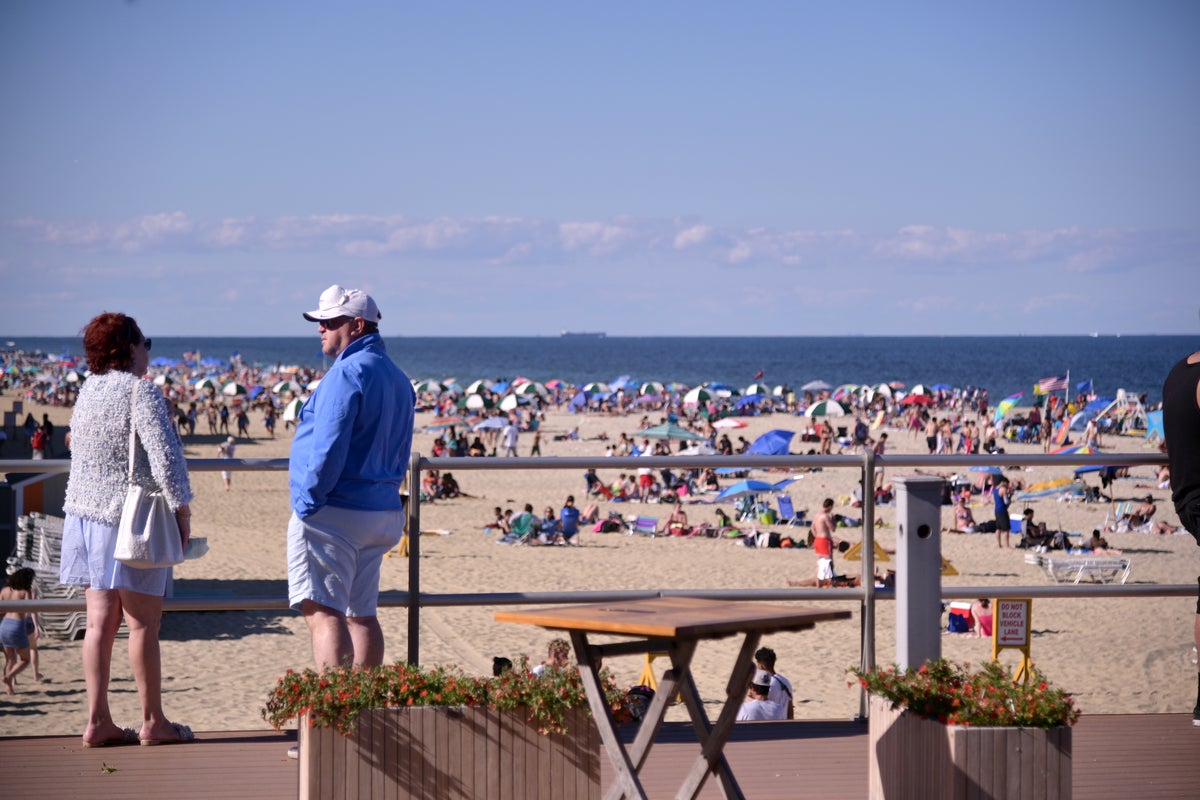
The salt air used to be the only thing that bit at your skin in Wildwood. Now, there is a different kind of electricity humming through the humidity. It is the sound of five hundred sneakers hitting the wood planks at once. It is the rhythmic, aggressive bass of a Bluetooth speaker that drowned out the mechanical clack of the Great White roller coaster long ago.
Imagine a shop owner—let’s call him Elias. He has sold saltwater taffy and cheap sunglasses for thirty years. He knows the rhythm of the Shore: the morning joggers, the afternoon families smelling of SPF 50, and the quiet, neon-soaked evenings. But lately, Elias doesn't look at the horizon. He looks at the clock. When the sun dips, his stomach knots. He isn't watching for a storm in the sky. He is watching for the "takeover."
New Jersey shore towns are currently locked in a desperate struggle to reclaim their identity. Local officials in places like Wildwood, Ocean City, and Seaside Heights are moving beyond mere concern into the realm of emergency legislation. They are weighing—and in some cases, already enforcing—strict curfews and "state of emergency" declarations to combat a surge in juvenile chaos that has turned the iconic boardwalks into flashpoints of friction.
The Anatomy of a Flash Mob
The shift wasn't gradual. It arrived like a rogue wave.
The phenomenon is driven by "pop-up" parties coordinated on TikTok and Snapchat, where thousands of teenagers descend upon a single square mile with zero notice. To a seventeen-year-old, it’s a game of digital capture-the-flag. To the police, it is a logistical nightmare. To the family trying to eat a slice of pizza, it is a scene of pure intimidation.
Consider the recent Memorial Day weekend. While the rest of the country grilled burgers, Wildwood was forced to declare a state of emergency. The police department was spread so thin they couldn't respond to standard calls. The sheer volume of bodies—unsupervised, emboldened by the anonymity of the crowd, and fueled by the performative nature of social media—created a vacuum of authority.
It isn't just about kids being loud. We are talking about systematic disruption. Fights breaking out in front of ice cream parlors. Stolen merchandise. The scent of marijuana thick in the air where toddlers play. The "chaos" cited in city council meetings isn't a buzzword; it’s a description of a community that has lost the ability to guarantee safety on its own main street.
The Heavy Hand of the Law
The response has been swift and, for some, controversial. The proposed and enacted curfews generally target minors, often requiring anyone under eighteen to be off the streets by 10:00 PM or midnight, depending on the municipality.
But a curfew is a blunt instrument.
Police chiefs argue that it gives them a "reason to stop." Without it, officers are often hamstrung by state-level juvenile justice reforms passed in recent years. These reforms, intended to prevent the over-criminalization of youth, have had an unintended side effect on the Jersey Shore: they stripped officers of their ability to use a "curb sort" or even a simple search for underage drinking without facing potential administrative backlash.
Now, the towns are fighting back with local ordinances that bypass the leniency of the state. They are closing beaches early. They are banning "backpacks" after certain hours—a move designed to stop kids from hauling alcohol and speakers onto the sand.
"We are not trying to be the fun police," one official remarked during a heated public hearing. "We are trying to be the police, period."
The stakes are invisible but massive. If a Shore town loses its reputation as a "family destination," the economic engine stalls. If the families stop coming because they are afraid of being caught in a stampede or a brawl, the taxes don't get paid, the boardwalk falls into disrepair, and the very soul of the Jersey summer evaporates.
The Human Friction
Think of a mother, Sarah, who saved all year to rent a small cottage three blocks from the water. She wants her kids to have the same memories she had—the smell of the ocean at night, the thrill of the lights. Instead, she finds herself ushering her children inside at 8:30 PM because a crowd of three hundred teens has started chanting and surging toward the pier.
The fear in Sarah’s eyes is the metric that doesn't show up in a police report, but it is the one that matters most to the mayor.
On the other side of the line is the teenager who just wants to see their friends. They argue that there is nowhere else to go. The mall is dead. The movies are expensive. The boardwalk is the last "third space" left. They feel targeted by a "boomer" establishment that has forgotten what it’s like to be young and restless.
But there is a difference between restlessness and lawlessness.
When a "takeover" happens, it isn't a protest. It isn't a social movement. It is a digital-age glitch where the physical world cannot keep up with the speed of an algorithm. A single post can summon a crowd that outnumbers the local police force ten-to-one in under an hour.
The Ghost of Summers Past
There is a historical irony here. The Jersey Shore has always been a place of rebellion. From the speakeasies of Atlantic City to the rock-and-roll grit of Asbury Park, the coast has always welcomed the fringe. But that rebellion usually had a price of admission—a cover charge, a sense of belonging to a subculture, or at least a modicum of respect for the venue.
Today’s chaos feels different because it is hollow. It is disruption for the sake of the "video."
The emergency curfews are an attempt to re-introduce friction into a world that has become too fast. By forcing a 10:00 PM shutdown, the towns are trying to break the momentum of the "scroll." They are trying to make it inconvenient to be a nuisance.
Will it work? In the short term, the boardwalks are quieter. The "state of emergency" allows for a surge in state trooper presence, creating a visible thin blue line that discourages the largest gatherings. But you cannot legislate away the desire for connection, nor can you easily fix the gap between a generation raised on screens and a generation that remembers the Shore as a sanctuary.
Elias, our taffy shop owner, stands in his doorway as the sun begins to set. He sees the police SUVs parked on the wood planks, their lights casting long, blue shadows over the sand. It’s not the summer he wanted. It’s not the atmosphere he spent thirty years building.
He turns the sign to "Closed" an hour earlier than he used to. He locks the deadbolt. He listens to the silence, waiting to see if it holds, or if the rhythmic thud of the crowd will begin again, just beyond the reach of the streetlights.