Cold.
The metal bleachers in a high school gymnasium in late October always hold the chill of the concrete floor beneath them, radiating upward through the soles of your shoes until your ankles ache. Around you, the air smells of floor wax, damp wool coats, and stale coffee from a cardboard urn near the exit doors. People check their watches. They shift their weight. They glance toward the heavy double doors at the far end of the court, waiting for a man whose name isn't even on the ballot to walk through and tell them why their lives feel slightly out of reach.
You know this feeling if you have ever stood in the rain outside a fairgrounds pavilion or refreshed a local news feed at midnight on a Tuesday in November. For months, the coverage of American midterm elections reads like an actuarial table—a dry recitation of polling margins, fundraising quarters, and the predictable return of former presidents Barack Obama and Donald Trump to the campaign trail. Standard political reporting treats their appearances like chess pieces moved across a board of battleground states: Pennsylvania, Georgia, Michigan, Arizona. It tells you where they landed, what they wore, and which soundbite clipped best for the evening broadcast.
It misses the pulse entirely.
When two former presidents—men who occupy entirely different universes in the American imagination—step onto makeshift wooden risers in the middle of a midterm cycle, they are not simply stumping for down-ballot senators or vulnerable House incumbents. They are acting as emotional proxy servers for a nation trying to figure out what happened to the ground beneath its feet. To understand why millions of people still pack into arenas to hear voices they have heard for decades, you have to step away from the podium and look at the people sitting in the third row.
The Anatomy of a Midterm Mirage
Consider a hypothetical voter—let’s call her Elena—sitting at her kitchen table in Macomb County, Michigan. The fluorescent light above the sink hums. Spread out in front of her are three envelopes: an escrow adjustment notice from her mortgage lender, a flyer from a local congressional candidate promising to "restore sanity," and a grocery receipt from the previous afternoon that somehow totaled one hundred and forty dollars for three bags of food.
Elena is not a political junkie. She does not watch cable news panels shout at each other over split screens. In presidential election years, the choice feels cinematic, almost mythic—a national referendum on identity and direction. Midterms, by contrast, feel like homework. Historically, turnout drops off a cliff between presidential cycles; according to data compiled by the United States Elections Project, midterm participation hovered around forty percent for decades before surging past fifty percent in 2018 and 2022, driven largely by polarization rather than sudden civic enthusiasm.
Why the sudden spike? Because the barrier between Washington abstractions and Elena’s kitchen table has dissolved.
Political scientists often describe midterm elections as a "referendum on the incumbent party." That is the textbook explanation, neat and sterile. In reality, a midterm election is an audit of broken expectations. Every two years, voters are asked to grade the gap between what was promised during the last big rally and what actually arrived in their bank accounts. And when the current crop of candidates fails to generate enough gravitational pull to drag exhausted voters to the polls in the drizzle of early November, party strategists reach for the heaviest weights they own.
They call the former presidents.
The Two Megaphones
Watch how the room changes when either man takes the microphone, and you begin to see the deeper psychological machinery at work. They operate on entirely different frequencies, yet both tap into the exact same reservoir of public anxiety.
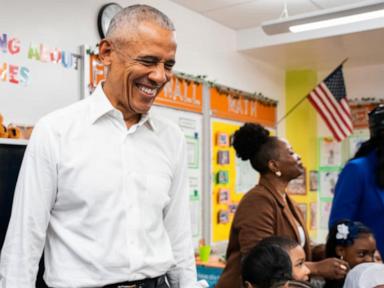
On one side of the country, in a university fieldhouse draped in blue banners, Barack Obama steps to the lectern. His cadence is deliberate, built on the rhythm of a Sunday morning sermon mixed with a constitutional law seminar. When Obama campaigns during a midterm cycle, his primary task is rarely to convert the opposition. His job is to cure a specific, creeping paralysis among his own coalition: cynicism.
Democratic strategists and election analysts frequently note that their base tends to view politics as a transactional ladder—you vote once, the problem gets fixed, and you move on with your life. When progress stalls in a divided Congress, disappointment curdles into apathy. Obama’s appearances are designed to reframe that boredom as danger. He uses humor to lower the room's defenses, poking fun at the absurdity of political theater, before pivoting sharply to the mechanics of power. He reminds the crowd that judicial appointments, local election boards, and state legislatures—the unglamorous plumbing of democracy—are decided when people stay home. He is selling vigilance.
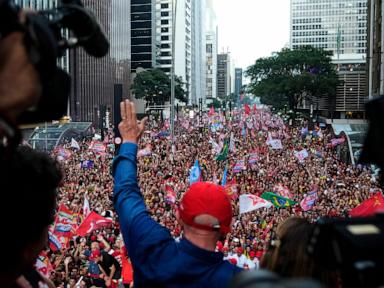
Three hundred miles away, inside an airport hangar where the wind rattles the corrugated steel walls, Donald Trump walks out to the opening chords of Lee Greenwood. The energy here is not seminar-style reflection; it is kinetic, communal defiance.
Where Obama speaks to the anxieties of institutional erosion, Trump speaks directly to the sensation of cultural and economic displacement. Political observers and campaign historians point out that Trump’s rallies function less like traditional political speeches and more like town-hall catharsis sessions. He riffs for ninety minutes or more, weaving local grievances—a shuttered manufacturing plant down the highway, the price of diesel, a school board dispute—into a sweeping narrative of us versus them. For his supporters, the midterm ballot is not a polite civic duty; it is a defensive perimeter. He is selling vindication.
Different styles. Different diagnoses. Yet if you strip away the party logos and listen closely to the applause lines in both rooms, you hear the exact same question echoing off the rafters: Does anyone in charge actually see me?
Why Surrogates Matter More Than Candidates
There is a strange irony at the heart of modern midterm campaigning. The candidates whose names are actually printed on the ballot—the state attorneys general, the House representatives, the Senate hopefuls—often spend months raising tens of millions of dollars only to find themselves standing three paces behind a former president, smiling stiffly while someone else commands the cameras.
Why do campaigns willingly surrender the spotlight in the final stretch of a race?
Think of a political campaign like a massive cargo ship trying to turn in a narrow harbor. A first-time Senate candidate or a second-term congressperson is a tugboat—useful, agile, capable of pushing against local currents, but limited in raw displacement. A former president is an icebreaker. When Obama or Trump enters a media market, local television stations preempt regular programming. Local newspapers run front-page spreads. Social media algorithms, which normally bury dry policy speeches about infrastructure grants or tax credits beneath videos of cats and recipe tutorials, suddenly flood local feeds with clips from the rally.
In an era of fractured media—where half the town gets its news from neighborhood Facebook groups and the other half listens to podcasts during their commute—attention is the scarcest currency in politics. You cannot buy organic attention with thirty-second television ads anymore; voters have developed a collective blindness to glossy commercials that end with a candidate walking through a warehouse in rolled-up shirtsleeves.
Former presidents bypass that filter. Love them or loathe them, you cannot ignore them. Their presence turns a local race into a national drama, forcing disengaged voters to pick a side in a story they already know the characters to.
Of course, this strategy carries a hidden trap, one that campaign managers quietly dread even as they book the venues. An icebreaker clears a path, yes, but it also leaves a massive wake that can swamp smaller boats.
In swing districts—those razor-thin suburban battlegrounds where elections are won or lost by three thousand votes—nationalizing a local race can backfire spectacularly. A moderate independent voter who might have liked a local candidate’s stance on property taxes or infrastructure suddenly sees that candidate standing shoulder-to-shoulder with a polarizing national figure. Overnight, the local election stops being about potholes and becomes a referendum on the past eight years of national grievances. Mobilizing your own base almost always wakes up the other side’s base at the exact same time.
The Invisible Stakes Beneath the Noise
It is easy to get lost in the theater of it all—the motorcades, the Secret Service earpieces, the dueling crowd-size estimates traded like baseball cards on social media. When I first started paying serious attention to off-year elections years ago, I used to think the rallies were the main event. I watched the speeches like sporting matches, scoring rhetorical points and assuming that whoever drew the louder roar on Saturday night would win on Tuesday morning.
I was wrong. Almost completely wrong.
The speeches are just the flare gun fired into the night sky. The real battle happens in the cold, unglamorous hours after the arena lights come back on and the folding chairs are stacked against the wall.
Think of a political campaign as an iceberg—a familiar metaphor, certainly, though one that rarely captures just how cold the water really is. Above the surface sits the ten percent everyone watches: the presidential visits, the viral clips, the heated debates. Beneath the waterline sits the ninety percent that actually determines who governs: voter file cross-referencing, canvassing routes mapped down to individual apartment buzzers, ballot-curing teams chasing down mismatched signatures on mail-in envelopes, and volunteer drivers hauling night-shift nurses to polling places before their shifts start.
Former presidents do not just deliver speeches; they harvest data. Every person who registers for a ticket to see Trump in an airport hangar or Obama in a gymnasium hands over a cell phone number, an email address, and a zip code. Within minutes, those details are ingested into massive party databases, cross-checked against public voter rolls to see whether that attendee actually voted in the last midterm, and assigned to a field organizer three miles from their house.
That is the true currency of the campaign trail. Not the applause. The contact list.
And here is what makes this moment genuinely unsettling, even for people who spend their lives studying electoral patterns: the system is running hotter than it was built to handle. Midterm elections were designed by the framers of the Constitution as a cooling mechanism—a regular, localized check on federal power meant to keep representatives tethered to the specific needs of their home districts. Instead, they have become high-stakes proxy wars where every county commissioner race feels existential.
We have reached a point where millions of Americans no longer view their political opponents as neighbors with bad ideas, but as existential threats to their way of life. When former presidents step onto those stages, they are both responding to that fear and amplifying it. They didn't invent the fracture in the country, yet their very presence reminds us how deep the fault line runs.
Tuesday Night in the Rain
Eventually, the motorcades leave. The temporary stage decking is loaded back onto flatbed trucks, the banners are rolled up and stored in warehouse bins, and the high school gymnasium returns to smelling like floor wax and basketball sneakers.
On Election Day itself, there are no spotlights. There are no swelling soundtracks or roaring crowds. There is only a retiree sitting behind a folding table in a church basement, checking names off a paper ledger with a ruler and a ballpoint pen, handing out oval stickers with an American flag printed on them.
Imagine Elena again, standing in line at 6:45 in the morning before heading to work. Her shoes are damp from the parking lot. Ahead of her stands a man wearing a union jacket; behind her stands a woman scrolling through her phone, wearing a lanyard from the local hospital. None of them are shouting. None of them are waving signs. They are just standing under a flickering porch light, waiting for the precinct captain to unlock the front door.
In a few hours, television anchors will stand in front of glowing touchscreens, zooming in on county maps, reducing Elena and the man in the union jacket and the nurse behind her into red and blue percentages, calculating whether the former presidents' final barnstorming tours moved the needle by half a point in the suburbs.
They will talk about momentum. They will talk about historical headwinds and messaging discipline.
Yet the truth is far quieter, and far heavier, than any broadcast panel will admit. Two former presidents can fly across six time zones, burn through millions of dollars in jet fuel, and fill every arena between the coasts with thunder—and still, the entire machinery of American government comes down to what happens in the thirty seconds after a tired citizen pulls a privacy curtain shut, picks up a felt-tip pen, and decides whether the future is worth filling in one small, dark oval.