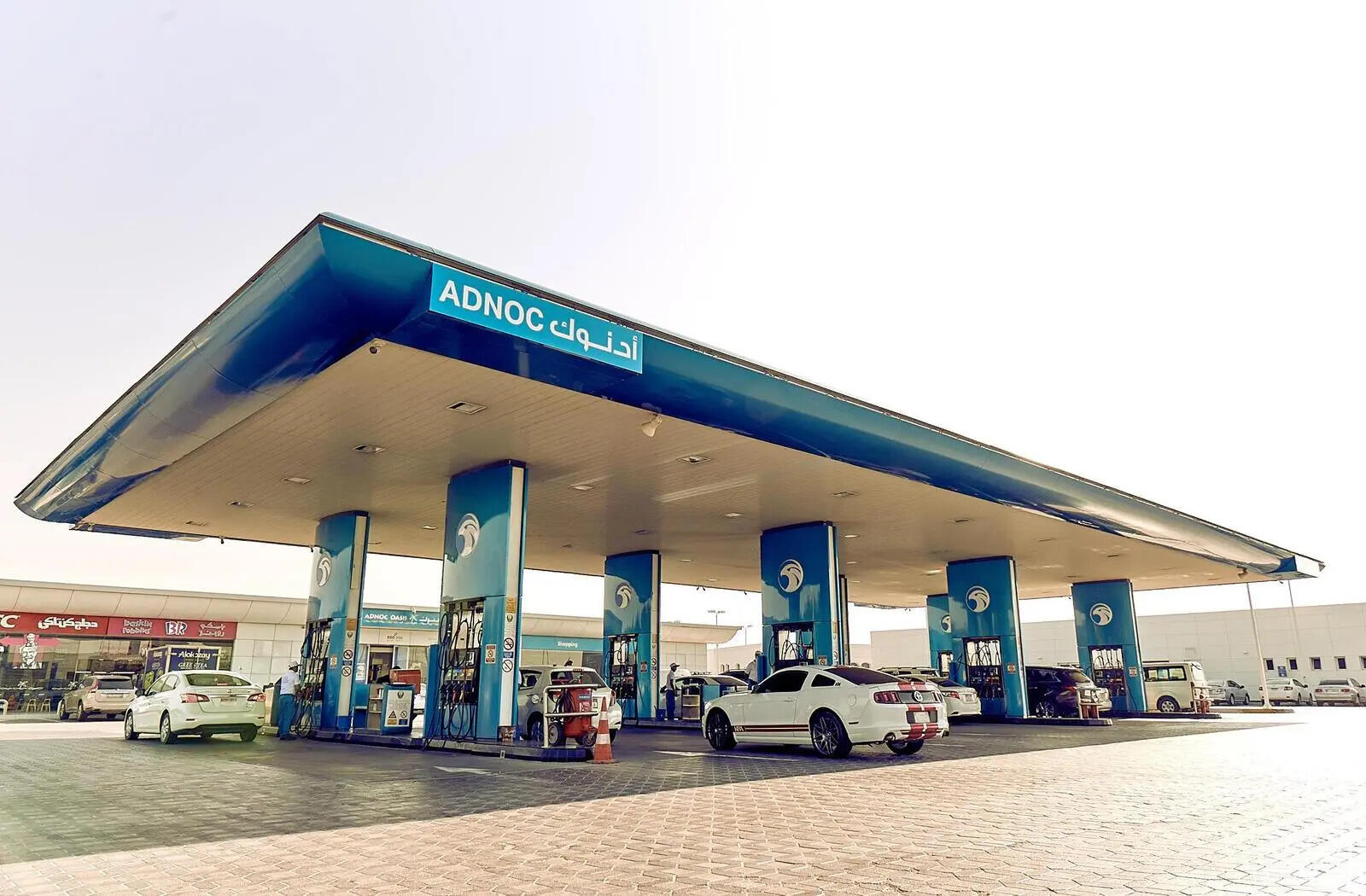
The headlines are dripping with predictable anxiety. "Highest level in nearly four years." "An 8% spike." "Consumers feel the squeeze."
When the UAE fuel price committee announced that June 2026 petrol prices would climb to Dh3.95 per litre for Super 98, the media immediately pulled out its standard, tired playbook. They interviewed worried drivers, ran back-of-the-napkin math on the cost of filling up a Nissan Patrol, and implied that the sky is falling on the Gulf’s economic hub.
It is a lazy, superficial narrative.
Everyone is staring at the price pump, weeping over a few fils, and completely missing the macroeconomic engine humming beautifully underneath. Dh3.95 petrol isn't a crisis. It is a sign of a roaring, mature economy that has successfully broken its dependence on the state-subsidized artificiality that ruins emerging markets. If you are panicking about June’s fuel prices, you are fundamentally misunderstanding how modern wealth is generated in the region.
The Myth of the "Cheap Fuel Right"
For decades, the Gulf operated on an unwritten social contract: cheap oil flowed out, and cheap gasoline flowed into local tanks. It was a distortionary drug.
When the UAE deregulated fuel prices in August 2015, linking them to global market movements based on mean international benchmarks, it wasn't a penalty on citizens and residents. It was an institutional masterstroke. I watched corporate analysts at the time predict capital flight and operational ruin. It never happened. Instead, it laid the groundwork for the hyper-resilient economy we see today.
Let’s look at the actual numbers for June 2026:
| Fuel Grade | June 2026 Price (per litre) | May 2026 Price (per litre) | Percentage Change |
|---|---|---|---|
| Super 98 | Dh3.95 | Dh3.34 | +18.2% |
| Special 95 | Dh3.84 | Dh3.22 | +19.2% |
| E-Plus 91 | Dh3.76 | Dh3.15 | +19.3% |
| Diesel | Dh4.12 | Dh3.58 | +15.0% |
(Note: While the mainstream media fixated on a trailing 8% rolling average from earlier quarters, the immediate month-over-month jump is even sharper. And guess what? The economy can take it.)
The lazy consensus screams that this will choke consumer spending. But let's dismantle the premise of that fear.
Why are oil prices up globally? Because demand is fierce. Why is the UAE thriving? Because it is a massive exporter of that liquid energy and its derivatives. The premium you pay at the pump is a fractional micro-tax compared to the massive capital inflows flooding into the country's sovereign wealth funds, real estate markets, and infrastructure budgets.
You are paying more to fill your tank because the global economy wants what this region owns. To want cheap local petrol while enjoying a booming, tax-friendly corporate environment is economic illiteracy. You cannot have a hyper-profitable, world-class business ecosystem built on the back of subsidized, distorted energy markets.
Dismantling the "People Also Ask" Panic
When energy prices spike, the search algorithms light up with variations of the same panicked questions. Let's answer them with brutal honesty rather than public relations fluff.
"Will higher fuel prices cause massive inflation across UAE supermarkets?"
Marginally, but not the hyperinflationary nightmare the doomsayers predict. Logistics operations do face higher diesel costs (now at Dh4.12 per litre). However, serious supply chain operators do not run their margins so tight that a 54-fil jump in diesel destroys their business model. Companies that use this as an excuse to hike consumer goods prices by 20% are profiteering, not adapting. The actual transport component of a gallon of milk or an electronic item is a sliver of its retail price.
"Should I sell my SUV and buy an electric vehicle immediately?"
If you are doing it purely to "save money," your math is probably terrible. Buying a Dh250,000 electric vehicle to avoid a Dh60 increase per tank on your current vehicle is a classic example of spending a dollar to save a dime. The depreciation on a brand-new EV will vastly outpace the fuel delta over the next three years. Buy an EV because you want the technology or the performance, not because you are terrified of a cyclical commodity price wave.
"Is the government going to step in and cap prices again?"
Hopefully not. Capping prices is an admission of economic weakness. It signals to international markets that a country cannot handle reality. The UAE’s commitment to market-linked pricing is precisely why global institutions trust its fiscal policy. It proves that the nation plays by international rules, making its currency and assets far more secure.
The Hidden Dividend of Expensive Petrol
Let's look at the mechanics of what actually happens when fuel reaches Dh3.95 per litre.
First, it forces corporate efficiency. For too long, logistics firms, construction giants, and delivery aggregates in the region treated fuel as a negligible cost. Drivers idled engines for hours. Routes were optimized poorly. Fleet management was an afterthought.
High fuel prices act as a corporate disciplinary mechanism. I have seen logistics companies slash their operational waste by 15% within three months of an energy price spike simply because they were finally forced to use route-optimization software and enforce strict anti-idling policies. The price hike cures corporate laziness.
Second, it accelerates the right kind of infrastructure. The UAE has invested heavily in public transportation systems, from Dubai’s expanding metro lines to the sweeping network of Etihad Rail.
If fuel stays at Dh1.50 a litre forever, nobody uses public infrastructure. The roads stay choked with single-occupant SUVs, productivity drops in traffic, and emissions skyrocket. A realistic fuel price forces the population to utilize high-density infrastructure, which ultimately raises the quality of life for everyone in the urban centers.
The Reality of Global Comparison
To truly understand how soft the local complaints are, we need to zoom out. The narrative that Dh3.95 is an unmanageable burden crumbles the second you look across the border or across the ocean.
Let's look at what consumers pay globally per litre for equivalent premium fuel right now:
- United Kingdom: Dh7.15 ($1.95)
- Germany: Dh7.42 ($2.02)
- Singapore: Dh8.10 ($2.21)
- Hong Kong: Dh11.12 ($3.03)
- UAE (June 2026): Dh3.95 ($1.08)
Even at its highest level in nearly four years, petrol in the UAE is a staggering bargain compared to almost every other major global commercial hub. You are living in an economy with no personal income tax, minimal capital gains tax, and world-class infrastructure, yet you are complaining that your fuel is priced at half of what a business professional in London or Singapore pays.
It is privilege masquerading as an economic crisis.
Stop Optimizing for the Pump
If your business or personal wealth strategy is vulnerable to a 40-fil move in petrol prices, your problem isn’t the fuel price committee. Your problem is your revenue model.
I have counseled business owners who spent weeks agonizing over fleet fuel surcharges while ignoring massive leaks in their real estate leases, outdated software subscriptions, and bloated middle management. They focus on the fuel pump because it is highly visible, changing every calendar month on a public notice. It is a psychological trap.
Here is the unconventional blueprint for navigating the June 2026 pricing reality:
- Ignore the monthly announcement. Stop checking the news on the 31st of every month to see if prices went up or down by 5%. It is a waste of cognitive bandwidth. Budget your business based on a structural cost of Dh4.50 per litre. If it sits below that, you bank the surplus. If it hits it, you are already insulated.
- Audit operational idling, not mileage. The biggest waste of fuel in the Gulf isn't the distance driven; it is the stationary AC usage. Implement telematics that track asset utilization. If a vehicle's engine is running but its GPS speed is zero for more than ten minutes, your money is evaporating. Fix that, and you just neutralized the June price hike.
- Leverage the macro reality. Recognize that higher fuel prices mean the local sovereign ecosystem is flush with cash. Position your business to capture high-value government contracts, real estate developments, and corporate spending initiatives. The money being spent at the pump is being recycled directly into mega-projects. Go get a piece of that larger pie instead of crying over the cost of the crumbs.
The crowd will continue to complain. They will post memes about the cost of filling up their tanks, and they will pine for the days of cheap, subsidized energy. Let them. While they are busy looking down at the fuel gauge, the smart money is looking up at the broader economic horizon, capitalizing on a market that is mature enough to face global realities head-on and strong enough to win anyway.