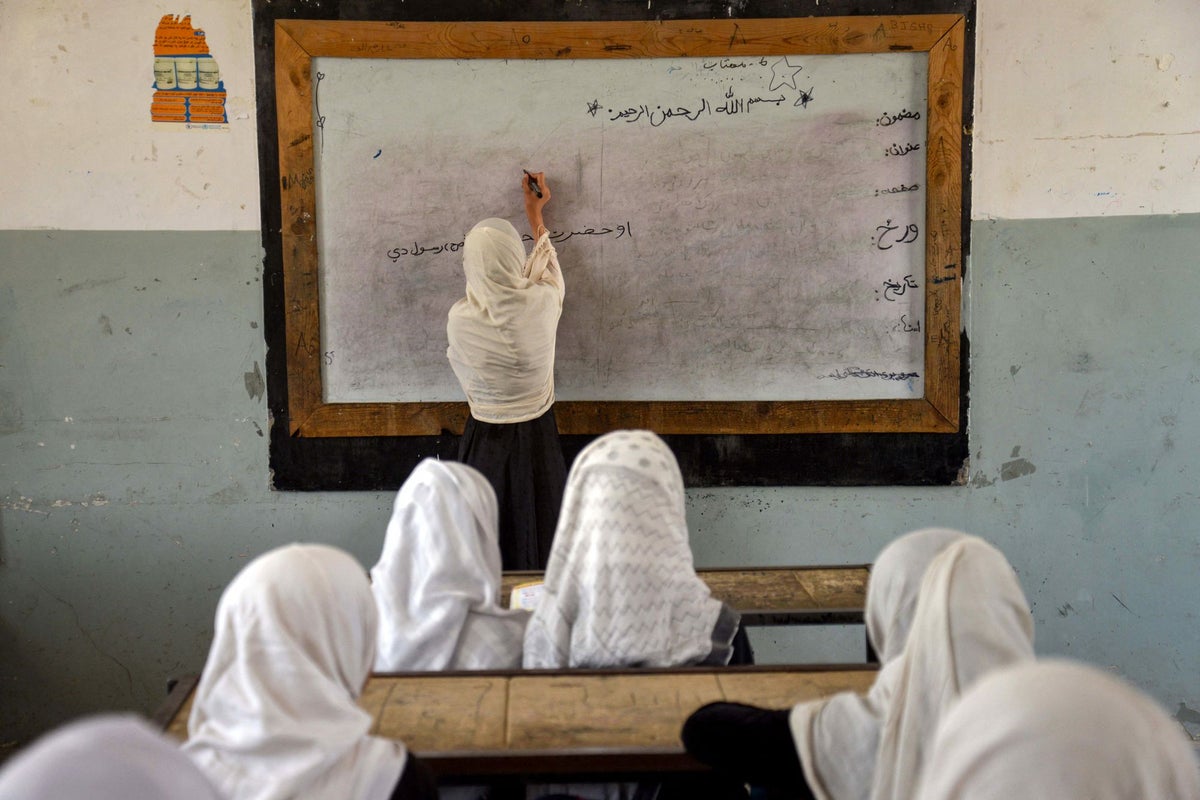
The British government's promise to "warmly welcome" those fleeing the Taliban has officially reached its expiration date. If you're an Afghan woman looking for safety in the UK right now, the numbers suggest you shouldn't hold your breath. Fresh analysis of Home Office data shows a brutal shift in how the UK treats those escaping one of the most repressive regimes on the planet. The high approval rates we saw immediately after the fall of Kabul are gone. In their place is a wall of bureaucracy that seems specifically designed to keep women out.
It's a grim irony. At the same time the Taliban is scrubbing women from public life entirely—banning them from parks, gyms, and universities—the UK is making it harder for those same women to find refuge. We aren't just talking about a slight dip in numbers. We're looking at a systemic collapse of support.
The numbers don't lie
Back in 2022, shortly after the Taliban took control, the initial grant rate for Afghan asylum seekers was a staggering 98%. It made sense. Everyone agreed that if you were fleeing a group that bans girls from school and flogs people in stadiums, you probably had a well-founded fear of persecution.
Fast forward to 2026. That approval rate has plummeted to roughly 34%. Think about that for a second. Two-thirds of Afghans who make it to the UK are now being told they aren't "at risk enough." This isn't because Afghanistan got safer. It’s because the UK changed the goalposts. The Home Office now argues that security has stabilized and risks must be judged on a "case-by-case" basis. For a woman living under gender apartheid, that "individualized" logic is often a death sentence.
Why women are getting the short end of the stick
You’d think women would be the priority. They aren't. In fact, the way the UK sets up its "safe and legal" routes actually discriminates against them.
- The closure of formal schemes: The flagship resettlement programs like ACRS (Afghan Citizens Resettlement Scheme) and ARAP (for those who worked with the UK government) effectively stopped taking new applications in July 2025.
- The visa brake: As of March 2026, the government introduced a "visa brake" on nations like Afghanistan. This includes blocking student visas. I spoke with researchers who pointed out that for many Afghan women, a student visa was the only way to escape without crossing a desert or a sea. That door is now locked.
- The "small boat" trap: Because the legal routes are closed, people take the Channel. But this route is dominated by men because the journey is incredibly dangerous. By making "illegal" arrival the only way to claim asylum and then penalizing those who arrive that way, the UK has created a system where women—the most vulnerable—are effectively filtered out before they even reach the border.
The myth of the safe return
The Home Office's current stance is that the "general" situation in Afghanistan doesn't warrant automatic protection. They want proof of specific, personal threats. But how do you prove a specific threat when the threat is the law of the land?
In February 2026, the government’s own country policy notes admitted that the Taliban’s judicial system is now a repurposed ideological tool. They use an extreme interpretation of Sharia where a single judge can decide your fate based on a personal whim. Yet, the UK's refusal letters often suggest that women can "relocate internally" to stay safe.
Relocate where? To a different city where they still can’t work, still can't go to school, and still can't leave the house without a male guardian? It’s a ridiculous argument that ignores the reality of life under the Taliban.
The scholarship scandal
One of the most heart-wrenching developments this year is the treatment of female scholars. The Chevening scholarship—a prestigious UK government-funded program—was supposed to be a lifeline. In early 2026, Afghan women who had spent months refining essays and passing interviews were suddenly told their applications were being binned.
The reason? A visa ban. The UK government is literally funding scholarships for these women with one hand and denying them the travel documents to use them with the other. It’s peak hypocrisy. One software engineer, who spent years working behind closed doors in Kabul, described it as being told by the UK the same thing the Taliban tells her: "You don't belong in a classroom."
What happens next for those stuck in the system
If you're currently in the UK awaiting a decision, you're likely in a state of permanent limbo. The backlog is down from its 2023 peak, but there are still nearly 50,000 cases waiting for an initial decision.
For those who are refused, the path is even darker. New rules proposed in late 2025 make the road to citizenship longer and more expensive. Family reunion rights—the thing that allows a woman to bring her children over—are being tightened. We’re seeing a deliberate attempt to make the UK as "unhospitable" as possible, regardless of the humanitarian cost.
Steps to take if you are supporting an Afghan claimant
Don't rely on the Home Office to be "fair." You need to be aggressive with documentation.
- Gather specific evidence: General reports on the Taliban aren't enough anymore. You need evidence of personal "characteristics" that put the individual at risk—previous employment, family connections to the former Republic, or specific incidents of harassment.
- Challenge "Internal Relocation": If a refusal letter suggests moving to another province, legal reps must argue why this is impossible for a woman without a mahram (male guardian).
- Engage your MP: The "visa brake" and the closure of ACRS are political decisions. They only change with political pressure.
The UK's pivot from "Operation Warm Welcome" to a cold shoulder isn't an accident. It’s a policy choice. By pretending the crisis in Afghanistan is "stable," the government is turning its back on the very people it once promised to protect. The plummeting approval rates aren't a sign of fewer people in danger; they're a sign of a country that has simply decided it's done helping.
If you’re helping someone navigate this, get a specialist lawyer immediately. The 98% approval days are dead. You’re in a fight now.