Brexit didn't end in 2020. It just turned into years of expensive border delays, cancelled student exchanges, and endless political posturing.
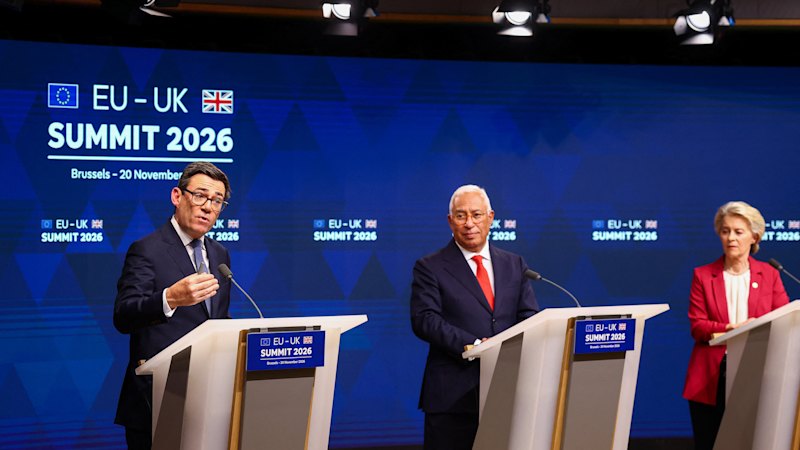
Now, the UK and the European Union have agreed to new deals on trade and youth movement, officially pledging to rebuild ties after Brexit. Politicians on both sides of the Channel are calling it a major reset. Yet if you read past the press releases, the real story is far more practical, specific, and frankly, long overdue.
Having watched British exporters drown in veterinary certificates and UK graduates lose out on European work visas over the last few years, I can tell you one thing. Good intentions in Brussels and London don't move freight across Dover. Binding legal agreements do.
Why This UK and EU Reset Happened Now
The post-Brexit Trade and Cooperation Agreement (TCA) signed under Boris Johnson's government was always a bare-bones framework. It avoided tariffs on goods, sure, but it erected massive non-tariff barriers that hammered small businesses, food exporters, and young people.
By the time the scheduled 2026 review of the TCA rolled around, the economic reality was impossible to ignore. Data from the Office for Budget Responsibility (OBR) had consistently shown that post-Brexit trade friction was shaving roughly 4% off long-term UK productivity. Meanwhile, European leaders faced growing security threats on the continent and sluggish growth across the Eurozone.
Neither side could afford a cold war over customs forms anymore.
London needed economic growth without crossing its own political red lines—meaning no return to the Single Market, no Customs Union, and no restoration of full freedom of movement. Brussels wanted a reliable security partner on its western flank and fair reciprocal access for its citizens, particularly young Europeans wanting to live and work in Britain.
So they struck a pragmatic bargain. Trade friction goes down, security cooperation goes up, and young people finally get a structured path to cross the Channel again.
What Changes for UK and EU Trade
If you run a business that buys from or sells to Europe, you've probably spent the last few years paying customs agents to fill out paperwork that didn't exist a decade ago. The new trade agreements target the worst of those bottlenecks directly.
Agri-Food and Veterinary Checks
The biggest headache since 2021 has been Sanitary and Phytosanitary (SPS) controls. Every shipment of meat, dairy, plants, or fish crossing between Great Britain and the EU required expensive Export Health Certificates signed off by a qualified vet. Small British cheesemakers and seafood exporters simply stopped selling to Europe because the paperwork cost more than the shipment.
Under the new reset, London and Brussels have agreed to align standards closely enough to slash routine border checks on food and agricultural products.
Here is what that looks like in practice:
- Fewer physical inspections at ports. Lorries carrying fresh produce and animal products won't sit in queues for hours waiting for routine visual checks at Dover or Calais.
- Lower compliance costs. Businesses won't need to pay hundreds of pounds per consignment for repetitive veterinary sign-offs.
- Smoother supply chains for supermarkets. Fresh fruit and vegetables imported from Spain and the Netherlands will reach UK shelves faster and with less spoilage.
I've spoken to logistics managers in Kent who watched perishable goods rot in holding bays because a single digit on a health certificate was mistyped. Removing that friction isn't glamorous policy work. It just keeps food affordable and keeps small exporters alive.
Mutual Recognition of Professional Qualifications
Trade isn't just pallets on trucks. Britain is a services powerhouse, and services run on people.
Since Brexit, a British architect, engineer, or auditor couldn't automatically have their qualifications recognized across EU member states. You had to navigate a patchwork of 27 different national regulators. The new framework establishes a clearer, faster pathway for professional bodies in the UK and EU to strike mutual recognition deals.
It won't happen overnight for every single profession. Regulators still have to sign off on sector-by-sector agreements. Still, for consulting firms, engineering practices, and creative agencies, bidding for European contracts just got a lot less complicated.
Defence and Security Cooperation
You can't separate trade from geopolitics anymore. Alongside the economic measures, the UK and EU formalized a structured security and defence pact.
British defence manufacturers gain better access to joint European procurement programs, and intelligence sharing between London and Brussels becomes far more systematic. Given ongoing instability in Eastern Europe and shifting global alliances, both sides recognized that pretending Britain wasn't part of European security architecture was absurd.
How the Youth Movement Scheme Actually Works
Let's clear up the biggest misconception immediately. The new youth mobility agreement is not a return to EU freedom of movement.
Opponents in the UK press love to frame any visa deal with Brussels as "Brexit betrayal by the back door." That's nonsense. Freedom of movement meant any EU citizen could move to the UK indefinitely, bring dependents, claim benefits, and stay permanently without a visa.
A youth mobility scheme is completely different. Britain already runs identical schemes with countries like Australia, Canada, Japan, and South Korea.
The Core Rules of Youth Mobility
While final administrative rollout dates vary by specific sector, the agreed structure follows the standard international youth mobility model:
- Strict age limits. The scheme applies strictly to young adults aged 18 to 30. Once you age out, you don't qualify.
- Time-limited stays. Visas are capped—typically at two years, with potential extensions up to three years in certain categories—and do not automatically lead to permanent settlement.
- No access to public funds. Participants must support themselves financially, pay an upfront healthcare surcharge (or hold equivalent insurance), and cannot claim UK welfare benefits.
- Annual caps. Both sides retain the right to set numerical caps on how many visas are issued each year so migration numbers remain predictable.
For a 22-year-old graduate in Manchester who wants to spend a year working in Berlin, or a 24-year-old from Lyon wanting to gain experience in London's hospitality or tech sectors, this is huge. Post-Brexit immigration rules made sponsoring young, entry-level workers financially impossible for most businesses due to high minimum salary thresholds and visa fees.
Now, young people get a straightforward, temporary route to work, travel, and build international experience without needing a multinational corporation to sponsor them.
What About Erasmus and Student Exchanges?
University students were some of the hardest-hit casualties of the 2020 split. When the UK left the Erasmus+ program, British universities scrambled to replace it with the domestic Turing Scheme.
The Turing Scheme had one glaring flaw. It only funded UK students going abroad. It offered zero funding or visa waivers for European students coming to British universities, destroying the reciprocal exchange networks that universities rely on.
The new youth and educational cooperation provisions reopen structured pathways for student exchanges, academic research partnerships (building on the UK's earlier return to the Horizon Europe science program), and cultural touring. Musicians and artists—who faced brutal cabotage rules and work permit fees when touring Europe after Brexit—also see major administrative relief for short-term performances.
What Critics and Skeptics Get Wrong
Not everyone is cheering this deal, and some of the criticism deserves a fair hearing.
Hardline Eurosceptics argue that aligning with EU food and product standards turns Britain into a "rule-taker"—bound by regulations made in Brussels where the UK no longer has a vote. Technically, they aren't wrong. If you want frictionless trade with a market of 450 million people on your doorstep, you have to follow their product rules. British manufacturers selling into Europe already follow EU rules anyway because nobody builds two separate production lines for the same widget.
On the flip side, pro-European campaigners complain the deal doesn't go far enough. They point out that without rejoining the Single Market or Customs Union, UK businesses still face customs declarations and rules-of-origin paperwork.
Both critiques miss the point of where politics actually sits right now.
Rejoining the Single Market is politically dead in Westminster for the foreseeable future. Doing nothing and letting UK-EU trade slowly atrophy was economic self-harm. This agreement sits in the messy, realistic middle ground. It fixes the worst practical damage without reopening a constitutional war that nobody wants to fight again.
Common Misconceptions About the UK-EU Deal
Whenever Brussels and London announce a breakthrough, rumors spread fast on social media. Before you book a one-way ticket to Paris or tear up your customs procedures, separate fact from noise.
Myth 1: British tourists no longer face the 90-day Schengen rule.
False. UK passport holders are still third-country nationals in the EU. You are still limited to 90 days in any 180-day period across the Schengen Area unless you hold a specific national visa or qualify under the new youth movement scheme.
Myth 2: You can throw away your passport and use an ID card again.
Wrong. You still need a valid passport with at least three months left beyond your planned departure date, issued within the last ten years. The new EU Entry/Exit System (EES) biometric checks at borders still apply to short-term visitors.
Myth 3: All customs paperwork between the UK and EU disappears tomorrow.
Not quite. Customs declarations still exist because Britain remains outside the EU Customs Union. What changes is the intensity of physical checks, veterinary certification burdens, and regulatory duplication on specific goods.
How to Take Advantage of These Changes Right Now
Political deals only matter when real people and businesses actually use them. Depending on your situation, you should start preparing now rather than waiting for every single regulatory tweak to hit the headlines.
If you run a UK business exporting goods or services to Europe, audit your current compliance spending immediately. Talk to your customs broker or freight forwarder about how reduced SPS checks and mutual recognition frameworks affect your specific product codes. Many businesses kept paying third-party intermediaries out of habit long after rules shifted. Stop paying for paperwork you no longer need.
If you are between 18 and 30 and want to live, study, or work in Europe, start getting your documents in order. Make sure your passport has plenty of validity left, research the exact host-country registration rules for the youth mobility scheme, and build up the required proof of savings before application windows open. These capped schemes always see massive demand in the first few months.
If you work in higher education, research, or the creative industries, reconnect with your European counterparts now. Universities and arts organizations across Germany, France, Spain, and the Netherlands are actively looking to rebuild UK partnerships that went dormant after 2020. Reach out before funding pots and touring schedules for the next cycle fill up.