Long-range strikes are changing the math of modern warfare. Kyiv just proved that deep inside Russian territory is no longer safe for Moscow's vital aerospace manufacturing. Ukrainian forces launched a major strike using domestically produced Flamingo cruise missiles. The target wasn't just a random warehouse. They hit the Progress Rocket Space Centre in Samara, roughly 900 kilometers away from the Ukrainian border.
This facility isn't just churning out old Soviet hardware. It builds the Soyuz-2 launch vehicles that carry Russian military reconnaissance gear and the Rassvet low-Earth-orbit satellite constellation. Moscow designed Rassvet to counter SpaceX's Starlink network, which gives Ukrainian troops a massive battlefield advantage in communications and drone operations. By targeting the rocket hub, Kyiv aims to choke off Moscow's ambitions for an independent military satellite internet grid before it can fully scale.
The Anatomy of a Deep Strike
Hitting an industrial target nearly 900 kilometers inside Russia requires serious engineering and precise intelligence. Open-source intelligence groups and military analysts indicate that the strike impacted crucial assembly buildings at the Samara enterprise, including spaces handling onboard electrical systems and circuit architecture for launch vehicles.
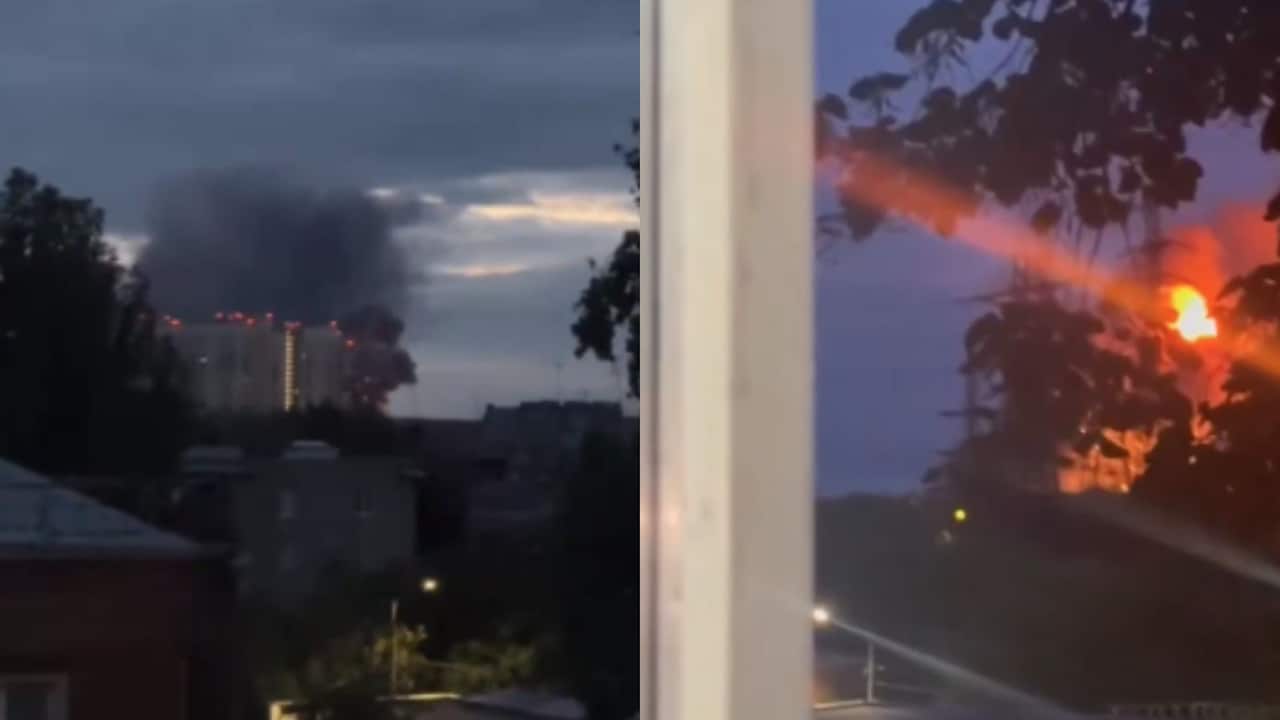
Local officials in Samara acknowledged heavy explosions, reporting that industrial infrastructure sustained localized damage after what they called a massive missile attack. Meanwhile, Ukrainian President Volodymyr Zelenskiy confirmed the use of the FP-5 Flamingo cruise missile in the operation. This highlights an aggressive shift in strategy. Kyiv is no longer relying solely on modified civilian drones. They are investing heavily in domestic long-range missile production to hit high-value strategic targets that directly feed Moscow's war machine.
Why the Rassvet Constellation Matters So Much
Starlink transformed how modern infantry fights. Reliable, high-speed low-latency satellite links let units coordinate artillery, stream live drone feeds, and manage logistics in real time. Russia recognized this vulnerability early on. Moscow's answer is the Rassvet constellation, intended to provide similar broadband military communications from low Earth orbit.
Building a satellite constellation requires a steady cadence of heavy rocket launches. The Soyuz-2.1b rockets manufactured at the Progress centre in Samara are the backbone of that deployment schedule. If assembly lines are damaged, circuit boards are destroyed, or specialized testing bays burn down, the entire launch timeline stalls. A rocket bottleneck starves the orbital network of fresh hardware. Without those satellites going up, Russian ground forces miss out on the secure communications grid commanders desperately want.
Targeting the Entire Aviation and Aerospace Chain
The strike in Samara didn't happen in a vacuum. On the exact same night, Ukrainian forces also struck the Savasleika air base in Russia's Nizhny Novgorod region. That airfield hosts MiG-31K interceptor aircraft equipped to carry Kinzhal aeroballistic missiles.
Tying these targets together reveals a calculated campaign. Kyiv is systematically attacking the two pillars of Russian long-range projection: the airborne delivery systems launching strikes against Ukrainian cities, and the aerospace infrastructure building the space-based eyes and ears of the Kremlin's military command.
Local governors and regional mayors downplay the structural damage, pointing to emergency services putting out fires and claiming air defenses intercepted portions of the attack. Yet satellite data and video footage tell a different story of persistent blazes at critical production nodes.
The message from Kyiv is blunt. Peace talks and political pressure won't work if Moscow's industrial base runs at full capacity behind the front lines. By taking the fight deep into Russian industrial centers, Ukraine is forcing military planners in Moscow to choose between protecting front-line offensives and defending domestic manufacturing plants that thousands of kilometers of territory were supposed to keep safe.