Submarines have always faced a brutal paradox. To find out what's happening on the surface, they have to risk coming up. Putting a mast or an antenna above the waves is basically a giant signpost in a very empty ocean, inviting everyone in the area to come and hunt you down.
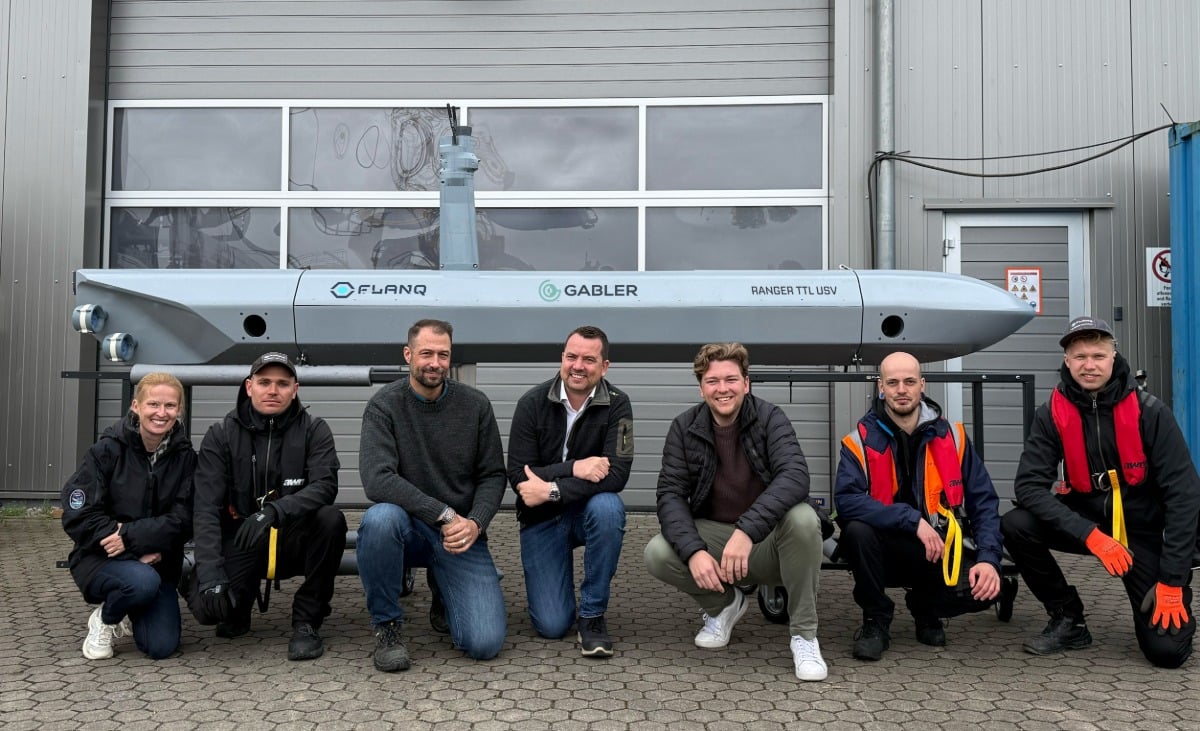
German naval engineering firm Gabler Naval Technology is tackling this exact problem. By developing two uncrewed surface vessels (USVs)—named Ranger and Raider—that launch directly from standard 533mm submarine torpedo tubes, they're attempting to solve the vulnerability issue once and for all. It's a clever shift in naval warfare, but it also highlights a massive design challenge that most people overlook.
The Hidden Trap of Underwater Recoveries
Let's be honest about the state of naval robotics right now. Getting a robot out of a submarine's torpedo tube isn't actually the hard part. It's getting it back in.
Navies around the world have been trying to master the art of the underwater "docking" process for years, and the results have been mixed at best. In late 2024, when the US Navy launched a drone from the USS Delaware, it was lost and never recovered. During follow-up attempts in a Norwegian fjord, another drone refused to dock, forcing divers to jump into freezing water to haul the multi-million-dollar machine back on board. It's messy, dangerous, and ruins the entire point of stealth.
Gabler's strategy splits the problem into two radically different paths:
- Ranger (The Spy): This is a reusable reconnaissance drone designed to swim up to the surface, raise a sensor mast, and send real-time data back to the submarine. To keep the boat safe, it's built to operate at a distance, ensuring the submarine doesn't have to show its face to get eyes on a target.
- Raider (The Strike): This is a one-way attack drone. It's designed to swim out, find a target, strike it, and never come back. By making Raider expendable, Gabler bypasses the nightmare of recovery.
Both platforms are roughly 4.5 meters (nearly 15 feet) long, built with electric propulsion to keep them incredibly quiet, and modular enough to hold different sensor or weapon payloads.
Why "One-Way" is the New Standard
Designing military hardware to be intentionally thrown away sounds like an expensive habit, but in the deep ocean, it's often the only practical option. The US Navy reached the same conclusion with its own MEDUSA program—a torpedo-launched drone built by General Dynamics that swims off to lay sea mines and then intentionally dies on the ocean floor.
If you don't have to worry about recovery, you don't need complex docking software, expensive homing beacons, or a crew that's distracted by trying to catch a floating robot. You fire, the drone does its job, and the submarine is already miles away before anyone realizes what happened.
Comparing these new drone platforms to traditional heavy torpedoes like the Italian Black Shark or the German DM2A4 reveals a shift in priorities. While those torpedoes are designed to sprint at speeds up to 50 knots to smash into a hull, USVs like Ranger and Raider are built for endurance and stealth. They trade brute speed for the ability to loiter, watch, and strike when the timing is perfect.
The Alliance Fast-Tracking the Tech
Gabler isn't building these platforms in a vacuum. To speed up development, they've partnered with German engineering outfit FLANQ. The goal is to get these systems operational for European and NATO fleets quickly, especially as tensions in the Baltic Sea continue to climb.
We're seeing a broader shift across European navies toward uncrewed systems. The Royal Navy, for instance, has actively stated its intention to prioritize uncrewed vessels over crewed ones whenever possible. By designing drones that fit inside the standard torpedo tubes already found on almost every NATO submarine, German designers are ensuring that fleets don't need to build entirely new, expensive ships to use this technology. They just need to load a different kind of weapon into the tubes they already have.
If you want to understand where naval warfare is heading, watch how these sea trials play out. The navies that master these plug-and-play, tube-launched systems will be the ones that control the chokepoints of tomorrow.