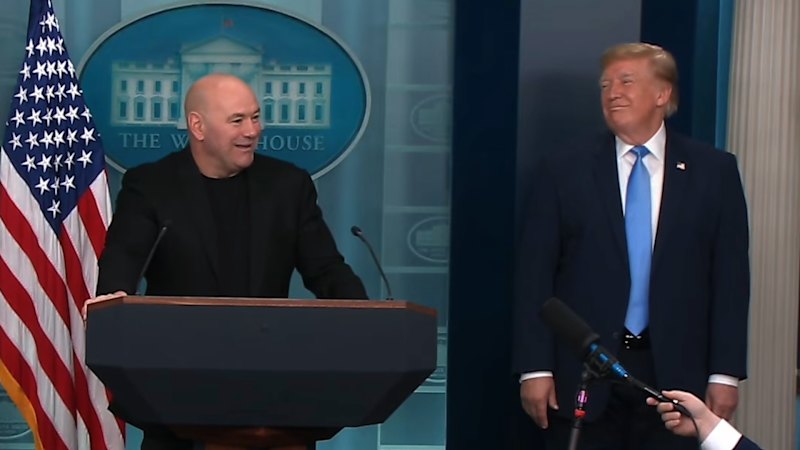
Direct-to-consumer executive communication eliminates traditional media filters, converting casual spectators into invested stakeholders through perceived transparency and real-time accountability. When UFC CEO Dana White hosts an unscripted question-and-answer session—often framed around the sentiment of wanting to bypass conventional press bottlenecks—the event operates less as casual fan service and more as a calculated distribution and sentiment-management mechanism. By stepping outside the structured press conference format, an executive alters the power dynamic of public relations, trading institutional insulation for high-velocity narrative control.
Standard sports and entertainment journalism relies on an intermediary model. Reporters gather information, filter it through editorial priorities, and distribute it to the public. In combat sports, where matchmaking, fighter compensation, and regulatory disputes generate constant friction, this intermediary layer often amplifies conflict before an organization can frame its operational reality. An unmoderated Q&A collapses that pipeline. The executive speaks directly to the end consumer, establishing an immediate feedback loop that reveals what the market actually cares about versus what beat writers prioritize.
The Structural Shift in Executive Communications
Traditional corporate communications prioritize risk mitigation. Statements are vetted by legal counsel, public relations teams, and stakeholder boards to prevent stock volatility or regulatory scrutiny. While this approach protects legacy enterprises, it creates a credibility deficit in personality-driven industries. Fans of combat sports, gaming, and live entertainment reject sanitized corporate messaging because the core product relies on authenticity and raw competition.
When an executive conducts an open-floor Q&A, the operational objective shifts from risk elimination to trust accumulation. This tactic relies on three core mechanisms:
- Information Asymmetry Reduction: Fans frequently speculate about why specific matchups fail to materialize or why certain venues are selected over others. By addressing these questions directly, the executive explains the logistical, financial, and medical constraints behind matchmaking—such as athletic commission timelines, broadcast partner windows, and contract negotiations—turning opaque business decisions into understandable operational realities.
- Algorithmic Distribution: Unscripted sessions generate high-variance soundbites. A thirty-minute livestream produces dozens of micro-clips that social media algorithms favor over polished promotional trailers. Short, candid answers to fan questions achieve higher organic reach because audiences perceive them as unscripted truth rather than paid advertising.
- Market Research in Real Time: The volume and frequency of specific questions serve as an unfiltered demand signal. If seventy percent of incoming queries focus on a specific contender or an international market expansion, leadership receives immediate, unvarnished data on consumer appetite without commissioning external focus groups.
Narrative Control Through Perceived Vulnerability
Stepping in front of an open microphone without a teleprompter or pre-screened questions introduces operational risk. An executive might face hostile inquiries regarding fighter pay, antitrust litigation, or unpopular rule changes. Yet, in modern media environments, the willingness to absorb hostile questions publicly generates disproportionate reputational equity.
This dynamic follows the costly signaling theory in evolutionary biology and economics. For a signal to be perceived as credible by an observer, it must carry a cost that a deceptive actor would be unwilling or unable to pay. A scripted press release carries zero reputational risk; therefore, audiences discount its credibility. Conversely, answering live, unvetted questions carries the genuine risk of public embarrassment, verbal missteps, or viral backlash. Because the executive accepts that risk, audiences assign higher truth value to the answers provided—even when the answers themselves are evasive or defensive.
In practice, this allows leadership to reframe controversial business decisions. When pressed on why a highly ranked contender is passed over for a title shot, an executive can pivot from cold financial metrics to meritocratic or injury-based explanations in a conversational tone. The informal setting softens the defensive posture. Instead of appearing as a corporate spokesperson defending a balance sheet, the executive appears as a fellow enthusiast explaining the messy realities of running a fight promotion.
The Economics of Disintermediation
Media disintermediation—removing the middleman between content creator and consumer—fundamentally alters the unit economics of promotion. Historically, combat sports promoters depended entirely on print journalists and television networks to build awareness for upcoming cards. That dependency required promoters to grant access, provide credentials, and tolerate critical coverage in exchange for distribution.
Owned media channels, social platforms, and direct streaming have inverted that relationship. Today, an executive's personal social media accounts often command a larger, more engaged audience than traditional sports media outlets. Hosting a direct Q&A weaponizes this reach. By breaking news—such as announcing a main event, confirming an injury replacement, or teasing an international expansion—during a fan Q&A rather than through an exclusive press release to a major sports network, the executive trains the audience to bypass third-party aggregators and tune directly into owned channels.
This creates a self-reinforcing flywheel:
- Exclusive News Drops: Releasing high-value information during informal Q&As conditions fans to watch live, driving concurrent viewership metrics.
- Earned Media Amplification: Traditional journalists are forced to cover the Q&A anyway, quoting the executive's stream and linking back to the organization's primary channels.
- Data Capture: Hosting these sessions on proprietary apps or tracked social ecosystems yields granular demographic and engagement data that third-party press coverage never provides.
Operational Bottlenecks and Strategic Limitations
Despite its effectiveness in driving engagement and shaping narratives, the direct executive Q&A model carries severe structural limitations. It is not a scalable communications architecture for every enterprise, nor can it be deployed indiscriminately without eroding its own effectiveness.
The primary bottleneck is key-person dependency. This strategy works only when the executive possesses deep institutional knowledge, rapid recall, and a distinct public persona that aligns with the brand's core demographic. If a chief executive lacks conversational agility or appears overly rehearsed, an unscripted Q&A exposes incompetence rather than building trust. Substituting a mid-level communications director breaks the mechanism entirely, as fans recognize the lack of decision-making authority.
A second limitation involves regulatory and legal exposure. Publicly traded parent companies—such as TKO Group Holdings, which oversees the UFC—operate under strict disclosure rules. Off-the-cuff remarks regarding broadcast rights negotiations, revenue projections, or pending litigation can trigger compliance violations or move stock prices prematurely. The executive must maintain strict cognitive discipline, knowing precisely where operational transparency ends and material non-public information begins.
Third, diminishing returns set in rapidly if the format is overused. The appeal of an executive saying they have "always wanted to do this" rests on scarcity and novelty. If open Q&As become a weekly routine, the answers grow repetitive, the novelty evaporates, and troll-driven spam overwhelms genuine fan inquiries. Moderation becomes mandatory, which immediately reintroduces the perception of censorship and destroys the costly signal of unfiltered access.
The Anatomy of Matchmaking and Business Friction in Public Forums
When combat sports executives open the floor to fans, the questions inevitably cluster around three operational friction points: matchmaking delays, venue logistics, and cross-promotional disputes. Addressing these publicly requires translating complex multi-party negotiations into digestible narratives without destroying leverage at the bargaining table.
Consider the mechanics of high-stakes matchmaking. From a fan's perspective, booking two top-ranked fighters is a simple binary decision. From an operational standpoint, a major bout requires aligning six independent variables:
- Contractual Term Length: Ensuring neither athlete fights out their agreement on a massive platform without renewal protections.
- Broadcast Calendar Windows: Placing the fight on a date that maximizes pay-per-view buy rates or satisfies linear television commitments without competing against major sporting events like the NFL playoffs.
- Medical and Athletic Commission Clearances: Verifying recovery timelines from prior bouts and securing licensing in the target jurisdiction.
- Venue Economics: Balancing site fees offered by host cities or sovereign wealth entities against projected live-gate ticket revenue.
- Purse Structures: Reconciling guaranteed minimums, win bonuses, and pay-per-view point thresholds across both camps.
- Card Depth: Ensuring the undercard carries sufficient regional or stylistic appeal to prevent single-point-of-failure risk if a headliner withdraws.
In a traditional press release, these variables remain invisible. During a candid Q&A, an executive can selectively reveal one or two constraints—such as an athlete turning down a date or a venue conflict—to shift public pressure onto the negotiating counterparty. Public sentiment becomes a leverage tool. If fans believe a specific fighter is stalling negotiations, social media pressure accelerates agreement far faster than private legal correspondence.
Executing High-Leverage Direct Communications
Organizations seeking to replicate the engagement mechanics of unscripted executive Q&As must treat the format as a disciplined operational play rather than an informal hangout. The transition from traditional PR to direct stakeholder engagement requires strict guardrails to capture the upside of authenticity while containing legal and reputational downside.
Deploy unscripted executive sessions selectively around major inflection points—such as post-event fallout, schedule announcements, or periods of intense market speculation—to preserve scarcity. Anchor each session with at least one concrete, previously unannounced piece of operational news to reward live viewership and force secondary media pickup. Train the executive to answer the underlying intent of hostile questions directly rather than pivoting to corporate talking points, acknowledging real operational trade-offs while withholding confidential financial terms. By pairing radical candor on fan-facing logistics with strict silence on regulated corporate metrics, leadership converts direct audience access into a durable competitive moat.