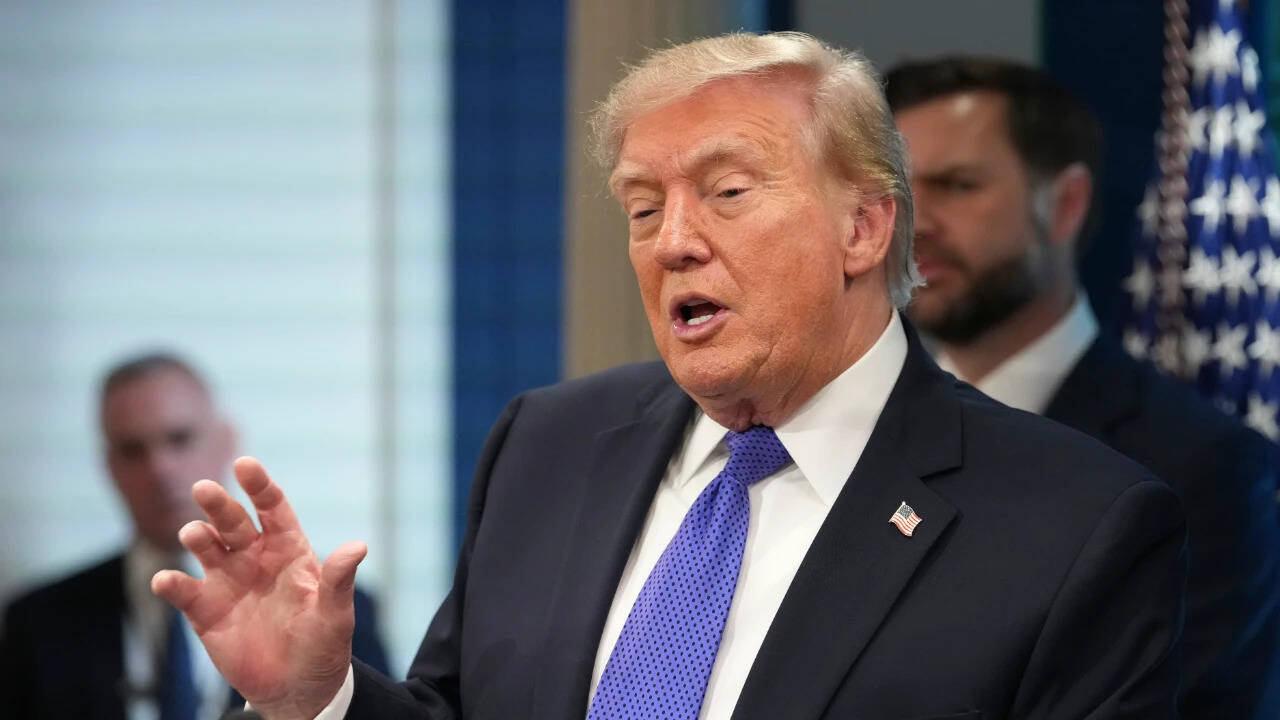
The fluorescent lights of the James S. Brady Press Briefing Room do not forgive. They flatten every shadow, sharpen every crease in a tailored suit, and turn a simple microphone into an instrument of historical judgment.
When President Donald Trump stepped up to that podium, the press corps expected the usual volley of domestic grievances and rapid-fire policy pivots. Instead, the air in the room shifted. Within minutes, a single press conference transformed into a masterclass in geopolitical contrast, economic anxiety, and the brutal arithmetic of modern survival. Ten distinct takeaways emerged from the podium that afternoon, yet strip away the political theater and you are left with two phrases that refuse to let go.
"Look at India."
"A country of second chances."
On paper, those words look like standard rhetorical flourishes—fodder for the evening news cycle and the next morning’s bulleted listicles. In reality, they represent the fault lines of a world tearing itself away from old certainties. To understand what actually happened in that White House briefing room, you have to step out of Washington, walk past the marble columns, and look at the lives caught in the crosshairs of those ten declarations.
The Weight of a Number
I have spent the better part of two decades covering the quiet rooms where trade deals and border policies stop being ink and start becoming dinner-table crises. You learn quickly that politicians speak in percentages, while ordinary people live in absolutes. A two-percent tariff hike is a rounding error in the West Wing; in a machine shop outside Toledo or a textile mill in Surat, it is the difference between keeping the night shift and padlocking the gates.
During the presser, the President laid out a sweeping vision of American economic nationalism—a triad of aggressive tariffs, domestic energy dominance, and a hardline recalibration of global alliances. He pointed to India not merely as a strategic partner, but as a mirror. When Trump urged reporters to "look at India," he was invoking a nation that has spent the last decade unapologetically prioritizing its own industrial expansion, navigating between Western democracies and Russian oil markets without blinking, and demanding respect at the global bargaining table.
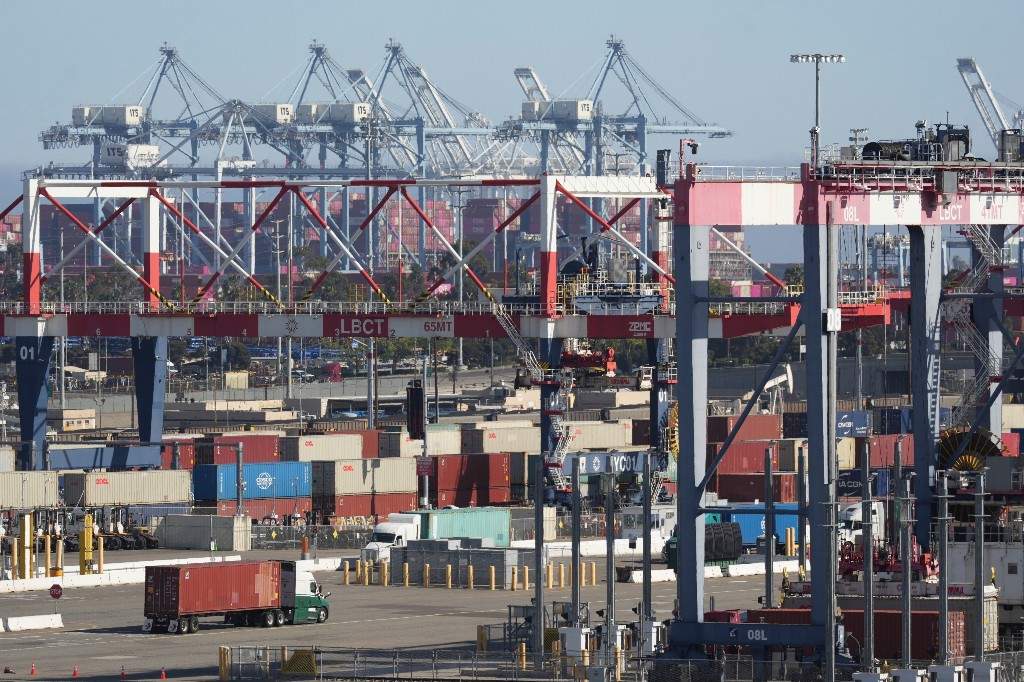
Consider a hypothetical engineer named Vikram, working in Pune. Vikram doesn't care about the ideological debates raging on American cable news. He cares about supply chains. When Washington announces sweeping reciprocal tariffs—one of the central pillars of the briefing—Vikram’s reality changes overnight. If American corporations pull manufacturing out of China to avoid punitive duties, Pune becomes a prime destination. Yet, in the same breath, Trump warned that high-tariff nations—explicitly naming India alongside China and Brazil—would face matching American barriers if they did not open their markets.
Vikram is standing on a tightrope stretched between two titans. One hand offers him the manufacturing boom of a generation; the other threatens to tax his company’s exports out of the American market entirely. That is the invisible stake behind the President’s rhetoric. It is not a simple alliance. It is a high-stakes poker game where every player is both a partner and a rival.
The Architecture of a Comeback
The phrase "country of second chances" landed differently. It carried a softer, almost mythic resonance, though its application during the briefing was anything but sentimental.
Trump used the idea of second chances to frame both his own political resurrection and his administration’s approach to criminal justice reform, economic recovery, and domestic manufacturing. He pointed to the revival of hollowed-out industrial towns, the reintegration of non-violent offenders into a tight labor market, and the sheer, stubborn refusal of the American economy to stay down when counted out.
Listen closely to the cadence of that argument.
Redemption.
It is the oldest story in the American canon, yet it is the hardest one to execute in policy. Take a hypothetical former steelworker from Pennsylvania—let’s call him Marcus. Marcus lost his union job fifteen years ago when global offshoring gutted the Monongahela Valley. He spent a decade drifting through gig work, watching his town’s Main Street board up, feeling invisible to the coastal elites who told him to "learn to code." When the President stood at the podium and spoke of bringing back heavy industry, slashing regulatory red tape, and unleashing domestic oil and gas to drive down energy costs, Marcus heard something he hadn't heard in years: permission to hope again.
Yet hope is a fragile currency.
For Marcus, a second chance requires more than a speech. It requires capital investment that actually materializes, apprenticeships that pay a living wage, and a global trade environment that doesn't trigger retaliatory tariffs on the very products his new factory hopes to sell. When the briefing covered deregulation and tax cuts—two more core takeaways from the afternoon—the administration framed them as the oxygen required to keep Marcus’s second chance alive. Critics in the room pushed back, questioning whether corporate tax relief would trickle down to the factory floor or vanish into stock buybacks.
I admit, watching that exchange from the press rows, the tension felt unresolved. Economic history is littered with promises of industrial rebirth that stalled halfway through a congressional term. You want to believe the ledger will balance in favor of the guy on the assembly line, even when the math looks unforgiving.
Ten Threads, One Tapestry of Pressure
If you strip away the noise, the ten takeaways from that White House presser weren't isolated soundbites. They were interlocking gears in a single, relentless machine.
First came the tariff doctrine—the insistence that reciprocity is the only fair rule in global trade. Second was the India pivot, holding New Delhi up as both a formidable competitor and an essential counterweight in the Indo-Pacific. Third stood energy independence, framed not as an environmental debate, but as a blunt-force weapon to lower inflation and starve geopolitical adversaries of leverage.
Then the focus narrowed to the home front. The fourth takeaway centered on border security and immigration enforcement, pitched as a prerequisite for wage growth among working-class Americans. Fifth was the deregulatory sweep, promising to dismantle bureaucratic bottlenecks that stall infrastructure and energy projects for years. Sixth came criminal justice and workforce re-entry, anchoring that "second chances" narrative in tangible labor policy.
The final four takeaways stretched outward into a volatile world: NATO burden-sharing, demanding European allies pay their full share for collective defense; Middle East stabilization, tied closely to energy markets and regional security pacts; tech sovereignty, guarding artificial intelligence and semiconductor supply chains against foreign espionage; and finally, institutional disruption—the unmistakable message that Washington’s traditional consensus is dead, and transactional realism has taken its place.
Think of those ten points not as a checklist, but as a pressure cooker. Every single policy interacts with the others. You cannot restrict immigration and expand domestic manufacturing simultaneously without confronting a severe labor shortage—which is precisely why the administration suddenly needs "second chance" workers like Marcus, and why automation and artificial intelligence become necessities rather than luxuries. You cannot confront China on trade without courting India, yet you cannot court India without confronting New Delhi’s own protectionist instincts.
Everything touches everything else.
The Geography of Leverage
To understand why India occupied such a prominent place in the President’s remarks, you have to understand how power shifts when no single nation holds all the cards.
For thirty years after the Cold War, Washington operated under a simple assumption: economic integration would naturally produce political alignment. Bring nations into the global trading system, let them prosper, and they will eventually look and act like Western democracies.
That assumption shattered.
Instead of converging, the world fractured into competing centers of gravity. And right in the middle sits India—a nation of 1.4 billion people, the world’s largest democracy, possessing a youthful workforce, a booming digital infrastructure, and a fiercely independent foreign policy. When Trump told the room to "look at India," he was acknowledging a reality that many in Washington still struggle to digest. India does not want to be a junior partner to the United States. It wants to be a pole in its own right.
Imagine a diplomatic negotiation room in New Delhi. Across the table sit American trade representatives pushing for lower tariffs on Harley-Davidson motorcycles, bourbon, and medical devices. Across from them sit Indian bureaucrats whose primary mandate is protecting millions of small farmers and nascent domestic manufacturers from being crushed by foreign imports. Neither side is acting out of malice. Both are acting out of survival.
This is where the analogy of a neighborhood hardware store versus a global big-box chain helps clarify the friction. For decades, America acted as the global big-box store—keeping its doors wide open, absorbing the world’s surplus goods, and tolerating massive trade deficits in exchange for geopolitical stability. Now, the store is under new management. The new manager is standing at the front door with a clipboard, checking every delivery truck, demanding that anyone who wants to sell inside must open their own storefronts to American goods on equal terms.
India, meanwhile, is building its own megastore down the block. It respects the American market, needs American technology, and shares deep concerns about regional security in Asia. Yet it refuses to hand over the keys to its own aisles without extracting a steep price.
The Quiet Cost of Uncertainty
There is a human emotion that rarely makes it into official White House transcripts, yet it hangs over every press conference like static electricity: exhaustion.
People are tired of living in a state of permanent contingency.
A small business owner in Ohio importing aluminum components doesn't have a team of Washington lobbyists to decode the subtle nuances of an executive order. She has a spreadsheet, a line of credit at a local bank, and twelve employees who expect their paychecks to clear on Friday. When she watches a press conference where tariffs can jump twenty-five percent on a Tuesday and be negotiated down on a Thursday, her instinct isn't to celebrate geopolitical strength. Her instinct is to freeze. She delays buying that new CNC machine. She holds off on hiring a thirteenth worker.
Uncertainty is an invisible tax. It doesn't show up on a customs form, yet it drains momentum just as effectively as an interest rate hike.
At the same time, look at the other side of that coin. For years, predictability meant the steady, quiet erosion of American industrial capacity. It meant watching towns hollow out while Wall Street hit record highs. It meant accepting a status quo where vital pharmaceuticals, semiconductors, and steel were produced thousands of miles away by nations that didn't always share American interests.
The friction in that White House briefing room was the sound of a country trying to break out of a slow decline without triggering a sudden crash. It is a messy, loud, deeply uncomfortable process. There is no surgical way to rewire a thirty-trillion-dollar economy. You cannot move supply chains across oceans without breaking a few contracts, rattling a few allies, and giving every economist in Washington a migraine.
What Happens When the Podium Empties
Eventually, the cameras clicked off. The reporters filed out of the Brady Press Briefing Room, racing toward their deadlines to distill ninety minutes of unscripted power politics into digestible headlines. The ten takeaways were packaged, syndicated, and debated across continents before sunset.
Yet the real story didn't happen under the white lights of the West Wing.
It happened the next morning in a cramped apartment in Mumbai, where a software developer checked the rupee-to-dollar exchange rate before deciding whether to apply for an H-1B visa or take a job with a domestic startup. It happened at a kitchen table in Erie, Pennsylvania, where a father read an article about domestic energy expansion and wondered if the local plant might finally start hiring again. It happened in a ministry office in Brussels, where European diplomats quietly recalculated how much more they would need to spend on their own defense budgets before winter.
"Look at India."
"A country of second chances."
Those two phrases endure because they capture the twin engines driving the modern era: fierce national self-interest on the global stage, and a desperate hunger for renewal at home. Whether those two forces can coexist without tearing the global economy apart remains the defining question of our time.
In the quiet hum of a factory floor outside Pittsburgh, a newly hired machinist—three years out of a county jail, working his first steady shift in a decade—adjusts his safety glasses, pulls down the lever on a freshly calibrated lathe, and watches a curl of bright, hot steel peel away from the blade.