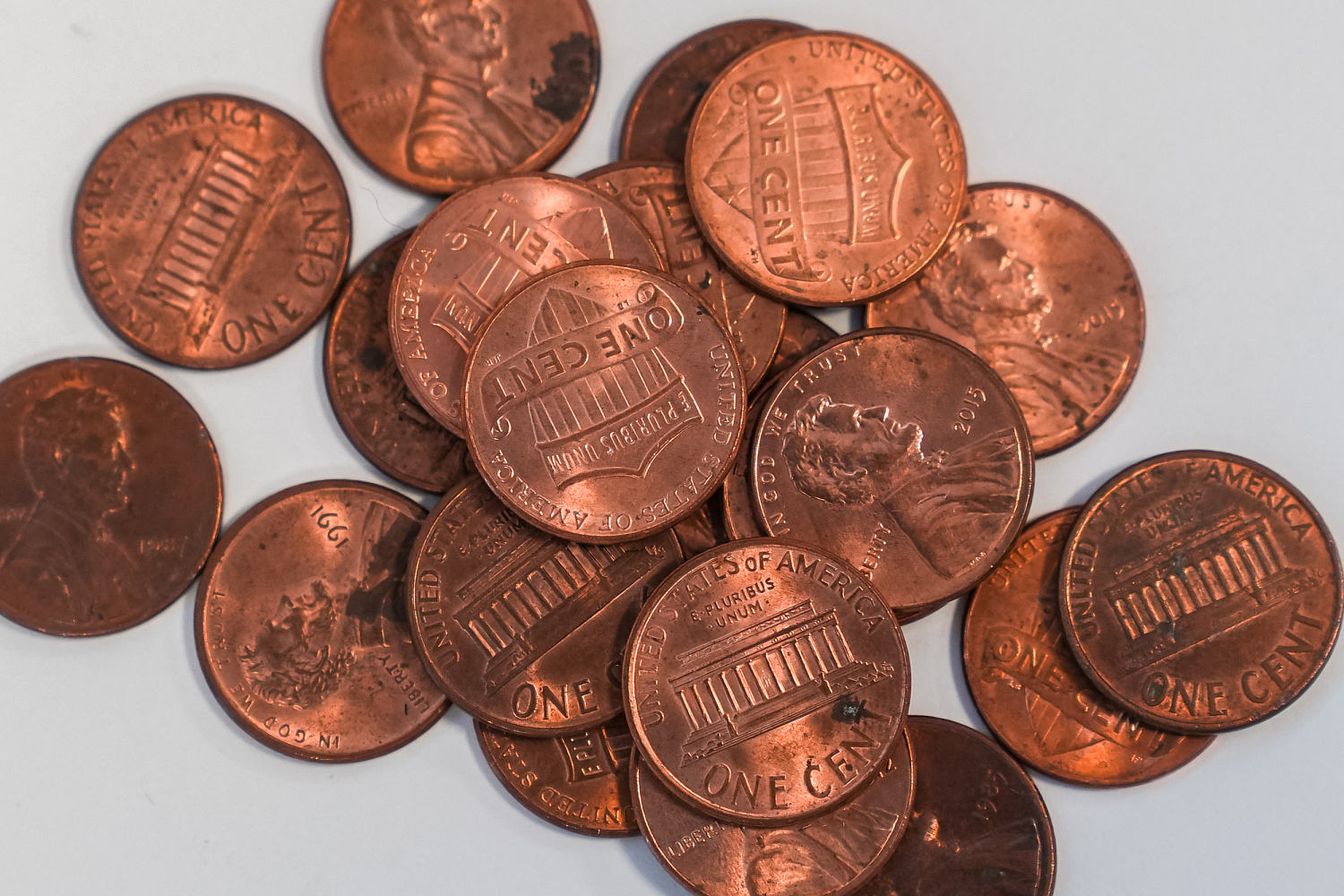
Eliminating the United States one-cent coin after nearly 250 years of production is an overdue fiscal correction driven by negative seigniorage, rather than a sudden ideological shift. For decades, the U.S. Mint operated a manufacturing line where the unit cost of raw materials, stamping, and distribution exceeded the face value of the finished asset by over 300 percent. Terminating this production run removes a structural loss-leader from the federal balance sheet, forces retail point-of-sale systems to adopt symmetric cash rounding, and exposes the operational friction of legacy physical currency.
The Structural Failure of Negative Seigniorage
In sovereign monetary systems, seigniorage represents the difference between the face value of currency and its production cost. Healthy circulating coinage generates positive seigniorage, acting as a revenue transfer from the central minting authority to the general treasury. The modern American penny inverted this economic principle.
Since the mid-2000s, global commodity prices for zinc and copper—the primary inputs for the post-1982 copper-plated zinc planchet—outpaced the fixed one-cent nominal value of the coin. When production, administrative overhead, and distribution expenses are factored into the total unit cost, the U.S. Mint absorbed a direct loss on every single penny struck. In recent fiscal years prior to the termination order, the unit cost consistently hovered above three cents per coin, resulting in tens of millions of dollars in annual net losses to the Treasury.
This deficit cannot be solved through operational efficiency or supply chain optimization. The U.S. Mint already utilizes high-speed coining presses capable of striking hundreds of coins per minute, relies on bulk commodity purchasing, and employs a low-cost zinc core (97.5 percent zinc, 2.5 percent copper plating) specifically designed in 1982 to replace expensive solid bronze. Because manufacturing throughput is already near physical limits, the unit economics of the penny are permanently broken by commodity inflation. Continuing production amounted to subsidizing a physical token whose purchasing power had eroded by more than 96 percent since the Coinage Act of 1792.
The Velocity Trap and Circulation Hoarding
A common misconception in monetary policy is that high annual minting volumes indicate high commercial demand. In reality, the penny suffers from an extreme velocity trap, characterized by one-way circulation flows that force continuous, wasteful replacement production.
Currency velocity measures how frequently a unit of money changes hands within a given timeframe. High-utility coins, such as the quarter, circulate continuously through vending machines, laundromats, parking meters, and retail cash drawers. The penny operates as a terminal currency. Consumers receive pennies as change during cash transactions, remove them from active circulation by depositing them in jars, drawers, or vehicle consoles, and rarely reintroduce them into the retail ecosystem.
Because these coins are effectively hoarded out of the money supply without being destroyed, retail banks experience a persistent localized shortage of one-cent coins. To prevent cash registers from running dry, the Federal Reserve must continuously order billions of new pennies from the U.S. Mint each year. Over 60 percent of all coins produced by the Mint annually were pennies, solely to replace coins sitting idle in domestic storage. Ending production breaks this unproductive capital loop, stopping the conversion of valuable industrial metals into dormant household clutter.
Mechanics of Post-Penny Retail Rounding
Removing the smallest denomination from active production does not require recalling existing coins, nor does it invalidate the penny as legal tender. Instead, it shifts the friction of exact change onto point-of-sale (POS) software through symmetric rounding—a mechanism successfully deployed by Canada in 2013, Australia in 1992, and New Zealand in 1990.
Under symmetric rounding, exact pricing remains intact at the line-item level. Sales taxes, discounts, and individual product prices continue to be calculated to the exact cent. Rounding occurs strictly at the final stage of a physical cash transaction:
- Electronic transactions remain untouched: Credit cards, debit cards, mobile wallets, and Automated Clearing House (ACH) transfers process to the exact cent. Because electronic payments account for the vast majority of modern retail volume, most consumers experience zero change in pricing.
- Cash totals ending in 1, 2, 6, or 7 round down: A cash subtotal with tax of $10.02 settles at $10.00. A total of $10.07 settles at $10.05.
- Cash totals ending in 3, 4, 8, or 9 round up: A cash subtotal with tax of $10.03 settles at $10.05. A total of $10.08 settles at $10.10.
- Totals ending in 0 or 5 require no adjustment: Transactions already aligned with five-cent increments clear at exact face value.
Empirical studies from the Bank of Canada following its 2013 phase-out demonstrated that symmetric rounding is statistically neutral for both consumers and merchants over time. Because final digits distribute uniformly across high-volume retail transactions, the gains from rounding down offset the losses from rounding up to within fractions of a percent. The widespread fear that retailers would exploit the elimination of the penny to engineer hidden price inflation failed to materialize in every developed economy that executed this transition.
Second-Order Supply Chain and Operational Impacts
While the macroeconomic case for terminating the penny is straightforward, the decision triggers immediate operational adjustments across multiple private and public sectors.
Commercial Cash Management and Armored Logistics
Coinage is heavy. A single modern zinc penny weighs 2.5 grams, meaning one million dollars in pennies weighs 250 metric tons. Armored car carriers, commercial banks, and retail cash offices spend disproportionate labor hours and fuel costs sorting, rolling, weighing, and transporting low-value coinage. Eliminating the penny reduces the physical weight of standard retail coin deliveries, freeing armored logistics capacity and lowering cash-handling fees charged to commercial merchants.
Point-of-Sale Software Reconfiguration
Retailers must update legacy POS terminals to distinguish between tender types before finalizing a transaction. Modern cloud-based systems can deploy symmetric rounding algorithms via routine over-the-air firmware patches. However, fragmented small businesses operating offline, hardcoded, or decades-old cash registers face manual tax-table adjustments or forced hardware upgrades.
The Nickel Substitution Bottleneck
The most significant operational risk of terminating the penny is downstream pressure on the five-cent coin. Under symmetric rounding, every cash transaction ending in a non-zero five-cent increment requires a nickel. Historically, the U.S. nickel has also suffered from negative seigniorage due to the high cost of its 75 percent copper and 25 percent nickel alloy composition. If eliminating the penny causes a sharp spike in nickel demand, the U.S. Mint could simply shift its manufacturing deficit from one denomination to another unless the alloy composition of the nickel is simultaneously reformulated.
Statutory Authority and Executive Execution
Executing the end of penny production relies on the statutory discretion granted to the Secretary of the Treasury under Title 31 of the United States Code. While Congress retains the constitutional authority to coin money and regulate its value, existing statutes allow the Treasury Secretary to determine the quantities of coins minted based on public demand and economic necessity. By directing the Treasury to cease ordering penny planchets and halt minting operations, the executive branch bypasses years of legislative gridlock driven by zinc industry lobbying groups and numismatic preservationists.
Limitations and Friction Points of the Transition
Treating the end of penny production as a frictionless fiscal windfall ignores three structural constraints that will complicate the rollout:
- Regressive impact on unbanked consumers: Low-income households rely disproportionately on physical cash rather than electronic cards. While symmetric rounding is neutral in aggregate, individual cash-dependent consumers face minor variance on small-ticket purchases. If a consumer buys a single low-cost item daily that consistently rounds up after local sales tax, they absorb a localized transaction penalty that card-holding consumers avoid.
- Charitable coin-drive compression: Non-profit organizations and schools that rely on high-volume penny drives lose a low-barrier fundraising mechanism. While digital micro-donations replace some of this volume, the psychological ease of donating "worthless" physical coins does not transfer cleanly to nickels or dimes.
- The legacy float overhang: Roughly 240 billion pennies remain in circulation or domestic storage. Because the coin retains legal tender status, retail banks and coin-counting kiosks will experience a multi-year surge in coin redemption as households liquidate accumulated jars before businesses stop accepting them voluntarily. Processing this reverse logistics wave will temporarily strain Federal Reserve coin terminals.
Strategic Execution for Retail and Financial Operators
Organizations handling physical currency cannot treat the end of penny minting as a passive news event; they must actively reconfigure cash operations to avoid checkout bottlenecks and margin leakage.
Retailers and hospitality operators must immediately audit their point-of-sale software to verify support for tender-specific symmetric rounding. Systems must be configured to apply rounding exclusively after sales tax calculation and strictly upon selection of physical cash as the payment method, ensuring compliance with state tax remittance laws that require exact-cent reporting. Simultaneously, treasury teams should instruct store managers to cease ordering penny rolls from commercial banks, drawing down existing register inventory until local floats naturally deplete.
Financial institutions and cash-in-transit providers must prepare for a 12-to-24-month spike in reverse coin logistics. Banks should waive coin-counting fees for retail account holders during the initial transition window to accelerate the liquidation of household penny reserves, feeding those coins back into commercial channels to satisfy remaining cash-drawer demand without requiring federal intervention. Finally, federal policymakers must immediately pair the termination of the penny with a metallurgical overhaul of the nickel, replacing its expensive cupronickel alloy with lower-cost plated steel to prevent the five-cent coin from becoming the Treasury's next negative-seigniorage liability.


