On July 4, 2026, a high-stakes standoff between executive will and extreme weather transformed the national celebration of America's 250th anniversary into a chaotic, late-night political rally on the National Mall. Severe thunderstorms and a blistering heatwave forced a total evacuation of the grounds at 7 p.m., leaving hundreds of thousands of attendees stranded in federal office buildings. Instead of canceling the "Freedom 250" signature event, President Donald Trump insisted on pushing forward, forcing a depleted crowd to endure hours of delays and secondary security screenings before he finally took the stage at 11:15 p.m.. What was meant to be a nonpartisan milestone of American independence became a dramatic demonstration of a president reshaping national traditions around his own political brand.
The event offered a stark look at the administrative and physical limits of staging a massive public spectacle during a severe weather alert. Meanwhile, you can find similar events here: Why Vladimir Putin Can't Hide the Truth About Russia's Failing Defense Frontline.
The Operational Breakdown on the National Mall
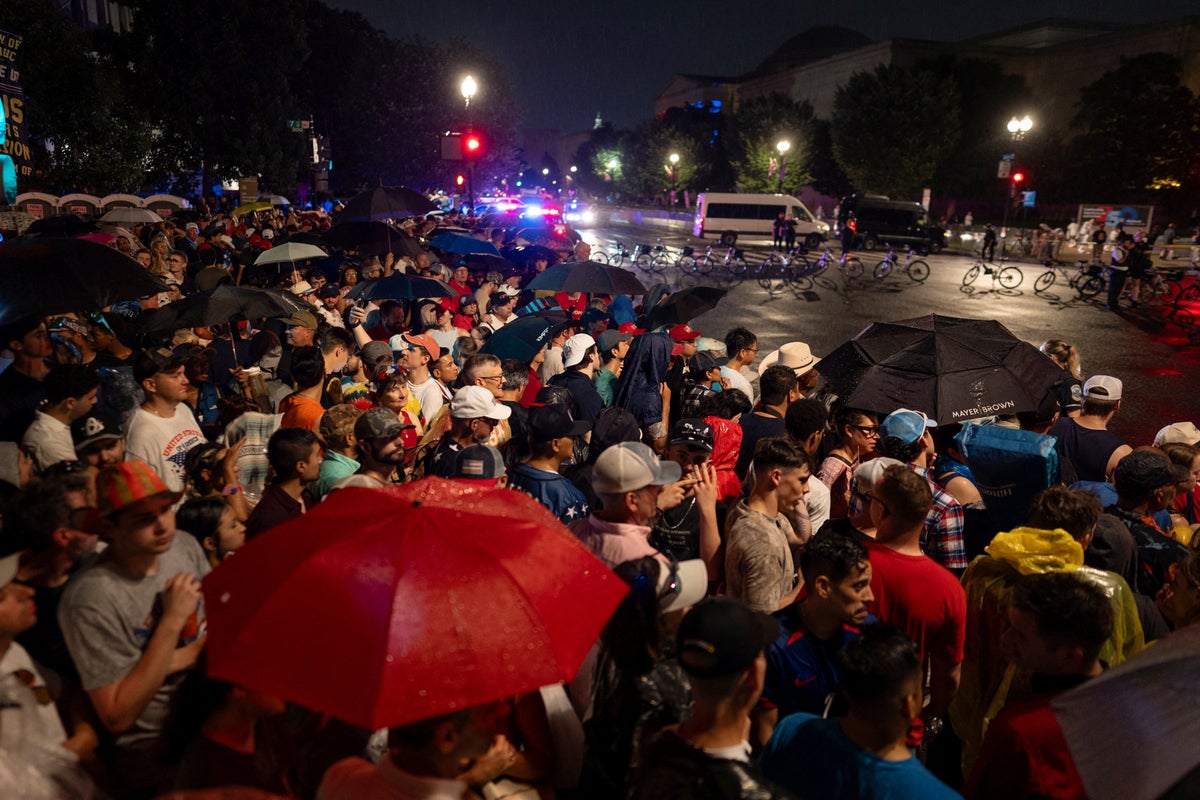
The tactical reality of evacuating more than 375,000 people from an exposed public park is a logistical nightmare. By late afternoon, the heat index in Washington had reached 115 degrees Fahrenheit, prompting emergency workers to treat dozens of attendees for heat exhaustion. When severe thunderstorms rolled in around 7 p.m., the U.S. Secret Service and National Guard immediately suspended security screenings and activated emergency protocols.
Loudspeakers ordered families, veterans, and tourists to clear the open grass. The response was immediate confusion. Thousands fled toward the nearest structures, while others remained frozen on the Mall, uncertain of where to seek safety. The Secret Service designated several nearby federal sites as emergency shelters, directing the crowd into the corporate stone lobbies of the Internal Revenue Service, the Department of Commerce, and the Department of Agriculture. To understand the bigger picture, we recommend the recent article by TIME.
For nearly three hours, these bureaucratic hallways served as makeshift holding pens. Families sat on marble floors while children drank water from bathroom sinks. The official line from the White House was that the schedule was merely paused. Monica Crowley, the chief of protocol, maintained on television networks that the evening was delayed rather than canceled.
Behind the scenes, the stress on federal personnel was immense. Forcing tens of thousands of people out of a secure zone meant that every single person would have to be processed through magnetometers a second time once the storm passed. Security officials expressed internal alarm at the prospect of running night-time screenings under active rain conditions, yet the directive from the top was absolute. The event would happen.
Executive Defiance and the Truth Social Bureaucracy
While thousands waited inside the dim lobbies of federal agencies, the president took to social media to ensure the event would not be compromised by weather. Trump declared that he was prepared to wait until the early morning hours to deliver his address. He compared the situation to a recent sports broadcast, asserting that storms bring luck and that the weather would clear just as it had for a past UFC event.
This insistence bypassed standard municipal safety recommendations. Typically, when lightning strikes within a specific radius of the National Mall, large-scale public events are abandoned for the night due to the ongoing threat of secondary storm cells and the strain on local transit networks. The Washington Metropolitan Area Transit Authority had to rapidly adjust its schedule, extending underground operations to accommodate a crowd that would now be leaving long past midnight.
At 9:45 p.m., the Secret Service reopened the security checkpoints. The original crowd of 375,000 had dwindled significantly. Roughly 150,000 people chose to brave the wet grass and walk back through the metal detectors. Many who left cited the lack of clear instructions, the oppressive humidity, and the impossibility of keeping young children outside until midnight. Those who returned were the most dedicated elements of the political base, transforming the gathering from a general civic audience into a distinct political assembly.
The Green Pool and the Aesthetics of Freedom 250
Every detail of the Freedom 250 celebration had been designed to project an image of modern American triumph, under the direction of the Salute to America 250 Task Force. The administration had spent over a year organizing state pavilions, military flyovers, and historical exhibitions stretching from the Capitol to the Washington Monument.
A prime example of this curated presentation was the $14.7 million renovation of the National Mall’s reflecting pool. The administration ordered the water treated to reflect a specific shade of American flag blue in time for the July 4 milestone. Nature had other plans. A sudden, massive algae bloom took hold in the days leading up to the holiday, tinting the entire expanse a stubborn, murky green.
This visual malfunction served as an unintentional metaphor for the entire weekend. While organizers planned a highly polished celebration of national unity, the realities of infrastructure, heat waves, and intense partisan friction kept breaking through the surface.
The scheduling choices also disrupted long-held traditions. To ensure the president’s speech occupied the prime late-night slot, the iconic fireworks display was intentionally moved past its normal 9 p.m. window. Due to the storm delay, the pyrotechnics did not begin until just before midnight. For millions of viewers watching at home, the iconic images of fireworks illuminating the Washington Monument were replaced by hours of cable news anchors tracking lightning radars and showing empty, rain-slicked bleachers.
Reaching for the Base in the Dark
When the president finally took the microphone at 11:15 p.m., the traditional, nonpartisan tone expected of a semiquincentennial address was quickly sidelined. Trump did spend time honoring the nation’s history, introducing elderly war veterans and the crew of the upcoming Artemis II lunar mission. He spoke of the unstoppable spirit that built the world's most powerful military.
The speech quickly pivoted into a familiar political playbook. Standing before a crowd clad in partisan merchandise, Trump used the platform to attack his domestic opponents. He openly targeted the progressive wing of the Democratic Party, labeling them a threat that needed to be extracted from the body politic. He also championed specific legislation, using the anniversary of American independence to advocate for the passage of the SAVE America Act to alter voting requirements ahead of the upcoming midterm elections.
Rally Attendance Shift (July 4, 2026)
=========================================
Original Estimated Crowd:   375,000
Post-Evacuation Return:     150,000
Net Attendance Decline:     225,000 (60%)
=========================================
This rhetorical choice drew sharp contrast with historical precedent. During the bicentennial in 1976, President Gerald Ford delivered speeches at Valley Forge and Independence Hall that deliberately avoided the campaign trail friction of his election year. In contrast, the 2026 celebration was explicitly framed by the administration as a showcase for the current political movement. Notably, all living former presidents were absent from the main stage events in Washington, highlighting the deep internal divisions that persist across the country.
The Realities of a Divided Anniversary
While the administration celebrated the late-night turnout as a triumph of American willpower over the elements, the tactical and political fallout paints a different picture. Vice President JD Vance spoke from a Navy ship in New York earlier in the day, accusing critics of obsessing over national imperfections rather than celebrating greatness. At the same time, opposition leaders issued statements reminding the public that the nation remains an unfinished project requiring constant adjustment rather than uncritical celebration.
The decision to turn a 250-year milestone into a test of loyalty in a rainstorm shows the current state of national politics. Tens of thousands of ordinary citizens were caught in the middle of a security apparatus scrambling to manage an unstable environment. By forcing the show to go on into the early hours of July 5, the administration achieved the specific imagery it wanted for its base, but it did so by leaving a trail of exhausted civil servants, abandoned family plans, and a fractured national message in the mud of the National Mall.