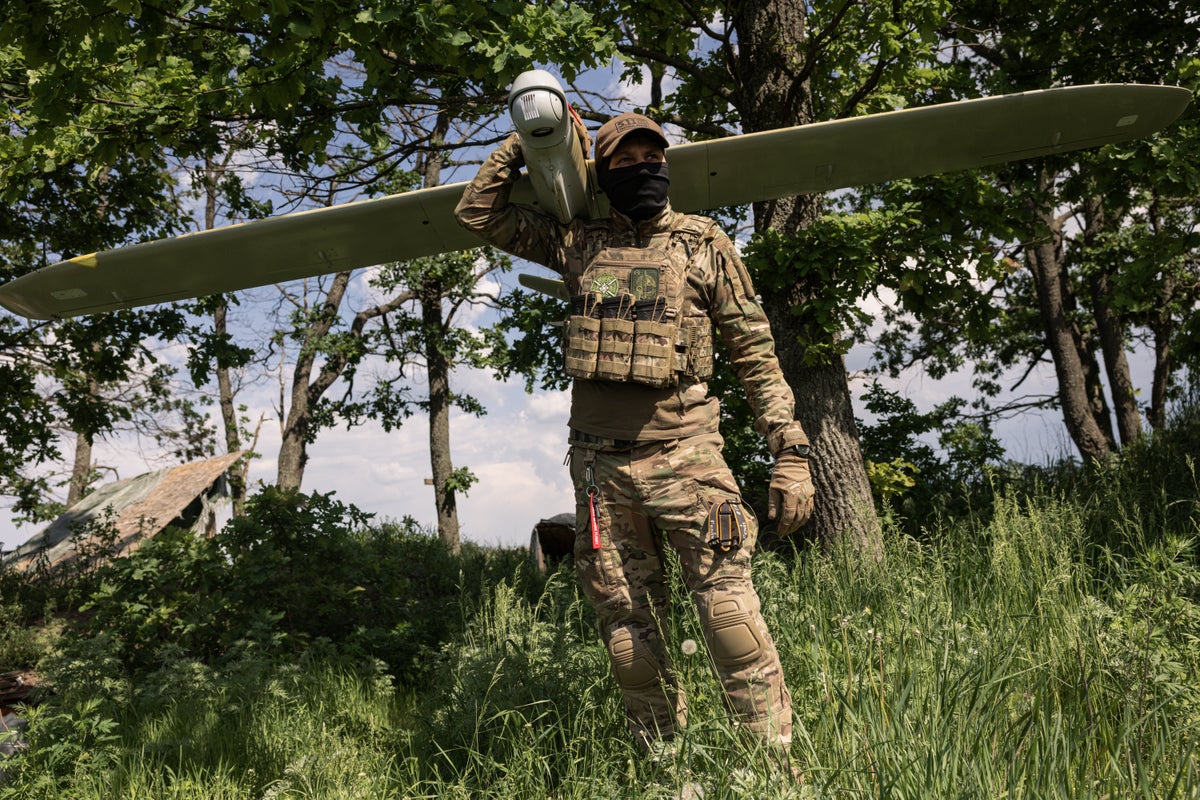
Heavy armor used to mean total dominance on the battlefield. Not anymore. During recent war games in Germany, Ukrainian drone operators systematically tore through a 3,500-strong American armored brigade. Troops from the US Army's 3rd Armored Brigade Combat Team found out the hard way that traditional military might counts for very little when cheap, first-person-view quadcopters own the sky.
The simulation wasn't even close. Ukrainian pilots flying commercial-style rigs spotted heavy American vehicles instantly, largely because the massive machinery kicked up unmistakable clouds of dust across the training grounds. Once spotted, reconnaissance units phoned in coordinates for explosive-dropping drones that virtually wiped out the American column. In fact, the simulated casualties piled up so fast that exercise controllers had to constantly "respawn" destroyed vehicles just to keep the training scenario running.
If you think this is just a minor tactical hiccup, you're missing the wider reality of modern defense. The Pentagon is scrambling to catch up to a reality that eastern European battlefields exposed years ago.
The Blind Spot in Traditional Force Design
For decades, military procurement focused on exquisite, multi-million-dollar hardware. Think advanced main battle tanks, sophisticated jet fighters, and heavily fortified command posts. These assets work brilliantly against conventional adversaries who fight using similar playbooks. They fail catastrophically against a swarm of two-thousand-dollar quadcopters guided by operators who have spent years dodging artillery fire.
During the exercises in Germany, the deployed American units did have standard electronic warfare and counter-drone kits. They still got dismantled. Why? Because gear sitting in a supply depot doesn't translate to intuitive field competence. Troops need constant, grinding exposure to aerial threats to change how they move, hide, and communicate.
When heavy vehicles kick up dust visible from three miles away in the infrared spectrum, hiding becomes impossible without strict discipline. Ukrainian veterans understand that signature management dictates survival. If your machinery radiates heat, electronic chatter, and visual dust trails, you're already dead.
How the Pentagon is Trying to Pivot
You cannot fix a generational doctrine problem just by throwing a blank check at defense contractors. Yet, that is largely what is happening. The Department of Defense has rushed billions of dollars into counter-drone technologies, accelerated testing cycles, and fresh interagency task forces designed to mirror front-line conditions.
Take recent testing efforts down in Florida, where special operations groups recreated the exact spiderweb drone assaults seen abroad. These tests used frequency-hopping connections, directional antennas, and fiber-optic control lines designed to laugh off standard electronic jamming. Military leaders are finally waking up to the truth that small, cheap, expendable tech beats rare, expensive perfection every single time.
There is also a frantic push toward software integration. The US recently partnered with Ukrainian developers to tap into battle-tested coordination systems that handle massive drone swarms without crashing or losing signal. Buying hardware is easy. Building the operational mindset to survive an omnipresent eye in the sky takes a complete cultural overhaul.
What Real Adaptation Looks On the Ground
Troops who survived those brutal training weeks in Germany didn't win by acquiring better tanks. They won by changing their behavior. They learned to disperse personnel across miles instead of bunching up in traditional command clusters. They masked their thermal signatures, buried generators, and treated every open field as a death zone.
We are watching the painful obsolescence of traditional ground tactics in real-time. If a multi-million-dollar armored division can be neutralized by a squad of operators flying gear bought off a consumer electronics shelf, the entire definition of military supremacy has shifted. The nations that win future conflicts won't necessarily be the ones with the heaviest steel. They will be the ones that treat adaptation as an ongoing emergency rather than a periodic training exercise.
Stop relying on legacy deterrence models. Disperse your assets, master electronic spectrum management, or prepare to lose.