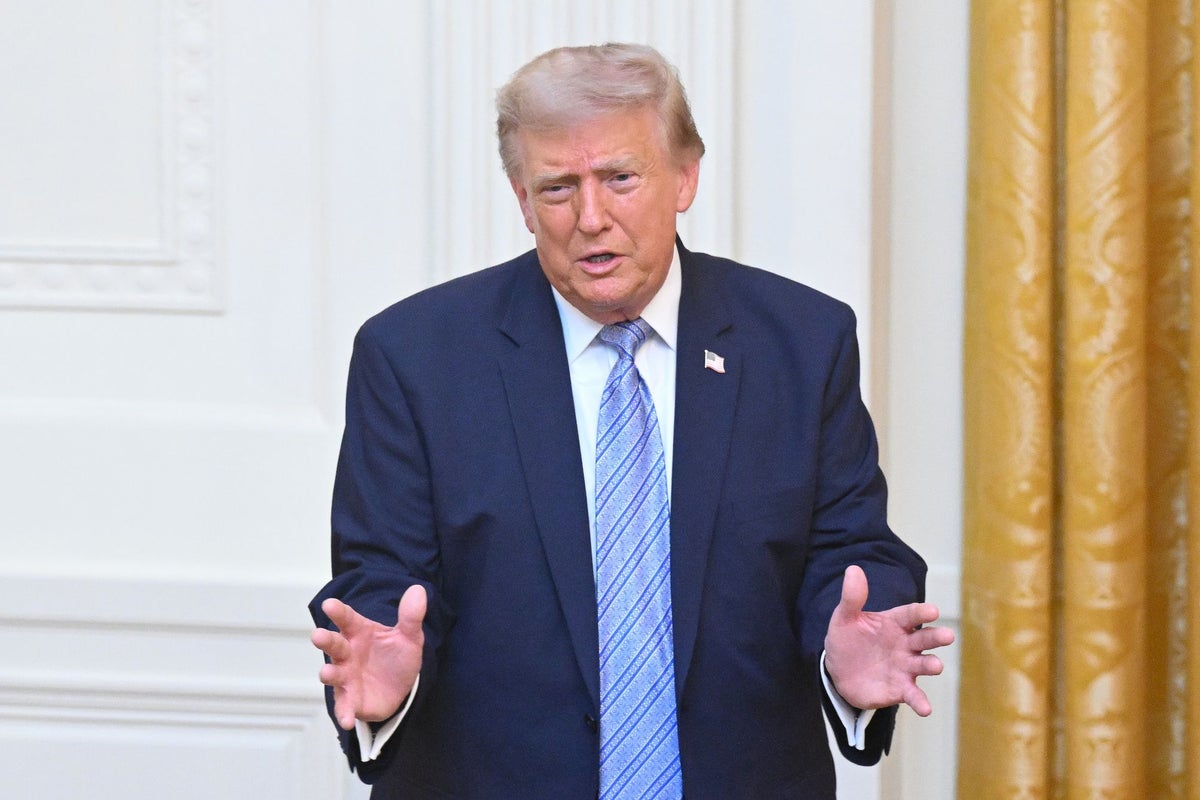
The political commentary class loves a predictable script. When a politician questions the integrity of an upcoming vote, the immediate reaction is a wave of shock, followed by a flurry of articles tracking every instance of "preemptive doubt." We saw this clearly when analysts rushed to document Donald Trump’s rhetoric surrounding the midterm elections, treating his skepticism as an entirely new breakdown of democratic norms.
They are missing the entire point. Recently making headlines recently: The Escalating Shadow War Over Gulf Infrastructure.
Preemptive election skepticism is not a sudden malfunction in modern politics. It is a calculated, time-tested tool of political mobilization used across the ideological spectrum. By treating this rhetoric as an unprecedented crisis rather than a standard operational strategy, mainstream analysis fails to understand how modern campaigns actually function.
The Strategy of Preemptive Doubt
Political campaigns operate on a simple currency: voter turnout. The hardest part of winning any election is not convincing people to agree with your platform; it is convincing them to leave their homes on a Tuesday and stand in line to vote. Further details on this are explored by USA Today.
Fear and grievance are the most effective drivers of voter turnout ever discovered.
When a political figure suggests that an election might be compromised, the media treats it as an attempt to suppress votes or subvert the system. In reality, it functions as a high-powered mobilization mechanism. It signals to the base that the stakes are higher than ever, that the opposition is playing dirty, and that maximum participation is required to overcome the alleged obstacles.
Consider the mechanics of political fundraising. An email that reads, "Our opponent has different policy ideas, please donate," generates minimal engagement. An email that reads, "They are trying to rig the system against us, we need your help to fight back," breaks fundraising records. This is not a breakdown of the system; it is the system working exactly as designed to maximize resource extraction and voter engagement.
The Consensus Media Blindspot
The standard media narrative frames election doubt as a unique, modern anomaly tied strictly to one individual or party. This view ignores recent political history.
Preemptive skepticism of election outcomes is a structural feature of a deeply polarized, two-party system.
- In 2018, Stacey Abrams famously refused to offer a traditional concession speech in the Georgia gubernatorial race, arguing that systemic voter suppression had compromised the outcome. Her stance was widely celebrated by the same media outlets that now treat election skepticism as an existential threat to society.
- Following the 2016 presidential election, a significant portion of the opposition party spent years arguing that foreign interference had fundamentally illegitimate the result, using terms like "stolen election" without facing systemic condemnation.
- Going further back to the 2000 Florida recount or the 2004 Ohio voting machine controversies, questioning the machinery, rules, and outcomes of elections has been a standard play in the political playbook for decades.
By pretending that this tactic arrived out of nowhere, analysts avoid dealing with the uncomfortable truth: both sides use election doubt whenever it suits their immediate strategic goals. It is a tool deployed by whoever happens to be out of power or anticipating a loss.
The Feedback Loop of Outrage
The relationship between political figures who question elections and the media organizations that cover them is entirely symbiotic.
Politicians use provocative rhetoric to gain free media coverage. The media uses that same rhetoric to generate outrage, which drives clicks, views, and subscription revenue.
Imagine a scenario where a politician gives a standard policy speech about tax rates or infrastructure. The media coverage is minimal, and public interest is low. Now imagine that same politician suggests the upcoming election cannot be trusted. Instantly, every major news network carries the clip live. Panels are assembled. Articles are written.
The politician gets millions of dollars in free advertising to reach their base, and the media networks capture the attention of an outraged audience. Neither side has an incentive to stop this cycle. The media pretends to be deeply concerned about the rhetoric, but they are the primary distributors making sure every single voter hears it.
Dismantling the Failure Premise
A common question found in political forums and search engines asks: "How do election doubts impact voter confidence?"
The premise of the question is flawed because it assumes voter confidence was high to begin with, or that institutional trust is destroyed from the top down. In reality, institutional trust decays from the bottom up.
When citizens experience deteriorating economic conditions, failing local infrastructure, and a political class that seems entirely disconnected from daily realities, their trust in institutions collapses naturally. Rhetoric about election fraud does not create skepticism; it merely capitalizes on an existing, profound lack of trust that the system works for ordinary people.
Trying to fix political discourse by demanding that politicians stop using provocative rhetoric is like trying to cure a fever by breaking the thermometer. The rhetoric is a symptom of a deeply divided society, not the cause.
The Cost of the Game
There is a distinct downside to this contrarian reality. While preemptive doubt is an incredibly effective short-term strategy for winning elections and driving media revenue, it leaves the civilian population trapped in a state of permanent anxiety.
When every election is framed not as a temporary choice between two governance models, but as an existential battle against an illegitimate enemy, normal political compromise becomes impossible. The tragedy of modern political analysis is that it focuses entirely on the theater of the rhetoric while completely ignoring the underlying strategic incentives that guarantee it will never stop.
The political class will continue to question the rules of the game whenever they think they are losing. The media will continue to scream that the sky is falling to protect their ratings. The only way to win is to stop treating their coordinated choreography as breaking news.