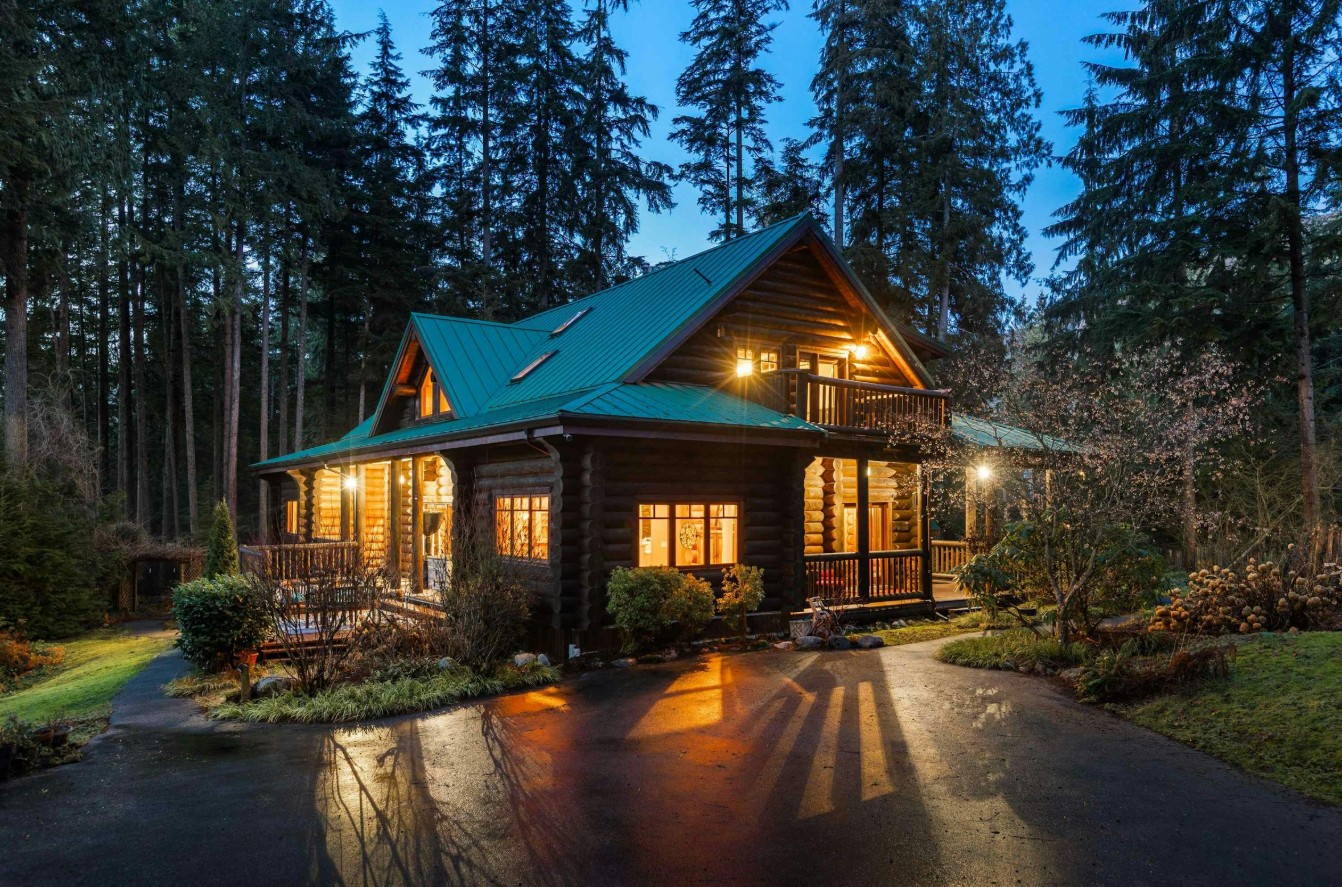
The listing of a 4,464-square-foot log home in Anmore, British Columbia—famed for its appearances in the American Pie franchise and Hot Tub Time Machine—for $2,949,900 exposes a persistent valuation gap in residential real estate. Traditional real estate metrics treat cinematic history as a subjective novelty, a marketing footnote designed to drive open-house foot traffic. Professional asset valuation requires a cold, quantitative dissection of how production utility, regional film tax incentives, and physical architectural assets intersect to dictate true market value.
To evaluate an asset of this nature, an investor must look past the nostalgia of Hollywood set design and analyze the underlying economic drivers that dictate its yield and capital appreciation potential.
The Valuation Triad: Sunk Costs, Production Yield, and Premium Anchoring
Evaluating a designated "movie house" requires a specialized framework. The asset's market price cannot be justified solely by a standard comparative market analysis (CMA). Instead, value is derived from three distinct components:
Total Asset Value = Baseline Land Value + Depreciated Replacement Cost + Production Premium
The Baseline Land and Structural Value
The property comprises a one-acre parcel in Anmore, a high-end semi-rural enclave adjacent to Port Moody. The structure itself, built in 1999, is a D-log style cabin. Standard log structures face distinct depreciation curves compared to traditional stick-built luxury homes.
- Maintenance Escalation: Log homes require exterior staining and chinking seal audits every three to five years to prevent moisture intrusion and UV degradation.
- Thermal Performance: Solid log walls rely on thermal mass rather than high R-value insulation, creating seasonal climate control cost volatility.
- Insurance Premium Inflation: Semi-rural wooden structures situated in heavily forested wildland-urban interfaces carry significantly higher insurance risk profiles, compressing net operating income for potential landlords.
The Production Yield Function
A residential property utilized as a active film set operates as a micro-commercial enterprise. The yield of this enterprise is governed by a specific cost-benefit function:
$$Y = \left( R_{\text{day}} \times D_{\text{prod}} \right) - \left( C_{\text{dep}} + C_{\text{opp}} \right)$$
Where:
- $Y$ represents the net annual production yield.
- $R_{\text{day}}$ is the daily location rental rate.
- $D_{\text{prod}}$ is the number of active production days per fiscal year.
- $C_{\text{dep}}$ is the physical depreciation and remediation cost post-wrap.
- $C_{\text{opp}}$ represents the opportunity cost of owner displacement.
Under British Columbia's competitive production environment, a high-utility residential location can command between $3,000 and $10,000 CAD per shoot day. The mathematical bottleneck is $D_{\text{prod}}$. Municipal zoning bylaws in Anmore and surrounding Metro Vancouver districts place strict annual limits on consecutive filming days in residential zones to protect neighborhood amenity standards. A property cannot operate as a year-round soundstage; its commercial utility is legally capped.
Architectural Utility: The Anatomy of a High-Yield Film Set
A residential home is rarely selected for film production based on aesthetic charm alone. Location scouts evaluate properties through a highly technical framework of operational utility. The Anmore property possesses specific spatial mechanics that explain its recurring selection by major studios:
Volumetric Interior Clearance
The home features a 30-foot ceiling in its central great room. This height is not merely a luxury design feature; it is a critical functional requirement for film crews. Standard eight-foot or nine-foot residential ceilings make it impossible to mount overhead lighting grids, boom poles, and diffusion screens without capturing the equipment in the frame.
The vertical volume allows camera operators to utilize jib arms and cranes, facilitating sweeping vertical camera movements that are structurally impossible in conventional luxury homes.
Spatial Depth and Sightlines
The open-concept layout of the primary living space allows for deep staging. Cameras require physical distance to achieve a cinematic shallow depth of field, separating the actor from the background.
Walls in standard suburban homes restrict camera placement, forcing directors to use wide-angle lenses that distort facial features. The expansive floor plan of the Anmore log home allows long focal length lenses to be deployed indoors, creating professional, high-end visual compression.
Acoustic Isolation and Environmental Geometry
The log construction provides natural acoustic damping. Unlike drywall, which reflects high-frequency sound waves and creates a cheap, echo-heavy audio profile, thick solid-wood logs scatter and absorb sound.
The presence of natural creeks and waterfalls on the one-acre property offers visual appeal but introduces a severe operational challenge. Continuous ambient water noise can contaminate dialogue tracks, requiring expensive post-production audio replacement (ADR). This environmental variable limits the property's utility to specific types of scenes where background white noise can be logically explained or masked.
The Macroeconomic Catalyst: The British Columbia Film Incentive Framework
The valuation of any film-friendly property in Metro Vancouver is directly tied to provincial and federal tax structures. The viability of the Anmore house as a recurring revenue-generating asset depends on the survival of these financial incentives.
The Tax Credit Structure
Productions filming in British Columbia leverage a dual-layered tax credit system:
- PSTC (Production Services Tax Credit): A flat-rate labor tax credit administered by Creative BC and the British Columbia Ministry of Finance.
- FIBC (Film Incentive BC): Tailored for domestic productions, offering substantial rebates on eligible Canadian labor expenditures.
Total Tax Rebate = Base PSTC (35%) + Regional Film Incentive (12.5%) + Distant Location Upgrade (6%)
Because Anmore lies within the Metro Vancouver area, it does not qualify for the regional or distant location tax credit bonuses, which apply only to productions filming outside of the designated coastal corridor. The property must compete strictly on its structural merits and proximity to central studio infrastructures in Burnaby and Vancouver.
The Proximity Bottleneck
The property is situated approximately 45 minutes from downtown Vancouver. Within the film industry, crew transportation costs are governed by strict union collective agreements (such as IATSE Local 891 and the Directors Guild of Canada).
When a location is situated outside the "studio zone" (typically a 40-kilometer radius centered on a specific urban point), production companies must pay travel time, mileage, and sometimes per diems to every crew member. The geographical position of Anmore sits right on the boundary of these zone restrictions. If a production team must pay transport penalties to shoot at the property, the location's daily rental rate ($R_{\text{day}}$) must be discounted to offset the crew's travel overhead.
Market Realities of the Film Asset Premium
A common error among retail real estate investors is assigning a permanent premium to a property's cultural history. This premium is highly volatile and depreciates rapidly.
Asset Price = Replacement Cost (Structural) + Premium (Cultural)
The cultural premium associated with movies like Hot Tub Time Machine (released in 2010) or early American Pie direct-to-video sequels is subject to generational decay. The demographic segment currently entering the luxury homebuying market (typically ages 35 to 55) has a shifting set of cultural reference points. Nostalgia for turn-of-the-century teen comedies does not reliably translate into a willing premium of several hundred thousand dollars above regional comps.
The second limitation is the physical modification of the asset. Film productions routinely repaint, re-carpet, and structurally alter interiors to fit the narrative. While location contracts mandate that production companies restore properties to their original state, subtle wear and tear accumulates. Heavy grip equipment, constant foot traffic from seventy-person crews, and temporary lighting installations inevitably accelerate the physical depreciation of high-end finishes, particularly bespoke cabinetry and custom hardwood floors.
Strategic Play for Acquisition
For an institutional buyer or a high-net-worth investor looking to acquire this asset, the property should not be purchased as a primary residence with a passive side-hustle. It must be acquired as a dual-purpose commercial-residential hybrid with a strict operational plan:
- Calculate the True Cap Rate: Strip the "celebrity premium" entirely from the underwriting model. Analyze the property strictly against recent comparable sales in Anmore—which currently hover in the range of $2.5M to $3.5M CAD for similar-sized lots and square footage—to ensure the purchase price is insulated by land-value fundamentals.
- Secure Municipal Permitting Pre-Approval: Before removing subjects on any purchase agreement, review the municipal bylaws of Anmore regarding commercial filming. Ensure there are no active neighborhood petitions or upcoming council votes aimed at restricting film permits.
- Establish a Dedicated Location Management Contract: Outsource the property's listing to a specialized location library agency. Do not rely on traditional MLS exposure to drive production revenue. The property must be actively marketed to location managers and production designers within the Hollywood North ecosystem.
The value of this asset does not reside in the celluloid of the past. It resides in the physical volume of the great room, the proximity to Vancouver’s soundstages, and the continuation of British Columbia's tax credit regime. Any acquisition strategy that fails to discount the nostalgia factor in favor of these hard operational realities will result in an over-allocated, illiquid asset.