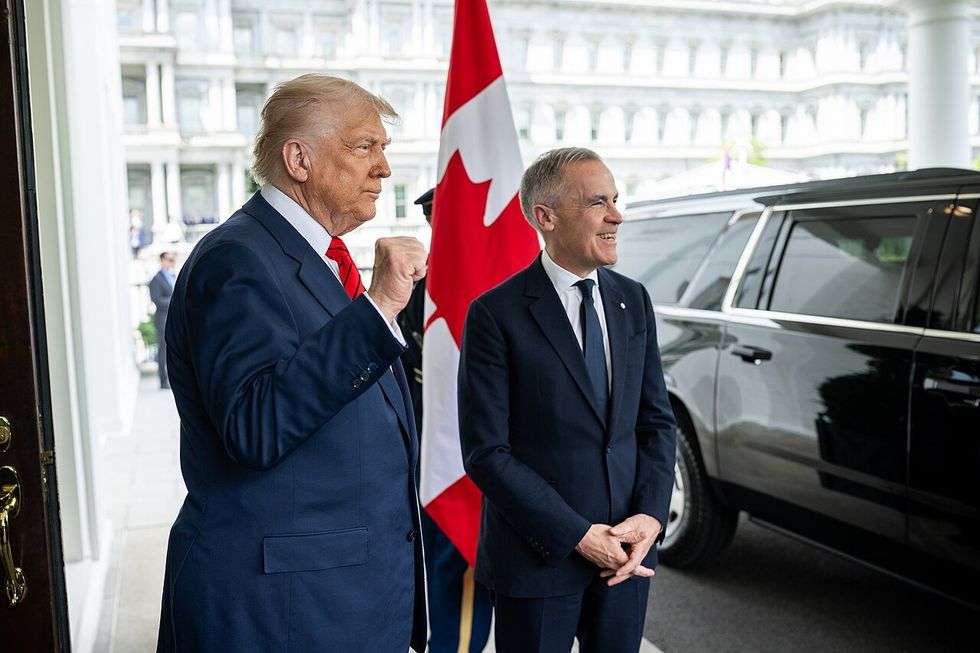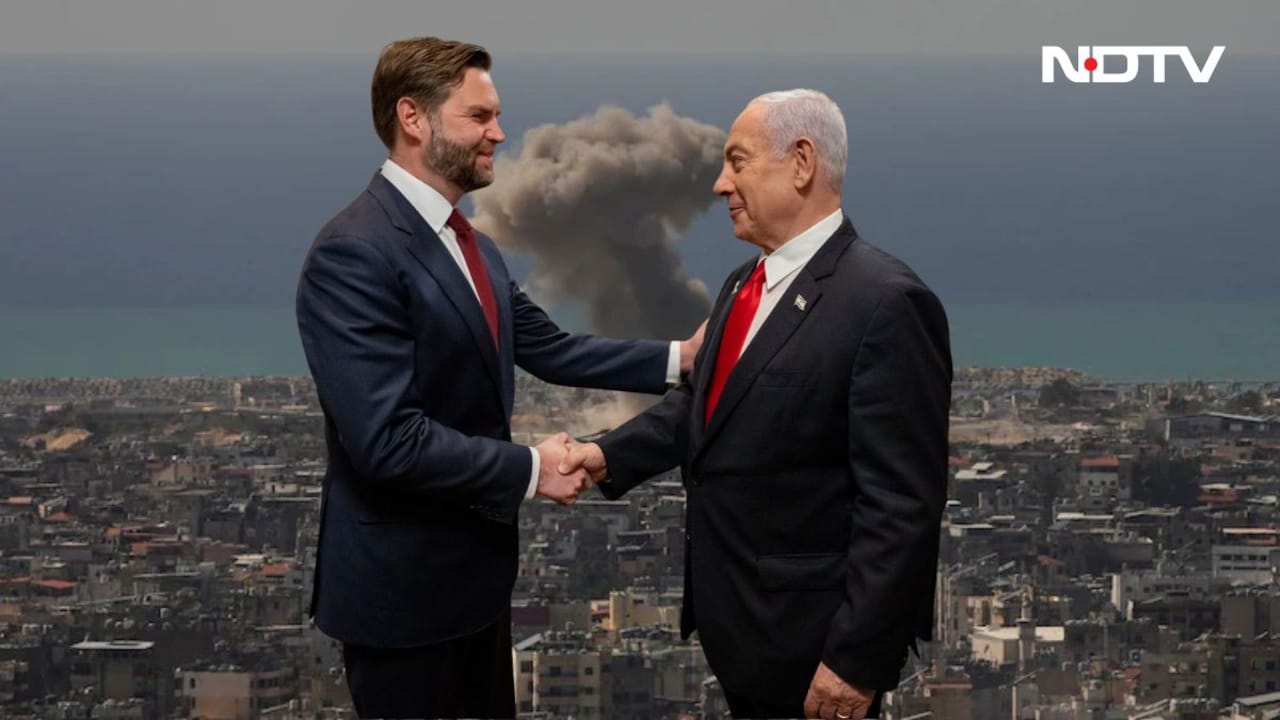
Read the standard Washington wire story on JD Vance declining to endorse Benjamin Netanyahu for re-election, and you get the exact same recycled plotline.
Trump backs Bibi. Vance stays quiet. Pundits call it a dramatic rupture, a populist civil war, or an ideological divorce.
Lazy. Lazy and wrong.
Conventional coverage treats a non-endorsement like a declaration of war. It assumes that if a vice president refuses to slap his name onto a foreign prime minister's campaign ahead of an Israeli election, he is turning his back on Israel or defying the top of the ticket. That reading mistakes public posture for strategic reality.
In campaign strategy and coalition politics, withholding an endorsement is often a cold calculation of bandwidth, leverage, and downside risk—not a grand ideological conversion.
The Lazy Consensus Around Vance And Netanyahu
The lazy consensus goes like this: Donald Trump offers full-throated backing to Netanyahu, Vance says he is not getting involved in Israeli elections because his focus is on U.S. races, and therefore a fault line has opened inside the administration.
That narrative rests on two flawed assumptions.
First, it assumes a vice president's public comments in the middle of a domestic midterm cycle are meant to mirror the president's overseas messaging word for word. They do not have to. Presidents routinely play the heavy or the loyal patron abroad, while vice presidents and surrogates are deployed to keep swing voters and base factions anchored at home.
Second, it treats foreign endorsements as cost-free theater. They aren't. When an American official endorses a sitting or campaigning foreign leader, they attach their own political brand to every headline, coalition twist, and military decision that follows.
Consider the timing. In October 2026, with Israeli voters heading toward late-October elections and American voters locked into a grueling midterm stretch, stepping into foreign ballot politics offered Vance zero upside in battleground districts and plenty of distraction. Saying "I'm not getting involved in Israeli elections" is not a philosophical treaty. It is a boundary line.
The Real Question Nobody Is Asking
Most commentary asks whether Vance is "pro-Israel" or "anti-Netanyahu."
Wrong question.
The real question is: What does disciplined American statecraft gain by keeping formal campaign endorsements out of another country's election while keeping executive channels open?
Think about how foreign intervention in democratic elections actually plays out. When foreign officials pick favorites before a vote, they hand domestic opponents a ready-made grievance about outside meddling and hand the favored candidate an artificial crutch that can backfire if coalition math shifts.
Imagine a scenario where a senior U.S. official loudly endorses a foreign prime minister two weeks before a tight parliamentary vote, only for opposition parties to form a governing coalition or for post-election negotiations to drag on for months. Suddenly, the U.S. official owns a public bet on a specific domestic politician rather than maintaining clean institutional footing with whoever commands a majority.
Even when alignment is strong on shared security concerns—such as confronting regional threats from Iran—campaign endorsements and sovereign state-to-state coordination operate on different tracks. A vice president can decline to campaign for a foreign leader's re-election without declaring hostility toward the country or severing working alignment.
Why "People Also Ask" Misses The Mechanics
Search feeds around this story predictably fill up with quick-hit questions:
- "Did JD Vance break with Donald Trump over Netanyahu?" Publicly declining to weigh in on a foreign race while reiterating that the president sets the administration's endorsement posture is division of labor, not a mutiny. A real break looks like policy sabotage or open public contradiction on core orders, not staying out of another country's ballot box.
- "Why would Vance refuse to endorse Netanyahu during a regional conflict?" Because wartime diplomacy and domestic electioneering are two different instruments. Keeping distance from a foreign leader's re-election pitch preserves room to press hard behind closed doors—and avoids turning U.S. domestic politics into a referendum on foreign campaign slogans.
- "Does skipping an endorsement mean the U.S. is abandoning Israel?" No. Campaign endorsements are political signals, not defense treaties or strategic assessments. Treating a refusal to endorse a candidate as abandoning a nation confuses a politician with the state.
What Years In High-Stakes Campaigns Teach You
I have watched political teams burn millions of dollars and endless credibility chasing shiny external validation when their core voters back home were begging for focus. When a campaign or administration starts acting like every foreign election requires a domestic press release, discipline goes out the window.
Here is a precise distinction most pundits blur: diplomatic engagement is official contact between governments to manage security, intelligence, and policy; electoral endorsement is taking a partisan side in another country's domestic vote. Conflating the two produces terrible analysis. You can take a firm, clear-eyed view of shared adversaries and strategic interests while refusing to play kingmaker in foreign elections.
Serious foreign policy thinkers—from realists like George Kennan and Henry Kissinger to modern strategists across the ideological spectrum—have long warned against tying American credibility unnecessarily to the political survival of individual foreign leaders. Personalizing alliances around one politician's re-election bid creates fragile incentives on both sides.
Let me be candid about the downside of my own argument. Restraint looks boring on cable television. When a high-profile leader says they are sitting out a foreign election, critics can frame the silence as hesitation, and supporters of the foreign leader may read coolness into neutrality. In politics, optics carry real weight even when the underlying strategy is sound—and if a leader overplays restraint, they can look detached when clarity is needed.
How To Read Foreign Endorsement Non-Answers Like An Insider
If you want to stop getting fooled by headlines every time a top official declines to back a foreign candidate, use this practical playbook:
- Separate the office from the ballot. Track official policy actions, security coordination, and executive statements rather than whether someone gave a campaign quote for a foreign election.
- Check the domestic calendar first. Look at what elections, legislative fights, or voter pressures are happening at home before inventing secret foreign-policy motives.
- Watch who owns the final call. When a subordinate or running mate says the president's call is what matters, listen to the hierarchy instead of projecting a fracture that isn't there.
- Ask what leverage is preserved by saying nothing. Sometimes the smartest move in politics is refusing to hand opponents an easy target or lock yourself into someone else's election outcome.
Stop reading every non-endorsement as a soap opera. Watch the incentives, mind the calendar, and keep your eyes on power—not punditry.