Alberta is experiencing a multi-decade peak in its vector population, driven by a compounding sequence of meteorologic and biological triggers. To understand this population surge, we must look past simple surface-level observations and analyze the underlying environmental mechanics.
The current crisis is not a random anomaly. It is the direct consequence of a multi-year ecological debt coming due, accelerated by rapid changes in localized microclimates.
[Image of mosquito life cycle]
The Ecological Debt: How "Egg Banks" Function
To understand the scale of the current population explosion, we must model the soil as a biological savings account.
Most temporary-pool mosquito species in the Canadian Prairies, such as those in the Aedes genus, do not lay eggs directly in open water. Instead, they deposit them in the moist soil of empty depressions, ditches, and low-lying fields. These eggs require a specific sequence of environmental cues to hatch:
- Desiccation resistance: The eggs must dry out and undergo a period of dormancy (diapause).
- Flooding: The physical depression must fill with water, submerging the eggs.
- Deoxygenation: As organic matter in the newly formed puddle decays, bacteria consume dissolved oxygen. This drop in oxygen tension signals to the embryo that the water body contains sufficient organic nutrients to support larval growth.
[Dormant Eggs in Soil] -> [Heavy Rainfall / Inundation] -> [Microbial Decay / Low Oxygen] -> [Mass Larval Hatching]
Over the past five to six years, Alberta experienced prolonged periods of drought. During these parched summers, billions of eggs remained unflooded. Rather than dying, these resilient embryos entered a state of metabolic arrest, capable of surviving in the soil for up to ten years.
The record-breaking rainfall of June and July has acted as a massive liquidity event for this biological bank. Decades of dormant eggs, accumulated across years of dry conditions, were submerged simultaneously. The resulting synchronized hatch has bypassed the natural regulatory pressures that typically suppress smaller, annual cohorts.
The Growth Equation: Temperature as a Catalyst
While standing water dictates the abundance of larvae, ambient temperature controls the velocity of the life cycle. The transition from egg to biting adult is highly temperature-dependent, operating as a biological rate function.
$$T_{development} = \frac{K}{Temp - Temp_{base}}$$
Where $K$ represents a species-specific thermal constant (degree-days) and $Temp_{base}$ is the minimum developmental threshold temperature.
Under typical cool spring conditions, the transition from larva to pupa to adult can require up to 30 days. However, when heavy rainfall is immediately followed by high summer temperatures, the metabolic rate of the larvae accelerates dramatically. The development window shrinks to a mere 7 to 10 days.
This thermal acceleration causes a severe generational overlap. Instead of distinct, manageable waves of emerging adults, multiple cohorts reach maturity simultaneously. This compounding effect overwhelms local predator populations—such as dragonflies, beetles, and insectivorous birds—which operate on slower, more rigid reproductive cycles.
Vector Dynamics and Public Health Risks
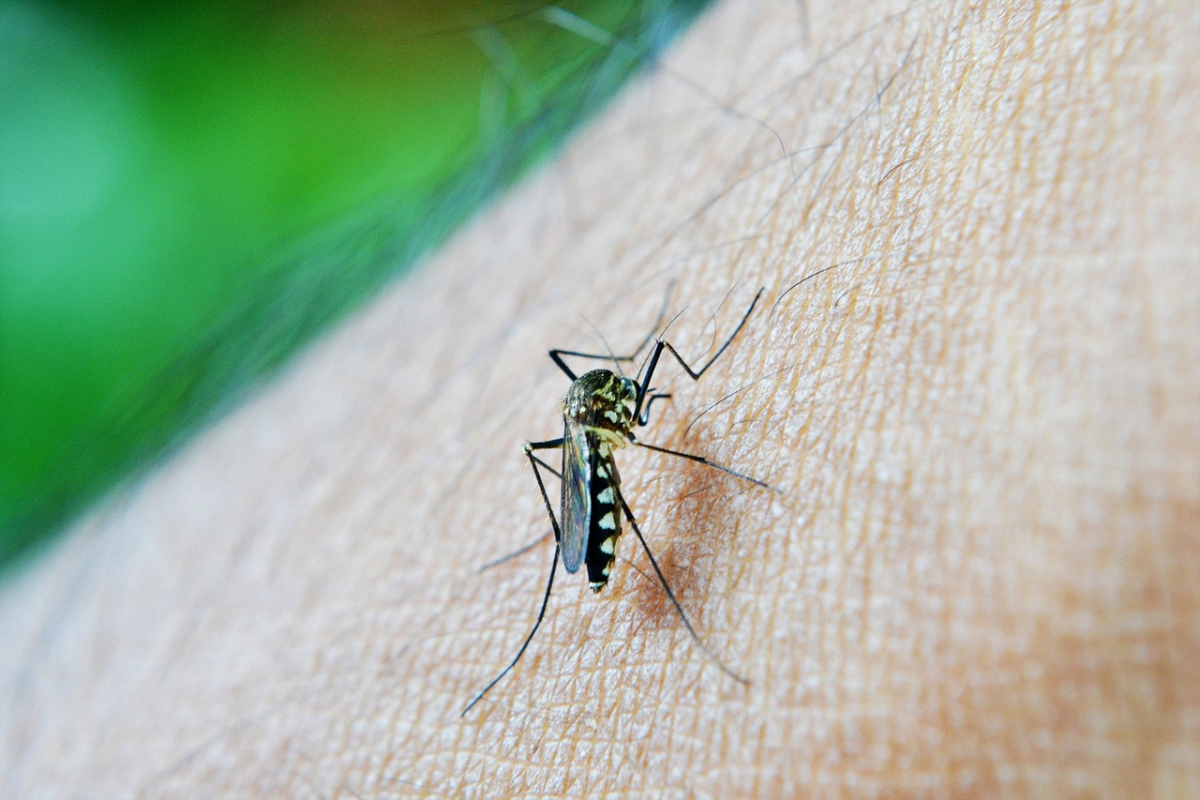
The public health implications of this surge require a highly specific taxonomic distinction. The primary nuisance species driving public complaints are floodwater mosquitoes (Aedes genus). These are aggressive, daytime biters adapted to large mammals, but they are poor vectors for disease.
Of greater clinical concern is the genus Culex, specifically Culex tarsalis and the increasingly prominent Culex pipiens, which serve as the primary vectors for West Nile Virus (WNV) in North America.
The population dynamics of Culex operate on a completely different model than Aedes:
- Breeding Preference: Unlike floodwater species, Culex mosquitoes prefer stagnant, organic-rich water found in urban environments—such as blocked gutters, bird baths, discarded tires, and storm sewers.
- The Flushing Effect: Heavy, continuous downpours actually clean out these urban micro-habitats, washing away Culex rafts and larvae. This physical disruption temporarily suppresses West Nile risk during peak rainfall events.
- The Post-Rain Threat: The critical danger window opens 3 to 6 weeks after major rainfall events. As standing water pools recede, dry out, and stagnate under rising temperatures, optimal breeding conditions for Culex are restored.
While current surveillance indicates that the dominant local strains of Culex pipiens in Alberta remain primarily ornithophilic (preferring to feed on birds rather than humans), the sheer volume of vectors increases the statistical probability of "bridge vector" transmission to human populations.
Tactical Mitigations: Personal and Municipal Protocols
Standard personal protective measures often fail because they do not account for vector biology. To minimize bite rates and transmission risk, defensive strategies must target specific sensory mechanisms.
Physical and Chemical Barriers
Mosquitoes locate hosts using a highly sensitive array of chemical and visual sensors. They track carbon dioxide plumes, thermal signatures, and visual contrasts.
- Spectral Avoidance: Aedes mosquitoes are highly adapted to target large, dark-skinned mammals like moose and deer. Wearing dark, high-contrast, or rough-textured clothing increases your visibility to their targeting systems. Light-colored, loose-fitting woven fabrics degrade their visual tracking and prevent physical proboscis penetration.
- Chemical Disruption: Synthetic repellents containing N,N-Diethyl-meta-toluamide (DEET) or Picaridin remain the gold standard. These compounds work by vaporizing off the skin, creating a barrier that jams the mosquito’s olfactory receptors, rendering them unable to detect host chemical signatures.
- Microclimate Manipulation: Mosquitoes are weak fliers, struggle in turbulent air, and require stable air currents to land. Utilizing oscillating fans on outdoor patios creates a localized wind barrier that significantly reduces landing success rates.
Municipal Larvicide Programs
Traditional adult spraying (fogging) is a highly inefficient, reactive measure that only targets a fraction of the flying population while causing collateral damage to non-target beneficial insects.
The primary municipal vector management protocol must focus on larviciding. Utilizing biological larvicides like Bacillus thuringiensis israelensis (Bti) in standing water bodies disrupts the digestive systems of mosquito larvae without impacting aquatic vertebrates, providing a targeted, environmentally stable reduction in emerging adult populations.
The current generational surge cannot be stopped entirely, but systemic backyard source reduction and precise personal protection can significantly flatten the local bite curve.