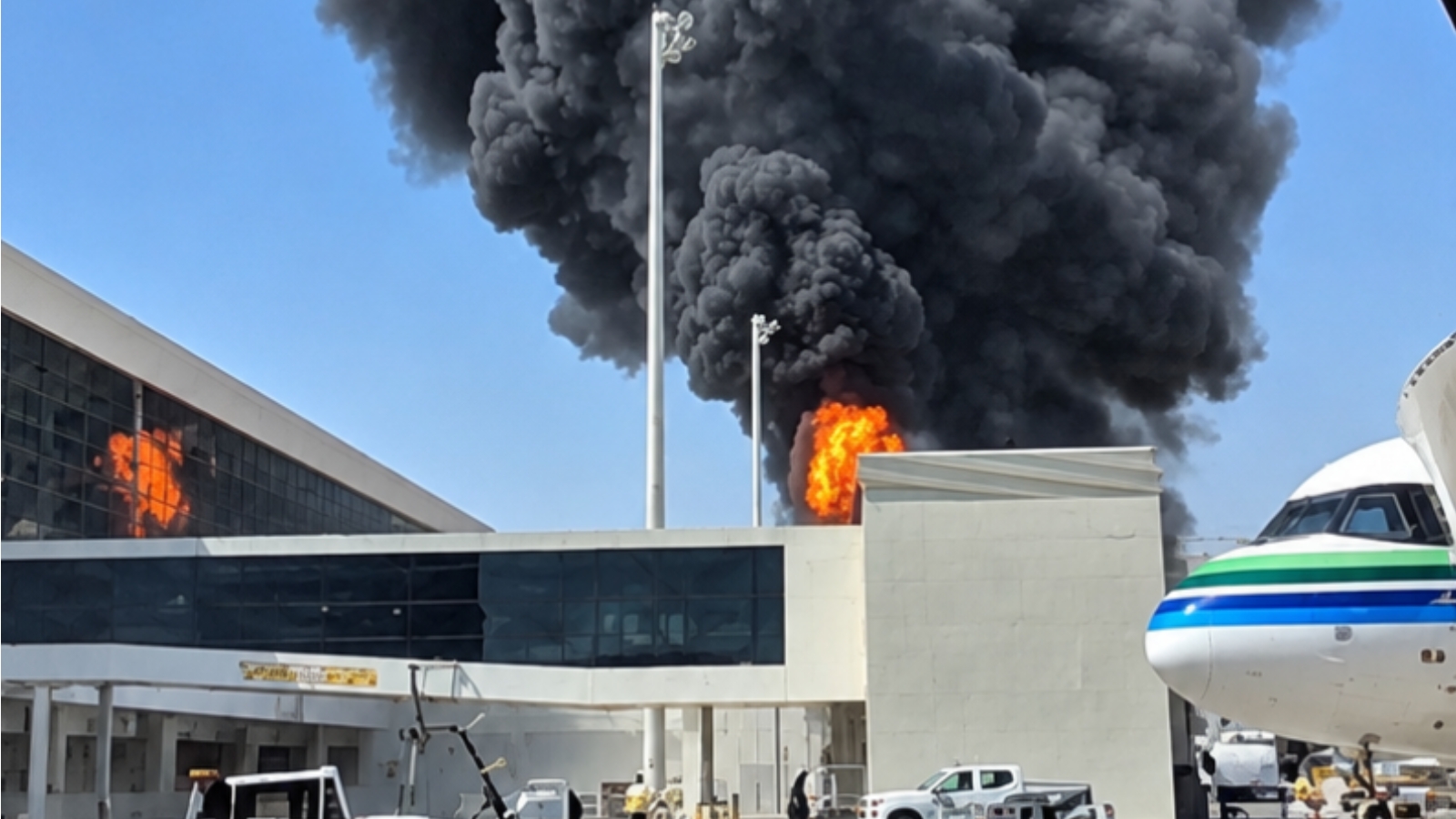
The structural integrity of civil aviation security relies on the absolute reliability of the flight deck crew. When a commercial co-pilot attempts to seize control of an active flight through violence, the failure is rarely instantaneous. It represents the culmination of a multi-stage cognitive drift, institutional blind spots in background screening, and the delayed detection of radicalisation vectors originating years prior.
Understanding the mechanics behind such incidents requires analyzing the trajectory of the individual through three distinct phases: ideological incubation, institutional evasion, and operational execution. Read more on a related topic: this related article.
The Incubation Phase: Environment Versus Ideology
Investigations into the background of individuals who commit sudden acts of aviation sabotage frequently point back to formative academic periods abroad. In the case of specific high-profile cockpit breaches, prosecutors and intelligence agencies have traced the cognitive shift of operators to foreign university environments where isolation and access to unvetted digital networks intersect.
The primary mechanism of this shift involves two concurrent forces: Additional reporting by The Washington Post explores similar perspectives on this issue.
- Social Dislocation: Young professionals or students residing far from their home domestic security networks experience cultural friction, creating vulnerability to insular online echo chambers.
- Digital Radicalisation: Exposure to extremist literature and content glorifying militant organisations often bypasses physical proximity to radical mosques or cells, relying entirely on peer-to-peer or self-directed online consumption.
Attributing radicalisation entirely to a specific geographic host nation oversimplifies the modern threat matrix. Universities function primarily as structural backdrops; the true vector is the unmonitored digital consumption of extremist propaganda during periods of personal transition.
The Institutional Evasion Vector: Screening and Indicator Fails
Commercial aviation operators face a complex regulatory and logistical challenge: the screening of professional pilots for behavioral anomalies over a decades-long career. Between initial flight school enrollment and active line operations, an operator's psychological and ideological profile can evolve invisibly.
[Initial Background Check]
       │
       ▼
[Career Progression & Travel]
       │
       ▼
[Unmonitored Ideological Drift]
       │
       ▼
[Employment Screening Gaps] ──> [Cockpit Access]
The systemic vulnerabilities within aviation human resources and security clearinghouses include:
- Fragmented Cross-Border Intelligence: Intelligence held by security services in one jurisdiction (such as an overseas university investigation or regional aviation ban) does not reliably sync with the human resources databases of regional airlines operating in separate jurisdictions.
- The Insider Threat Blind Spot: Traditional background checks focus on criminal records, financial distress, and substance abuse. Ideological extremism without a prior criminal conviction often remains invisible to standard automated screening filters.
- Peer-Reporting Inhibitions: Flight deck hierarchies and professional courtesy structures often discourage captains from reporting subtle behavioral changes or extremist rhetoric expressed by a co-pilot during long-haul rotations.
The Cost Function of Operational Compartmentalization
Aviation security architectures are heavily optimized against external threats—such as airport terminal infiltration or coordinated ground attacks—while maintaining trust-based assumptions regarding internal flight crew members. The introduction of hardened cockpit doors post-2001 successfully neutralized external boarding risks, but inadvertently elevated the insider threat by transforming the cockpit into a sealed, highly secure containment zone.
When the pilot flying or pilot monitoring becomes the threat actor, the physical security design of the flight deck works against the surviving crew member. A surprise assault inside a restricted, locked environment reduces the reaction time window to seconds, forcing the surviving pilot to fight off a physical attack while simultaneously managing flight trajectory and emergency communications.
Strategic Countermeasures for Civil Aviation Security
Mitigating the risk of advanced insider threats requires a transition from static background vetting to dynamic behavioral monitoring.
Airlines and regulatory bodies must implement:
- Continuous Vetting Protocols: Regular cross-referencing of pilot databases with international intelligence sharing frameworks to capture mid-career behavioral flags or travel patterns associated with extremist networks.
- Enhanced Crew Resource Management (CRM) for Behavioral Shifts: Training flight crews to identify and formally report ideological radicalisation markers, removing the social stigma of whistleblowing among peers.
- Two-Person Cockpit Mandates with Real-Time Oversight: Ensuring that cockpit occupancy rules are strictly maintained, combined with telemetry monitoring capable of detecting erratic flight profiles instantly during sudden physical altercations.
The objective is to eliminate the latency between ideological adoption and operational interception, ensuring that cognitive drift is caught long before an operator reaches the flight deck.