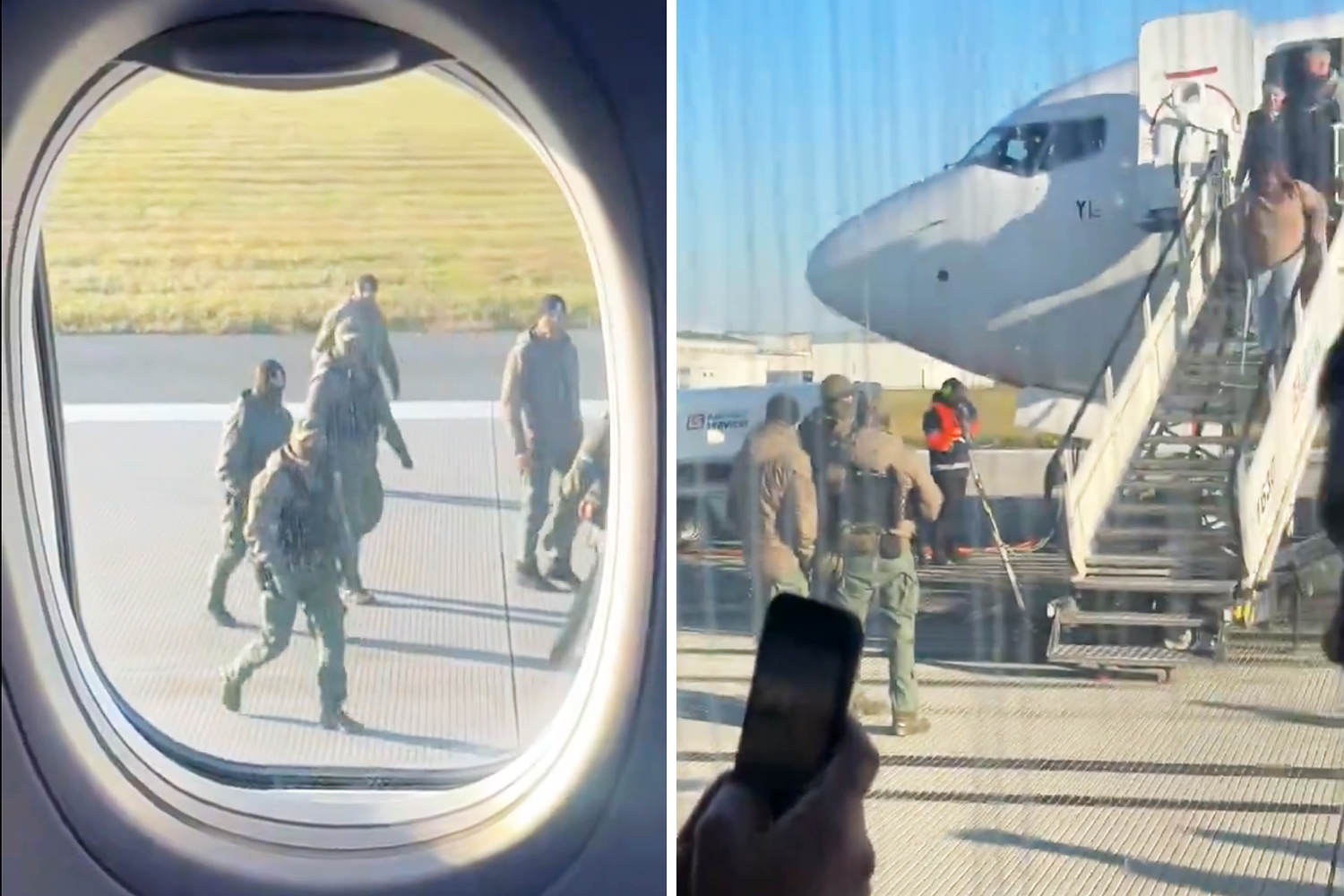
Every few months, the internet loses its collective mind over the same breathless headline. Three travelers miss a return flight six thousand miles from home. Panic ensues. Social media detectives start spinning theories about human trafficking rings, cartel kidnappings, and shadowy international syndicates.
Meanwhile, the actual crisis is sitting right in front of everyone, completely ignored.
The lazy consensus in modern travel journalism treats every missed connection or delayed check-in abroad as a true-crime thriller in the making. Editors love the click-through rates generated by geographical distance. "Six thousand miles away" sounds terrifying when you are sitting on your couch in Ohio. It implies an alien void where basic infrastructure evaporates and danger lurks behind every terminal pillar.
That narrative is not just statistically dishonest. It actively makes travelers less safe.
When you condition people to look for cinematic villains at international airports, they completely miss the mundane, bureaucratic, and systemic failures that actually strand people overseas. Having spent fifteen years analyzing aviation logistics, crisis response, and cross-border consular operations, I have watched families burn tens of thousands of dollars on private investigators while their loved ones were simply sitting in an airport holding cell over a minor visa technicality or dealing with a dead phone battery and a frozen bank card.
The Geography Fallacy
Distance has zero correlation with risk. None.
A flight from New York to Tokyo is roughly 6,700 miles. A drive across town in several major domestic metropolitan areas carries a statistically higher probability of violent crime than stepping off a wide-body jet at Haneda Airport. Yet the media relies on mileage as a proxy for peril because mileage triggers primal fear.
When three adults miss a flight home, the probability hierarchy is overwhelmingly mundane. At the top of that list sits simple logistical failure. Missed alarms. Misread 24-hour clock schedules. Traffic gridlock on the way to the terminal.
Right below that sits financial friction. Modern banking fraud algorithms are aggressively sensitive. You swipe a card at a duty-free shop in Bangkok or Buenos Aires, the algorithm flags an anomaly, and your primary payment method locks instantly. If your phone battery dies simultaneously—or if you relied entirely on an eSIM that lost carrier roaming privileges the moment your billing cycle ticked over—you are suddenly invisible. You cannot call home. You cannot buy a new ticket. You cannot access your hotel reservation.
To your family back home, you have vanished off the face of the earth. To the airline, you are just three no-show passengers whose seats were immediately handed to standby flyers.
How Airline Privacy Laws Manufacture Panic
If you want to understand why these stories spiral out of control so quickly, stop looking at crime statistics and start looking at corporate data compliance.
Imagine a scenario where three friends miss their departure out of a major European or Asian hub. Their families notice they never landed at their domestic destination. Naturally, the parents call the airline.
What happens next? Nothing. The customer service agent refuses to confirm whether the passengers boarded, whether they checked bags, or whether they rebooked.
To a terrified parent, that silence sounds like a cover-up or a catastrophe. In reality, it is strict adherence to privacy regulations like the European Union's General Data Protection Regulation (GDPR) and standard airline passenger manifest security protocols. Airlines are legally barred from disclosing a passenger's whereabouts or travel status to third parties—even immediate family members—unless the passenger explicitly listed them as an emergency contact on that specific booking record. Most travelers skip that field entirely when rushing through checkout screens.
The media takes that bureaucratic stonewalling and frames it as a chilling mystery. "Airlines refuse to comment on the whereabouts of three missing women." That line guarantees shares. It also completely misrepresents standard legal compliance as sinister silence.
The Consulate Myth
Another massive blind spot in mainstream reporting is the role of embassies and consulates. Readers assume that the moment a citizen misses a flight abroad, an army of government agents deploys into the streets with flashlights and satellite trackers.
That is pure Hollywood fiction.
According to guidelines published by the U.S. Department of State and equivalent foreign ministries worldwide, consular officers are not law enforcement agents. They cannot conduct criminal investigations on foreign soil. They cannot demand local police drop active cases to search for adults who missed a commercial flight. Under international law—specifically the Vienna Convention on Consular Relations—local authorities are only required to notify a foreign consulate if a citizen is arrested or detained, and often only if the detainee explicitly requests that notification.
If three travelers are detained by customs over an undeclared item, a prescription medication that happens to be illegal in the transit country, or an overstayed tourist visa, they might sit in an administrative holding facility for forty-eight hours before anyone on the outside hears a word. During that window, their phones are confiscated. Their luggage is locked in evidence.
Outside the terminal walls, the internet is already writing their obituaries.
Why Group Travel Increases Friction
There is a counter-intuitive dynamic at play when people travel in groups of three or more. Conventional wisdom says there is safety in numbers. While true for deterring street-level opportunists, group travel drastically increases the probability of logistical breakdowns.
Consider the mechanics of moving three independent adults through an international transit system:
- Diffusion of Responsibility: When you travel solo, you triple-check the gate number, the boarding time, and the terminal transfer bus. When you travel in a trio, everyone assumes someone else verified the itinerary. One person misreads the boarding pass, and all three end up in the wrong concourse.
- The Weakest Link Effect: If one member of the group gets pulled aside for secondary screening, loses a passport, or suffers acute food poisoning an hour before boarding, the entire group usually forfeits the flight together. Now, instead of one delayed traveler, you have three missing passengers.
- Fragmented Communication: Groups rarely share a single consolidated communication plan. One person relies on Wi-Fi, another paid for international roaming, and the third is using a local SIM card. When stress spikes and batteries drain, the group scatters to find chargers, currency exchanges, or customer service desks, breaking their digital tether to home entirely.
I have watched corporate executive teams—people who manage multimillion-dollar budgets for a living—get completely derailed by this exact friction at Heathrow and Charles de Gaulle. Put three tired tourists in the same environment after a two-week vacation, and missed flights become a mathematical certainty.
The Uncomfortable Truth About Travel Prep
Here is the part that makes people defensive, and it is the exact reason travel publications avoid printing it: most international travel emergencies are self-inflicted wounds caused by digital dependency.
Modern travelers treat their smartphones like infallible magic wands. Boarding passes live in apps. Hotel addresses live in emails. Emergency cash lives in digital wallets. Contact numbers live exclusively in cloud directories.
When that single piece of glass breaks, gets stolen, or runs out of power, the traveler is instantly reduced to total helplessness.
If you want to ensure you never become the subject of a viral missing-person headline, stop worrying about international syndicates and fix your operational security. Your preparation needs to be analog, redundant, and boring.
1. Build a Paper Redundancy Kit
Before you leave your house, print out two copies of your master itinerary. Include flight numbers, confirmation codes, hotel addresses written in both English and the local language, and three emergency phone numbers memorized or written on physical cardstock. Keep one copy in your carry-on and one in your pocket. If your phone dies in a taxi in Cairo or Santiago, that piece of paper is worth more than your passport.
2. Separate Your Financial Rails
Never keep all your money in one ecosystem. Travel with at least two debit or credit cards issued by different banking institutions operating on different payment networks (for example, one Visa and one Mastercard). Keep one in your wallet and lock the other in your luggage or a hidden pouch. Always carry at least two hundred dollars in clean, crisp local currency or widely accepted reserve currency tucked away for emergencies. Cash does not care if local cell towers are down or if your bank's fraud department is closed for the weekend.
3. Establish a Dead-Man Switch Protocol
Stop relying on vague "text me when you land" promises. Set a rigid, non-negotiable check-in window with one designated point of contact back home. Give that person your exact flight numbers, your airline's international customer service line, your travel insurance policy number, and explicit permission to contact your embassy if you miss a check-in by more than twelve hours. Better yet, add them directly to the Passenger Name Record (PNR) with your airline before departure so privacy laws do not block them from getting basic status updates.
4. Know the Local Transit Laws
Ignorance of local regulations is the fastest way to disappear into an administrative black hole. Common over-the-counter medications in North America—including certain decongestants containing pseudoephedrine or prescription stimulants—are classified as controlled narcotics in countries like Japan, the United Arab Emirates, and Greece. Getting caught with them at customs does not result in a polite warning; it results in immediate detention without phone access.
The Downside of Cynicism
To be entirely fair, dismissing every missing traveler story as a mundane logistical hiccup carries its own risk. Real tragedies do happen abroad. People suffer sudden medical emergencies, get caught in genuine accidents, or fall victim to violent crime. When authorities and media outlets grow numb to false alarms caused by dead phone batteries and missed connections, response times for actual life-or-death emergencies can slow down.
That is precisely why precision matters.
We do not need more sensationalist headlines counting the miles between a missing tourist and their hometown. We need a culture of competent, self-reliant travelers who understand how international aviation, banking, and border systems actually function.
The next time you see a viral panic erupt over travelers who failed to board a flight home, ignore the armchair detectives screaming about kidnappings. Look at the clock, check the time zone differences, and bet your money on a dead iPhone, a locked debit card, and an airline gate agent who closed the cabin doors ten minutes early.
Drop the thriller novels, print your boarding passes, and carry cash.