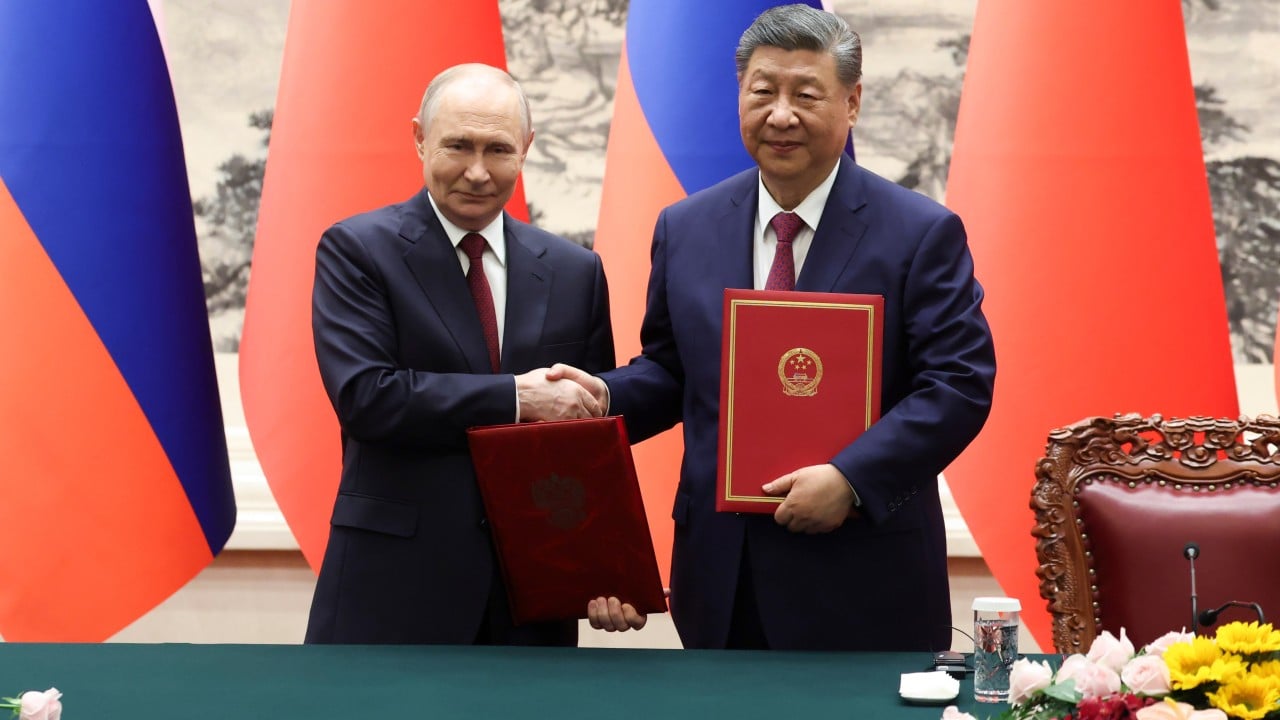
Vladimir Putin wanted a lot more than hugs and photo-ops during his high-profile state visit to Beijing. He didn't get them. While the Western media panicked over the optics of Russia and China uniting on world order, the actual reality on the ground was far more sobering for Moscow. Xi Jinping gave Putin a warm reception, plenty of rhetorical backing against Western hegemony, and a nice tour. But when it came to signing concrete economic agreements, China kept its wallet firmly shut.
You have to look past the grand statements about a limitless partnership to see what is really happening. Moscow is increasingly becoming the junior partner in an unequal relationship. Xi knows it. Putin knows it. This summit proved that Beijing will support Russia only up to the point where it risks its own economic survival.
The Illusion of a Limitless Partnership
The joint statement signed in Beijing sounded impressive. It ran over thousands of words, blasted the United States, and talked up a new multipolar world order. It’s exactly what both leaders love to talk about. They want to diminish American influence, rewrite global security rules, and build an alternative financial system.
But rhetoric doesn't pay for a war. Russia needs hard cash, energy markets, and advanced technology.
Western analysts often make the mistake of treating the China-Russia axis as a monolith. It isn’t. China’s economy is roughly ten times larger than Russia’s. Xi holds all the cards here, and he played them perfectly. He gave Putin the political cover he desperately needs to show domestic audiences that Russia isn’t isolated. In return, Xi got even cheaper access to Russian natural resources without giving up any major concessions.
Power of Siberia 2 is Still Stuck in the Mud
The biggest disappointment for the Russian delegation was the total silence on the Power of Siberia 2 pipeline. This is the massive project intended to redirect natural gas from Western Siberian fields, which used to supply Europe, over to China. Moscow has been pushing this deal for years. They need it to replace the lost revenue from the European market.
China is dragging its feet. Beijing doesn't need the gas urgently right now, and they are using that leverage to squeeze Russia on price. Reports from energy analysts indicate that China wants to pay close to domestic subsidized prices for that gas, while also refusing to commit to buying the full capacity of the pipeline.
Putin brought his top economic officials along, including the heads of Rosneft and Gazprom. They left without a deal. Every month that passes without a signature means Russia's energy-dependent economy ticks closer to a structural crisis. Beijing can afford to wait. Moscow can't.
The Looming Shadow of US Sanctions
Why is China being so cautious? Look at the trade numbers.
China’s total trade with the US and the European Union combined still dwarfs its trade with Russia. Xi faces severe economic headwinds at home, including a property sector slump and slowing growth. The last thing he wants is a wave of secondary sanctions hitting major Chinese banks.
Chinese Trade Volume (Annualized Estimates)
- Combined US and European Union Trade: Over $1.5 Trillion
- Russian Trade: Roughly $240 Billion
We saw the real-world impact of this fear just before the summit. Several large Chinese commercial banks started choking off payments from Russian entities. They didn't want to get caught in the net of American sanctions. Putin tried to resolve this banking bottleneck during his visit by pushing for smaller, regional Chinese banks to handle cross-border payments. These smaller institutions have less exposure to the global financial system.
It's a clumsy workaround. It slows down business, increases transaction costs, and proves that China will not risk its access to Western markets just to bail out Russian companies.
What This Means for the Global Balance of Power
This meeting showed us the exact boundaries of the Beijing-Moscow axis. It is a marriage of convenience, not a deep alliance. They share a common enemy in Washington, but their long-term visions don't align.
China wants to reshape the existing international system from within, ensuring its own rise to the top. Russia, driven by the war in Ukraine, wants to burn the current system down. That makes Moscow a volatile partner for a Chinese leadership that still values global economic stability to fuel its own growth.
If you are tracking global geopolitics, don't get distracted by the military parades or the joint declarations. Watch the corporate bank accounts. Watch the pipeline negotiations. The real story is that Russia is locking itself into a position of long-term economic dependence on China, and Beijing is making sure it profits from every single step of that decline.
To accurately read the trajectory of this relationship, stop reading the official communiqués. Monitor the export data of Chinese dual-use goods through third-party countries like Kazakhstan and Belarus. Track the pricing discounts on Russian ESPO crude oil heading to Chinese ports. Those are the metrics that tell you who is winning this partnership.