Concrete is indifferent. It does not remember the weight of the boots that march across it, nor does it absorb the echoes of a language spoken in whispers across oceans. Pennsylvania Avenue knows power. It knows the measured tread of diplomats, the heavy hum of armored motorcades, and the sharp, rhythmic cadence of protocol. But on a crisp autumn morning, the stone hears something different. It hears grief that has crossed continents, carried in the lungs of people who left their homes not by choice, but by the relentless geometry of displacement.
Consider the geography of distance. If you stand in Kashgar, the dust of the Taklamakan Desert settles on your doorstep, carrying the scent of parched earth and centuries of trade. If you stand in Lhasa, the thin air catches in your throat, tasting of juniper smoke and high-altitude snow. Now, transplant those lungs, those memories, those fractured family histories, to the asphalt shadows of Washington, District of Columbia.
The air here smells of exhaust and damp leaves. Yet, the breath remains the same.
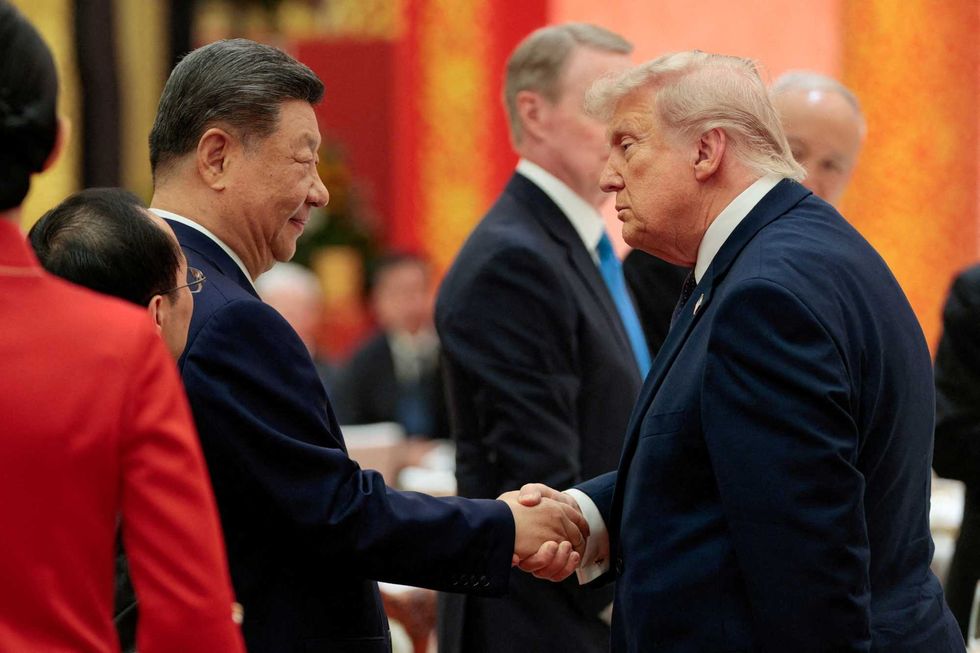
Across the globe, power moves in secure rooms behind frosted glass. Decisions are signed with fountain pens on heavy paper. Hands are shaken for the cameras, smiles calibrated for the evening news. But politics is never merely an abstraction of treaties and tariff rates. At its human root, politics is the friction between a state that wants to forget and a person who cannot afford to.
When heads of state meet, the choreography is precise. Motorcades glide through cleared streets. Traffic lights turn green in a synchronized wave, sweeping away the ordinary chaos of the city to make room for VIPs. The spectacle projects inevitability. It suggests that history is authored solely by those who hold the megaphones and the nuclear codes.
Yet, history is porous.
Outside the sanitized perimeter, ordinary individuals gather. They carry banners printed in scripts that most passersby cannot decode. They chant slogans in languages that do not feature on morning broadcasts. Among them are members of the East Turkestan and Tibetan diaspora communities—people whose daily lives in the West are a strange, suspended animation of paying mortgages, answering emails, and worrying over relatives whose phone numbers ring into a dead void.
To understand why they stand near the White House when visiting dignitaries arrive, you have to abandon the lexicon of international relations. Forget geopolitics for a moment. Look instead at a pair of worn leather shoes.
Imagine Tenzin. He is sixty-four years old, living in a modest apartment in Queens, New York. His hands are calloused from decades of working in hotel kitchens, washing dishes long after the city has gone to sleep. On his living room wall hangs a framed portrait of the Dalai Lama, draped lightly with a white silk khata. Every morning, before the sun clears the rooftops of Queens, Tenzin pours water into seven tiny brass bowls on his altar, an ancient ritual performed to accumulate merit and remember a homeland he left as a child, tucked inside the folds of his mother’s cloak.
Tenzin has not seen his sister in thirty years. When he tries to call her, the line sometimes connects to a recording or simply clicks shut. There is no message left to explain why. There is only the heavy, suffocating silence of an algorithmic surveillance state operating thousands of miles away.
Now, imagine Gulbahar. She lives a few hours away, balancing the demands of raising two teenagers who speak English with effortless native accents while she herself navigates the bureaucracy of a new country with halting, careful phrases. Her memories of Urumqi are not political treatises; they are sensory details. The sound of copper pots clattering in the bustling Sunday bazaar. The scent of cumin and roasting lamb drifting through narrow alleys. The sudden, freezing panic of a knock on the door in the middle of the night.
When the news arrives that a high-ranking official from Beijing is scheduled to visit Washington, Tenzin and Gulbahar do not consult a political strategy memo. Their bodies simply react. Muscle memory takes over. They fold woolen blankets, pack thermoses of hot tea, and print out signs bearing names and dates that officials prefer to leave unmentioned.
This is the invisible stakes of diplomacy.
When world leaders sit down for bilateral talks, the agenda items are usually economic: trade deficits, semiconductor supply chains, territorial boundaries in the South China Sea. Human rights are frequently relegated to a polite, perfunctory paragraph near the end of a joint communique—a diplomatic checkbox designed to satisfy domestic critics before moving on to the serious business of commerce.
The protesters standing at the barricades are there to puncture that polite fiction. They are physical reminders that sovereignty is not just about lines drawn on a map by conquerors and kings. It is about the dignity of human beings who refuse to be edited out of the narrative.
The physical space around the White House is designed for containment. Metal bike-rack barricades create an artificial canyon, separating the seat of American executive power from the citizens and petitioners who stream toward it. Police officers in high-visibility vests stand at regular intervals, their posture neutral, their radios murmuring low-frequency static.
To the casual tourist, the protest can look like just another slice of American pluralism—a routine manifestation of the First Amendment, loud and colorful, easily ignored by those inside the iron fence.
Step closer, however, and the texture of the scene changes.
Listen to the chants. They do not rise in unison like a trained choir. They break and overlap, swelling with urgency. A young woman holding a megaphone’s plastic grip so tightly her knuckles turn white is shouting into the wind. Her voice is hoarse, worn down by hours of repetition. She is reading the names of vanished writers, detained scholars, erased villages.
Each name is a small anchor dropped into the rushing current of global indifference.
The challenge of witness is that the world moves fast. News cycles are structured like avalanches; one disaster buries the last before the dust has even settled. A protest happens today, captured in a few dozen smartphone videos and a couple of wire-service photographs, and by tomorrow morning, the feed has refreshed. The motorcades have departed. The streets have been swept clean by municipal trucks. The barricades are stacked away in storage yards.
What remains?
The absence remains. The quiet, grinding persistence of families split across digital frontiers. The anxiety of a phone call that doesn't come. The stubborn refusal of memory in the face of institutional amnesia.
When Tibetan and East Turkestan groups converge on Washington during high-level diplomatic visits, they are performing an act of radical visibility. They are insisting on being seen by leaders who find their existence inconvenient. In the grand theater of international statecraft, small nations and stateless peoples are often treated as collateral damage—historical friction to be smoothed over for the sake of stability and profit.
But stability built on erasure is always fragile.
History is filled with empires that believed they had successfully rewritten the map, silencing dissent and crushing local cultures into uniform compliance. Yet, culture is stubborn. It hides in dialects spoken in the dark, in songs passed down through generations, in the fierce, unyielding loyalty of children who grow up hearing stories of a place they have never physically touched.
As the afternoon sun dips behind the neoclassical columns of federal buildings, casting long, sharp shadows across the pavement, the crowd begins to disperse. Banners are rolled up and secured with rubber bands. Thermoses are emptied. People brush the autumn chill from their coats and head toward subway stations, returning to the anonymous rhythms of working-class immigrant life in America.
They will go back to driving rideshare cars, stocking warehouse shelves, managing small shops, and helping teenagers with algebra homework. The grand dignitaries will board their chartered aircraft, flying back across time zones to banquet halls and cordoned motorcades.
For a brief, sharp moment, though, the two worlds collided. The high-altitude winds of the Himalayas and the dry dust of Central Asian basins brushed against the polished glass of the American capital.
The silence that follows is never total. It hums with the memory of voices that refused to be lowered, echoing quietly against the stone.